

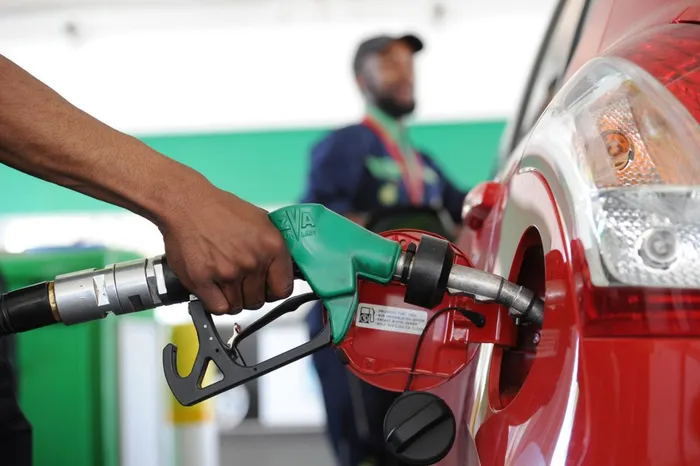
Latest data from the Central Energy Fund (CEF) points to significant under-recoveries in fuel prices, indicating that 95 Unleaded petrol could rise by about R3.52 per litre, while 50ppm diesel may surge by around R6.02 per litre next month.
Image: Karen Sandison / Independent Media
South African motorists could face one of the steepest fuel price increases in recent years in April, with the government yet to signal whether it will introduce any relief measures to cushion the blow.
Latest data from the Central Energy Fund (CEF) points to significant under-recoveries in fuel prices, indicating that 95 Unleaded petrol could rise by about R3.52 per litre, while 50ppm diesel may surge by around R6.02 per litre next month.
Although these figures are based on the month-to-date average and remain a moving target, the outlook remains highly uncertain due to ongoing volatility in global oil markets. Should international oil prices remain elevated for the remainder of March, the final increases could be even higher when the official fuel price adjustments are announced for April.
The sharp upward pressure on fuel prices is being driven by escalating geopolitical tensions in the Middle East. Brent crude oil climbed above $102 per barrel on Friday as the blockade of the Strait of Hormuz continued to disrupt global energy supplies.
The strait, a critical shipping route that carries roughly 20% of the world’s daily oil supply, has seen commercial maritime traffic severely curtailed as hostilities intensify in the region. Major Gulf oil producers have also been forced to scale back production as storage facilities reach critical capacity.
Despite the looming price shock, the National Treasury has indicated that no decision has been taken regarding possible relief measures.
When asked whether government was considering steps to offset the anticipated increases, Treasury on Friday said “there have not been any announcements in this regard” and that it could therefore not comment at this stage.
South Africa previously introduced temporary fuel price relief during the early months of the Russia-Ukraine war in 2022. At the time, the National Treasury and the Department of Mineral and Petroleum Resources (DMPR) reduced the general fuel levy by R1.50 per litre for four months by releasing a portion of the country’s strategic crude oil reserves.
The move provided short-term relief to consumers but came at a cost to the fiscus, with government foregoing an estimated R4.5 billion in revenue.
The government said at the time that the temporary intervention was necessary due to the combined effects of the Russia-Ukraine conflict, global supply chain disruptions and tightening monetary conditions, all of which were pushing energy prices sharply higher.
However, when the temporary relief measures expired in July 2022, fuel prices jumped significantly. The withdrawal of the general fuel levy relief contributed to petrol prices rising by close to R4 per litre, pushing the price of 95-octane unleaded petrol above R25 per litre for the first time.
Following the end of the levy relief, the price of 93-octane petrol rose from R23.93 to R26.31 per litre, while 95-octane petrol increased from R24.17 to R26.74 per litre, nearly R10 per litre higher than prices recorded just a year earlier.
Currently, 95 Unleaded petrol costs R19.47 per litre at the coast and R20.30 per litre in Gauteng, while 93 Unleaded sells for about R20.19 inland. The wholesale price of diesel stands at around R17.84 per litre at the coast and R19.17 inland.
The DMPR has already warned that the continued rise in international crude oil prices is likely to translate into higher pump prices in April.
“The under-recovery on fuel prices has been fluctuating since the onset of the conflict, and the Department will continue to monitor the situation closely,” the department said.
“Further updates will be provided in due course ahead of the official April fuel price adjustments.”
Industry stakeholders, however, argue that broader structural reforms are needed to reduce the country’s exposure to global energy shocks.
Road Freight Association CEO Gavin Kelly on Friday said South Africa’s transport sector remains highly vulnerable to international fuel price fluctuations.
“The fuel price increase in March illustrates how vulnerable the country’s transport sector is to international energy trends, with some really frightening figures being discussed for April if the current trajectory of increases and rand weakness continues,” Kelly said.
He argued that South Africa should accelerate efforts to expand synthetic fuel production and invest in alternative energy technologies such as battery-powered vehicles and hydrogen.
Kelly also suggested freezing increases in the fuel levy for a period to provide relief to consumers while reducing the country’s long-term dependence on imported fuel.
BUSINESS REPORT