

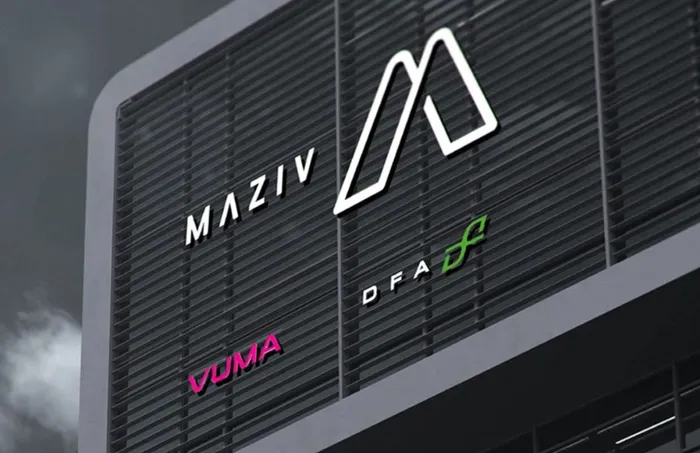
The Competition Commission and the Competition Tribunal had initially rejected the merger, citing concerns that it would substantially lessen competition across multiple markets
Image: Supplied
Banele Ginindza
Parliament has questioned the decision-making capacity of the Independent Communications Authority of South Africa (Icasa) and the Competition Commission after the latter reversed its stance on the proposed multi-billion rand merger between Vodacom and Maziv.
The scrutiny follows Tuesday briefings to Parliament in which both regulators outlined their evolving position on the deal.
The Competition Commission and the Competition Tribunal had initially rejected the merger, citing concerns that it would substantially lessen competition across multiple markets. At the time, the competition authorities argued that the conditions proposed by the merging parties were insufficient to address these risks.
The Commission maintained that the public interest commitments put forward did not outweigh the potential harm to competition, while the Tribunal concluded that the transaction posed significant horizontal and vertical competition concerns. It found that the merger’s potential anti-competitive effects exceeded any projected benefits and could not be justified on public interest grounds, leading to its prohibition.
However, the matter took a turn when the Department of Trade, Industry and Competition (the dtic), together with the merging parties, appealed the decision at the Competition Appeal Court.
During the parliamentary session on Tuesday, MP Crown Prince Adil Nchabaleng criticised the regulators’ handling of the case, questioning the adequacy of the explanations provided.
"On the Vodacom-Maziv, we are doing a slapdash job. We are not instilling confidence in our people regarding why these things are allowed, and the answers were unsatisfactory," Nchabaleng said.
"We need to either categorically not accept these slapdash answers on key issues such as why did the Competition Commission made a U-turn on a decision they had already made, allowing them to willy-nilly disagree with itself."
Nchabaleng raised concern over what he described as a “U-turn” by the Competition Commission, arguing that such reversals without clear justification undermine public trust. He further criticised Icasa for providing limited input, saying there were significant gaps in its presentation.
"Icasa did not say much, and they didn't give us much view. There are incomplete areas; there are gaps. Our interest is to ensure the expansion of digital connectivity in the country, aligning with NDP goals, and to make sure communities are connected," Nchabaleng continued.
Central to Parliament’s concerns is whether the merger will ultimately benefit consumers, particularly in terms of lowering data costs and improving access to affordable connectivity. Lawmakers also highlighted the importance of open access in the sector to ensure increased competition beyond dominant players.
Responding to the criticism, Commissioner Doris Tshepe explained that the Commission’s change in position followed extensive settlement discussions with the merging parties.
"We changed our minds because the parties engaged in settlement discussions and agreed on a set of conditions that according to the commission, substantially remedied the horizontal and the vertical competition concerns. As a result, the Competition Commission did not oppose the appeal," Tshepe said.
She noted that Mobile Network Operators (MNOs) rely heavily on Maziv’s fibre infrastructure, particularly dark fibre used for metropolitan connectivity. Without appropriate safeguards, the merged entity could have had the incentive to limit access or favour its own operations, disadvantaging competitors.
Similarly, fibre-to-the-business service providers could face exclusionary practices if the merged entity prioritised its own retail services.
In approving the transaction, the Competition Appeal Court imposed a series of conditions aimed at addressing these risks and advancing public interest objectives. These include expanding fibre connectivity into lower-income “reach” and “key” areas—such as townships, villages and informal settlements—where the average household income is less than R254,495 and R60,000 per annum, respectively.
Maziv is also required to meet connection targets in these areas and ensure that underserved communities gain affordable or even free access to broadband services, helping bridge the digital divide.
In addition, Vodacom has committed to investing R60 billion over five years to achieve 90% 5G population coverage, including the rollout of at least 564 new 5G sites annually.
Further conditions include providing free, uncapped wholesale fibre-to-the-home services to all public and private schools, as well as extending broadband connectivity to over 1,500 healthcare facilities, 210 libraries and 100 police stations nationwide.
The deal is also expected to create around 10,000 direct and indirect jobs, alongside increased contributions to employee benefit schemes.
Despite these commitments, Parliament remains concerned about regulatory consistency and transparency, signalling that further scrutiny of the merger—and the institutions overseeing it—is likely.
BUSINESS REPORT