

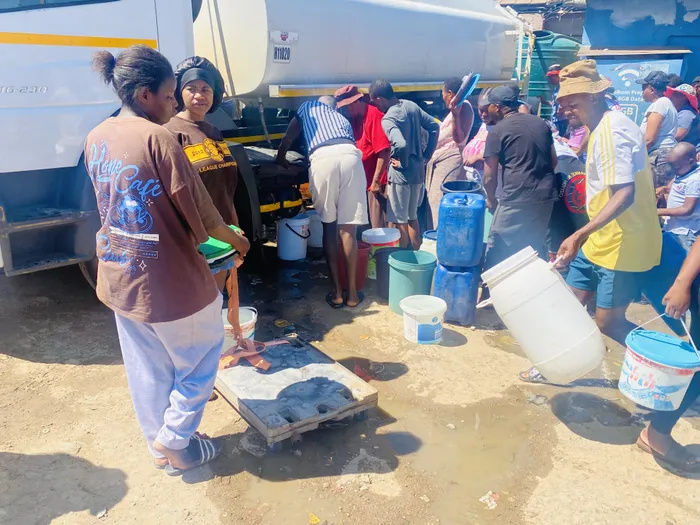
The reform aims to overhaul how municipalities manage core trading services such as water, electricity, sanitation and waste.
Image: Simon Majadibodu/IOL
South Africa has launched an ambitious reform programme aimed at restoring the financial and operational health of its struggling metropolitan municipalities, with the goal of improving basic services and unlocking more than R100 billion in infrastructure investment.
National Treasury director-general Dr Duncan Pieterse delivered a stark warning at the launch of the Metro Trading Services Reform on Wednesday, saying that South Africa’s economic future hinges on functional cities.
Years of declining municipal performance—marked by infrastructure breakdowns, unreliable water and electricity supply, and mounting financial strain—have eroded both public confidence and investor appetite.
“If our cities do not work, South Africa cannot grow,” Pieterse said, underscoring that metros are the engines of economic activity, innovation and inclusion.
The reform aims to overhaul how municipalities manage core trading services such as water, electricity, sanitation and waste. A central flaw identified by Treasury is that revenue generated from these services is often diverted into general municipal budgets instead of being reinvested into maintaining infrastructure.
The consequences are visible across the country: leaking pipes, rolling outages, and deteriorating service networks that deter investment and undermine growth.
Treasury’s solution is to restructure these services into ringfenced, business-like entities with clear accountability. Revenues will be retained within each service and reinvested to ensure long-term sustainability.
The reforms are backed by R54bn in performance-based incentives and are expected to unlock more than R100bn in infrastructure investment.
They also form part of a broader structural reform agenda linked to Operation Vulindlela, which aims to remove bottlenecks to economic growth and improve state capacity.
Yet while the diagnosis is widely accepted, the prescription is being approached with caution by municipalities.
Speaking on behalf of organised local government, South African Local Government Association (Salga) CEO Sithole Mbanga made it clear that cities support reform, but not at the cost of their constitutional authority.
“We support the reform as partners… as co-architects, not implementers of someone else’s blueprint,” Mbanga said, reflecting concerns that national interventions could inadvertently weaken municipal governance.
Metros, he said, are not mere administrative arms of national government but constitutionally recognised spheres with their own mandates and political accountability. Any restructuring of trading services must therefore preserve council authority, avoid parallel governance systems, and respect existing accountability lines.
Salga pointed to a range of practical risks that could complicate implementation, including the difficulty of balancing capital and operational spending, the political sensitivity of raising tariffs in a weak economy, and the need for continuity ahead of local government elections.
There are also concerns about reform alignment. Municipal leaders have called for greater clarity on how the Metro Trading Services Reform will interact with other policy processes, including changes to water legislation, electricity distribution industry reforms, and the ongoing review of the local government fiscal framework.
Without coordination, Mbanga warned, implementation could become “risky and politically sensitive.”
Another key issue is public buy-in. The reforms may require tariff increases and stricter revenue collection—steps that could prove unpopular with residents already under financial pressure.
Salga has urged national government to lead a coordinated communication effort to explain the necessity of these changes, rather than leaving municipalities to bear the political cost alone.
Labour relations also loom large. With municipal workers directly affected by structural changes, Salga emphasised the need for a national, coherent engagement with organised labour to avoid resistance that could derail the reforms.
Despite these challenges, both Treasury and local government agree that the status quo is untenable.
The reform represents a shift from passive oversight to more active intervention, including new mechanisms to ensure infrastructure funds are spent effectively—even if that means redirecting implementation to agencies like the Development Bank of Southern Africa when municipalities lack capacity.
International partners, including the World Bank and several bilateral donors, are also backing the initiative, signalling confidence in South Africa’s reform trajectory.
Ultimately, the success of the Metro Trading Services Reform will depend on whether government can strike the right balance between support and control—empowering cities to rebuild their capacity while ensuring accountability and results.
“Local government must remain in the driver’s seat of local government reform,” Mbanga said.
BUSINESS REPORT