

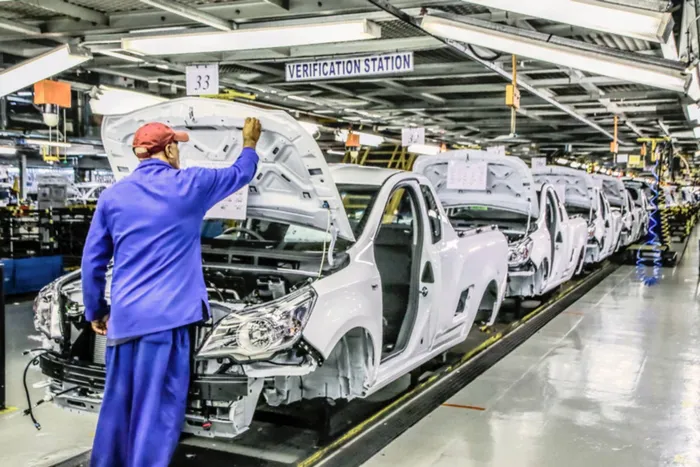
Naamsa said this represents the best March performance since 2007 and underscores the resilience of local demand despite an increasingly uncertain macroeconomic environment.
Image: Supplied
South Africa’s automotive sector delivered a strong performance in March, with new vehicle sales reaching their highest level for the month in nearly two decades, even as mounting global and domestic pressures begin to reshape the economic outlook.
According to the Automotive Business Council (Naamsa) on Wednesday, aggregate domestic vehicle sales climbed to 58,060 units in March, marking a 17.3% increase compared to the same period last year.
Naamsa said this represents the best March performance since 2007 and underscores the resilience of local demand despite an increasingly uncertain macroeconomic environment.
The strong domestic performance comes against the backdrop of the 2026 South Africa Investment Conference held on Tuesday, where government reaffirmed its commitment to investment-led growth, infrastructure expansion and industrialisation.
Industry leaders are of the view that the policy direction outlined at the conference is closely aligned with the automotive sector’s growth trajectory. Naamsa noted that the conference signals a shift from economic recovery toward expansion, with manufacturing positioned as a central pillar of growth.
Policy frameworks such as localisation incentives, export competitiveness measures and long-term strategies like the Automotive Production and Development Programme (APDP) and the South Africa's Automotive Industry Masterplan (SAAM 2035) are expected to support further investment in the sector.
The emphasis on green industrialisation and electric vehicle production is particularly significant.
Naamsa said the government’s focus on new energy vehicles (NEVs), battery storage and critical minerals integration positions South Africa to play a larger role in global automotive value chains. This transition is expected to attract investment while reshaping production and supply dynamics in the years ahead.
Yet these gains are increasingly under threat. Rising geopolitical tensions, particularly in the Middle East, have driven global oil prices higher, resulting in sharp fuel price increases in April.
Petrol prices rose by over R3 per litre, while diesel increased by as much as R7 per litre despite the temporary relief by the government, significantly raising transport and logistics costs across the economy.
Although a temporary fuel levy reduction by National Treasury will provide some relief, economists have warned that it will not fully offset the inflationary impact of higher energy prices. This is likely to place pressure on household budgets and business margins, potentially dampening demand in the coming months.
Brandon Cohen, chairperson of the National Automobile Dealers’ Association (NADA), said they expected to see some hesitation from buyers, with a degree of caution creeping back into the market as people waited to see where fuel prices would settle.
"Admittedly, consumers were feeling more comfortable with the interest rate remaining unchanged and the news of government intervening to soften the blow of record fuel price increases for April," Cohen said.
"We also believe consumers may have been worried that vehicle prices may rise as the Middle East conflict impacts logistics, as well as the supply of raw materials and components to global manufacturers."
However, while domestic sales remain robust, export performance continues to face headwinds. Vehicle exports declined by 5.3% in March to 37,388 units, reflecting a decrease of 2,111 units compared to the 39,499 vehicles exported in the corresponding month last year, reflecting the impact of geopolitical tensions and weakening global demand.
The broader macroeconomic environment presents a mixed picture. Earlier in the year, supportive conditions — including lower inflation, interest rate cuts and improved financial conditions — helped stimulate demand.
Consumer confidence improved to -7 index points, its strongest level since late 2024, while business confidence rose to 47, above its long-term average. Notably, vehicle dealer confidence reached a 13-year high, reinforcing the sector’s positive momentum.
The South African Reserve Bank has opted to hold interest rates steady following a series of cuts since late 2024, which had helped drive the recent recovery. These earlier rate reductions are expected to continue supporting demand in the near term, providing a buffer against emerging risks.
BUSINESS REPORT