

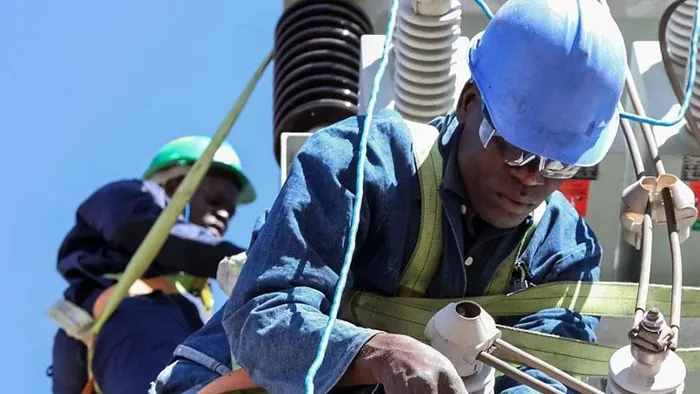
The World Bank Group's report underscored that the region’s long-term prospects hinge on its ability to generate jobs at scale.
Image: Supplied
Sub-Saharan Africa’s fragile economic recovery is losing momentum, with fresh warnings that growth is failing to translate into enough jobs for a rapidly expanding population.
According to the latest Africa Economic Update released by the World Bank Group, growth for the region is projected to remain flat at 4.1% in 2026, unchanged from 2025, but increasingly exposed to mounting global and domestic risks.
The report, coming on the eve of the International Monetary Fund/World Bank Annual Meetings this week, highlights a combination of geopolitical tensions, rising debt burdens, and structural inefficiencies as key factors constraining the region’s economic trajectory.
Chief among these risks is the ongoing conflict in the Middle East, which continues to drive up fuel, food, and fertilizer prices. These cost pressures are expected to push inflation higher, to around 4.8% in 2026, while simultaneously disrupting economic activity and eroding household purchasing power.
For millions of vulnerable households across the region, the impact is particularly severe. With a large share of income spent on basic necessities such as food and energy, rising prices threaten to deepen poverty and inequality.
The World Bank warns that without targeted interventions, these pressures could stall poverty reduction efforts and undermine broader development gains.
“In the short term, governments should target scarce resources to protect the most vulnerable households,” said Andrew Dabalen, World Bank Group chief economist for the Africa Region.
“At the same time, maintaining macroeconomic stability—by controlling inflation and exercising prudent fiscal management—will be essential to navigate the current shock and position African countries for a faster recovery once the crisis subsides.”
However, fiscal space remains limited. Public debt levels have surged across much of Sub-Saharan Africa, with debt service costs consuming an increasing share of government revenues.
The report noted that external public debt service has doubled from 9% of revenue in 2017 to 18% in 2025. At the same time, public investment in critical infrastructure remains about 20% below 2014 levels, constraining long-term growth potential.
Adding to the challenge is a decline in external financing, including reduced development assistance to low-income countries. This has left many governments struggling to balance immediate fiscal pressures with the need to invest in growth-enhancing sectors such as energy, transport, and digital infrastructure.
Yet the report underscored that the region’s long-term prospects hinge on its ability to generate jobs at scale. With more than 620 million people expected to enter Africa’s labour force by 2050, the urgency of shifting toward more productive, diversified, and private-sector-led growth has never been greater.
A central theme of the report is the role of industrial policy in driving this transformation.
The World Bank argues that well-designed industrial strategies can help African economies move up the value chain, boost productivity, and create higher-quality employment opportunities. This includes leveraging demand for critical minerals used in emerging technologies, as well as expanding manufacturing sectors such as pharmaceuticals.
But the report cautioned that industrial policy is not a silver bullet. Poorly designed interventions risk creating isolated, inefficient industries that fail to deliver broad-based growth. Instead, success will depend on policies that promote learning, innovation, and competitiveness across entire sectors rather than favouring specific firms.
Crucially, these policies must be supported by strong institutional capacity and embedded within a broader ecosystem that includes reliable infrastructure, access to finance, skilled labour, and regional market integration. The report highlights the importance of the African Continental Free Trade Area (AfCFTA) in unlocking larger markets and enabling economies of scale.
To be effective, industrial policies must also include clear performance benchmarks and credible exit strategies, ensuring that support is temporary and results-driven. Without such discipline, governments risk misallocating scarce resources and entrenching inefficiencies.
The findings come amid growing concern that Africa’s current growth model—largely driven by commodity exports and low-productivity sectors—is insufficient to meet the continent’s development needs. While the region has shown resilience in the face of repeated global shocks over the past decade, the pace and quality of growth remain inadequate.
BUSINESS REPORT