

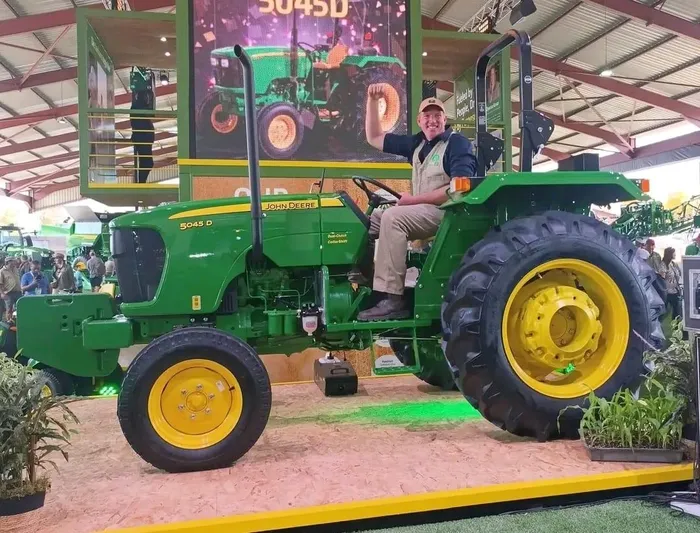
The event, organised by Grain SA, serves as a key platform where producers, agribusinesses and stakeholders converge to explore technologies, share knowledge and forge partnerships.
Image: Facebook
The agricultural sector is undergoing a fundamental shift, redefining resilience from a survival tactic into a strategy for sustained profitability, as industry leaders prepare for the upcoming NAMPO Harvest Day 2026 next week in Bothaville, in the Free State.
This year’s event will centre on the theme “Resilience Through Innovation,” reflecting how farmers are adapting to mounting pressures through smarter decision-making, improved efficiency and practical technological adoption.
Once viewed primarily as the ability to withstand droughts, price shocks and other external stresses, resilience in agriculture is increasingly being measured by long-term commercial viability.
This evolution comes as producers face rising input costs, logistical constraints and ongoing climate variability, forcing a shift toward more disciplined and forward-looking farming practices.
According to Brendan Jacobs, head of agribusiness at Standard Bank Business and Commercial Banking, the sector is moving beyond reactive responses.
“Resilience in agriculture has evolved. Beyond just getting through a difficult season, it is about using innovation and better information to make smarter decisions, manage risk and build farming businesses that can remain profitable,” Jacobs said.
Across the value chain, innovation is being deployed with a clear commercial purpose.
Farmers are increasingly prioritising solutions that can deliver measurable returns in the short to medium term, from precision agriculture technologies and improved genetics to data-driven financial planning and enhanced market access.
This pragmatic approach reflects tighter margins and heightened risks, where the cost of inefficiency can be significant. As a result, profitability has emerged as the clearest benchmark of resilience.
“When innovation is applied with intent and supported by sound financial planning, it enables farmers to cope with volatility while also positioning their businesses for sustained growth,” Jacobs added.
The significance of this shift will be a central focus at NAMPO, widely regarded as the largest agricultural exhibition in the Southern Hemisphere.
The event, organised by Grain SA, serves as a key platform where producers, agribusinesses and stakeholders converge to explore technologies, share knowledge and forge partnerships.
Dirk Strydom, managing director of NAMPO, said the event remains critical at a time when agriculture faces intensifying pressures.
“Resilience is no longer only about survival, but about the ability to adapt, make better decisions and remain sustainably profitable. NAMPO brings together the solutions, technologies and conversations producers need to face these challenges with confidence,” he said.
However, this year’s event will also reflect the realities of biosecurity risks facing the sector.
In response to recent outbreaks of Foot-and-Mouth Disease (FMD) in South Africa, organisers have taken the unprecedented step of banning all cloven-hoofed animals—including cattle, sheep, goats and pigs—from the exhibition.
The decision, taken jointly by Grain SA, NAMPO management and breeders’ societies, follows a comprehensive risk assessment and consultation with agricultural authorities. The move comes amid growing concern as FMD cases have spread closer to key production regions, raising the risk of transmission at large gatherings.
Danie Minnaar, chairperson of the NAMPO Harvest Day Committee, said the decision prioritises the long-term health of the industry.
“As protectors of biosecurity, we cannot risk creating a platform where threats cannot be effectively controlled,” Minnaar said.
While livestock exhibitions will be absent, organisers intend to use the situation as an educational opportunity.
NAMPO 2026 will incorporate awareness initiatives highlighting the importance of biosecurity, how diseases such as FMD spread, and the measures producers can take to safeguard their operations.
Non-risk animals such as horses, dogs and poultry will still be permitted under strict biosecurity protocols, including disinfection procedures for animals and vehicles.
Despite these adjustments, the core objective of NAMPO remains unchanged: to equip the agricultural sector with the tools and insights needed to navigate an increasingly complex operating environment.
BUSINESS REPORT