

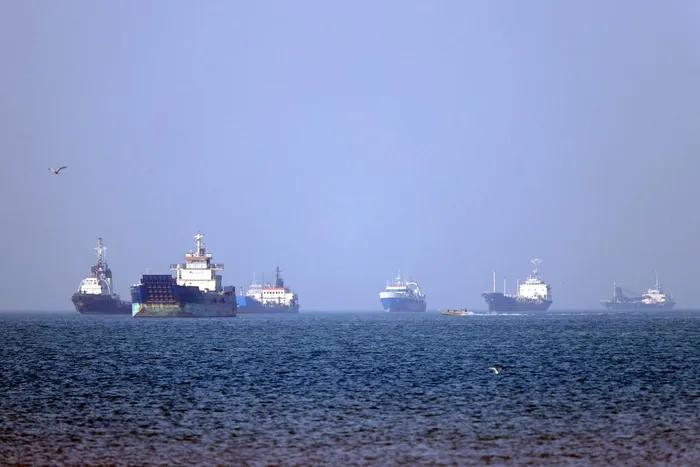
Financial markets are clearly convinced that both the United States and Iran have an incentive not to escalate. If a tentative ceasefire holds, the market believes the worse-case scenario has been avoided, argues the writer.
Image: ISNA /AFP
By David Crosoer
Financial markets have bounced back from their March lows and appear less concerned about the Iranian crisis than they were one month ago; despite the ongoing negative economic impact and the absence of an obvious political offramp.
Should we breathe a sigh of relief? Financial markets are clearly convinced that both the United States and Iran have an incentive not to escalate. If a tentative ceasefire holds, the market believes the worse-case scenario has been avoided.
Does this mean the Iranian conflict and the energy supply shock, for financial markets are already in the rear-view mirror, even if it doesn’t escalate further? Or is the market actually pricing that this needs to be resolved by some point, failing which all hell will break loose?
One could look to oil futures for clues on how long the Strait of Hormuz may remain disrupted (the market thinks not more than a couple of months). However, this is a moving target. The conflict has already outlasted initial expectations and the longer the Strait remains affected the further the timeline extends. Despite recent gains, oil prices are not yet pricing in a catastrophic situation.
When markets look past the noise
For markets escalation often matters more than duration. In a sense the unknown risk is not how long the Strait is disrupted but rather an unexpected development such as, broader geopolitical involvement or extreme retaliatory actions. The point is that once events cease to escalate, the negative impact is often less severe than feared, even if the Strait remains shut.
In recent memory, this was true for Russia’s invasion of Ukraine and President Trump’s unilateral tariffs - in both cases dire economic forecasts were unfounded as workarounds were found to the threats toglobal energy supply and global trade - and financial markets were quick to look past the initial panic.
More than 30 years ago as an economics undergraduate, one of my biggest challenges was getting my head around the standard textbook assumption of mean reversion. To me, at the time, it seemed wholly implausible that this would have any explanatory power. It turns though to have been one of the most important lessons I needed to learn as an investor.
It is always tempting to say but this time is different. The Strait is so important that remaining shut will be catastrophic for economies and financial markets. This may be the case, but the odds are it isn’t.
Market participants have learnt the market almost always overreacts to short-term geopolitical noise and hence buying-the-dip is a viable long-term strategy; whether the market put is provided by the Fed or the Trump TACO or an unexpected AI profit boom hardly matters.
Lessons over time
It is possible to take this argument too far. But I suspect that while many asset managers are testing the sensitivity of the balance sheet of the companies they hold to a strained economic environment and higher short-term rates, few have changed their long-term interest rate assumptions, or their long-term normalised earnings growth in each of the sectors they cover.
So, while the Iranian conflict has had an immediate impact on market expectations for short-terminterest rates (the Fed will no longer cut, the SARB might hike) it has not yet changed market expectations for the level of long-term interest rates.
This current conflict may be one of those rare geopolitical events that have a long-lasting impact on financial market expectations, but in all likelihood it won’t.

David Crosoer is the chief investment officer at PPS Investments.
Image: Supplied
* David Crosoer is the chief investment officer at PPS Investments.
** The views expressed do not necessarily reflect the views of IOL or Independent Media.
BUSINESS REPORT