

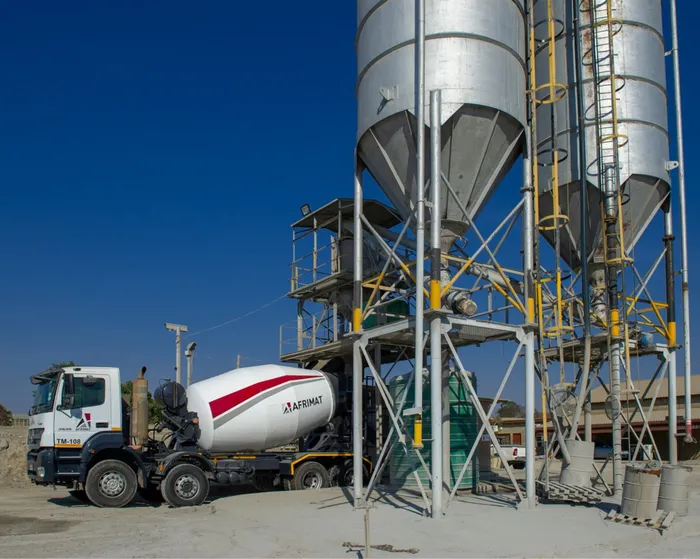
The mid-tier mining and materials company on Thursday said higher diesel costs have emerged as a major concern across its operations, with the group consuming about 27 million litres of diesel during the financial year.
Image: Supplied
Afrimat has warned that rising energy prices linked to the war in Iran could place fresh pressure on its operations, even as the diversified mining group reported stronger earnings and revenue growth for the year ended February 2026.
The mid-tier mining and materials company on Thursday said higher diesel costs have emerged as a major concern across its operations, with the group consuming about 27 million litres of diesel during the financial year.
Afrimat said post year-end fuel price increases, driven partly by geopolitical tensions in the Middle East, had already started affecting the business and some of the costs had been passed on to customers.
“Despite headway on margins across the Group, Afrimat is mindful of the potential impact of higher energy prices resulting from the war in Iran,” the company said in its audited annual financial results.
The warning came as Afrimat posted a 20.3% increase in revenue to R10 billion from R8.3bn previously, while operating profit rose 9.6% to R523.7 million.
Headline earnings per share climbed 32.5% to 95.8 cents, while the group declared a final dividend of 13 cents per share, taking the total dividend for the year to 33 cents.
The company said cash generation remained under pressure, although operating cash flow improved to R831.4m from R571.6m in the prior year. Afrimat added that stock build-ups in its iron ore business, after a domestic customer unexpectedly reduced volumes, temporarily constrained cash flow.
The group said reducing debt and strengthening cash generation would remain key priorities in the coming financial year.
Energy-related risks, however, continue to cloud the outlook for the mining and industrial sectors.
Afrimat said the impact of rising diesel prices was particularly significant because of the scale of its mining, quarrying and transport activities. The company operates across more than 100 sites and supplies a broad range of products including aggregates, cement, iron ore, anthracite, phosphate and industrial minerals.
The company also highlighted broader concerns around electricity pricing in South Africa, especially for energy-intensive industries.
Afrimat said prospects for its Nkomati anthracite operation could improve significantly if electricity tariffs for the ferrochrome sector were reduced.
“A reduced electricity tariff for the ferrochrome industry could dramatically improve Nkomati’s prospects,” the company said, adding that a decision from the National Energy Regulator of South Africa was expected in June 2026.
The anthracite business came under severe pressure during the year after the temporary shutdown of South African ferrochrome smelters in August 2025 sharply reduced demand. Nkomati reported an operating loss of R160.5m compared with a profit of R57.3m the previous year.
Afrimat said the shutdown of ferrochrome smelters, combined with weaker domestic demand and low export pricing, had materially affected profitability in the bulk commodities segment.
Despite these pressures, the company said its diversified business model continued to provide resilience.
Its aggregates business delivered improved margins and stronger sales volumes as infrastructure maintenance and road projects supported demand. Revenue from the construction materials segment rose 20.7% to R5.5bn.
The cement business, acquired through the Lafarge integration, remained loss-making but showed operational improvement. Cement sales volumes increased 36.2%, while clinker production rose 18.8%.
Afrimat spent R271.6m on repairs and maintenance in the cement division during the year as it sought to reverse years of operational neglect.
The group said cost-saving measures implemented during the year were beginning to bear fruit. The migration of Lafarge operations onto Afrimat’s Sage X3 system generated monthly savings of about R6m, while relocating offices reduced rental costs by a further R2m a month.
Afrimat also pointed to improving cooperation between the private sector and Transnet as a positive development for exporters.
The company praised Transnet’s new management team for efforts to stabilise the iron ore export line, although rail constraints continued to affect export volumes.
Looking ahead, Afrimat said it remained optimistic about growth opportunities linked to rare earth minerals and battery materials through its Glenover project, while continuing to explore expansion opportunities elsewhere in southern Africa.
However, the group cautioned that the evolving global energy environment and rising fuel costs would remain critical risks to profitability across the mining and construction materials sectors.
Afrimat's share price rose 2.5% in the JSE to R32.01 on Thursday noon.
BUSINESS REPORT