

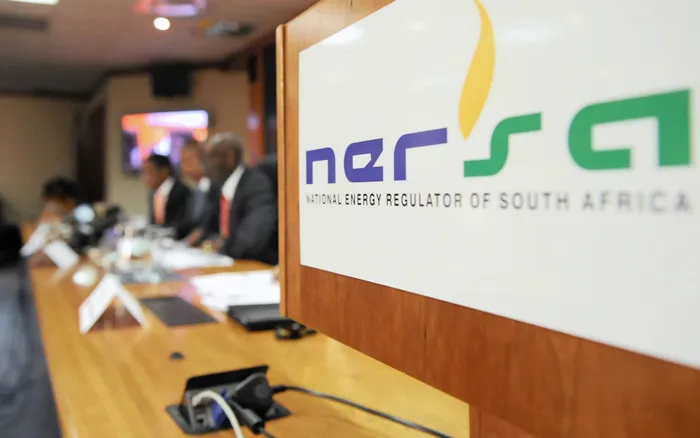
The amendments will provide electricity price relief aimed at preserving thousands of jobs, sustaining industrial production and preventing further decline in one of the country’s key export sectors.
Image: Supplied
The National Energy Regulator of South Africa (Nersa) has approved a series of amendments to Eskom’s negotiated pricing agreements with major ferrochrome producers.
This will provide electricity price relief aimed at preserving thousands of jobs, sustaining industrial production and preventing further decline in one of the country’s key export sectors.
Nersa on Friday announced that it had approved amendments to Eskom’s agreements with ferrochrome producers Samancor Chrome and the Glencore-Merafe Chrome Venture, as well as a temporary concession for Transalloys’ manganese ferroalloys smelter operations.
The approvals follow applications by Eskom and months of consultations involving government departments, industry stakeholders and affected companies.
For Transalloys, Nersa approved a six-month relaxation of the Take-or-Pay (TOP) requirement under its existing negotiated pricing agreement. The waiver, effective from 1 July 2026, temporarily suspends the requirement for the company to consume at least 70% of contracted electricity volumes.
Nersa said the intervention is intended to prevent the permanent closure of Transalloys’ smelters in Mpumalanga, mitigate projected job losses and avoid penalties arising from reduced electricity consumption after the leading producer of manganese ferroalloys warned that up to 600 jobs were on the line.
The regulator has instructed Eskom to submit progress reports every three months during the relief period to enable monitoring of the waiver’s implementation and impact.
In a separate decision, Nersa approved amendments to Eskom’s negotiated pricing agreements with Samancor Chrome for five years and with the Glencore-Merafe Chrome Venture for three years, both effective from 1 June 2026.
Under the approved framework, Eskom will charge participating smelters an electricity tariff of 62 cents per kilowatt-hour, with annual increases linked to South Africa’s Producer Price Index plus one percentage point.
Importantly, Nersa ruled that any revenue shortfall arising from the electricity price relief may not be recovered from ordinary electricity consumers and must be ring-fenced within Eskom. The utility will also be prohibited from recovering the revenue through the Regulatory Clearing Account mechanism.
The regulator said the decision was based on the strategic importance of the ferrochrome industry and the significant employment it supports.
Samancor Chrome alone supports approximately 2,230 direct jobs and 2,665 indirect jobs, while sustaining nearly 4,000 permanent mining jobs across Mpumalanga, Limpopo and the North West.
The Glencore-Merafe Chrome Venture employs more than 2,000 workers directly and supports an additional 1,333 contractor positions. The venture is also estimated to underpin almost 24,000 indirect jobs through its linkages with the chrome and platinum mining value chains.
Nersa noted that the ferrochrome producers remain highly vulnerable to rising electricity costs because of the energy-intensive nature of smelting operations.
While Eskom secured approval for short-term tariff relief in January 2026, subsequent assessments found that electricity prices remained above the breakeven levels required for many smelters to remain profitable.
As a result, Eskom approached the regulator in April seeking additional pricing support.
In a statement following the approval, Eskom said the decision represented an important step in balancing industrial sustainability, employment preservation and electricity system stability.
The utility argued that the ferrochrome sector remains strategically important to South Africa’s industrial base, export earnings and mining value chain, and that retaining large industrial customers would support electricity demand and improve utilisation of the national grid.
Eskom stressed that the framework had been subjected to a formal regulatory process, including public participation and independent evaluation by Nersa.
The utility also sought to reassure consumers that the arrangement would not result in additional costs for standard tariff customers or taxpayers.
“The framework is structured within a regulated environment, includes appropriate risk-sharing mechanisms and does not place additional financial obligations on standard tariff customers or taxpayers,” said Dan Marokane, Eskom Group CEO.
Marokane said the approval was made possible by Eskom’s operational recovery over the past three years and reflected a balanced approach to supporting strategic industrial capacity while maintaining the utility’s financial sustainability.
Nersa has instructed Eskom to submit six-monthly reports on the implementation and socio-economic impact of the amended agreements, allowing the regulator to assess whether the concessions are delivering the intended benefits of protecting jobs, sustaining production and supporting South Africa’s broader industrial economy.
BUSINESS REPORT