

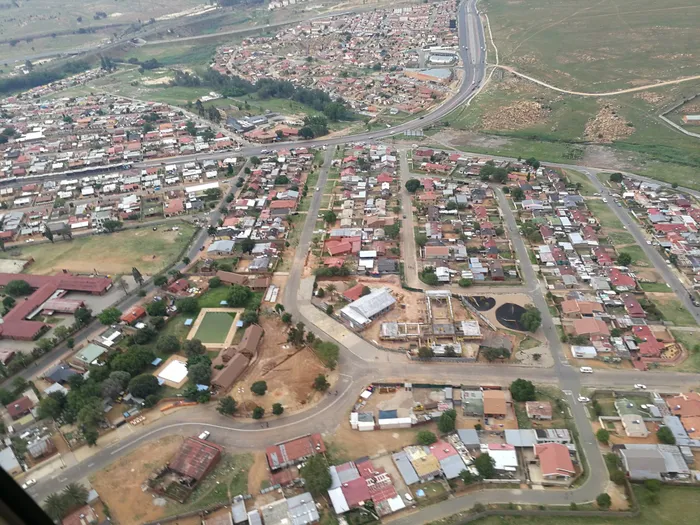
Gauteng boasts several small towns which can be appealing to property buyers.
Image: Clinton Moodley.
There have been growing indications of a gradual shift towards small towns, as property consumers are rethinking the long-term decisions around family life, profession, and retirement.
Over the years, many South Africans have gravitated towards the big cities in the hopes of career prospects, entertainment, and access to amenities.
Much like wide-leg jeans, it seems small-town living could very much be back in style, says Adrian Goslett, the CEO and regional director of REMAX Southern Africa.
He says there has been growing interest in smaller towns as buyers and tenants alike are becoming more intentional with their lifestyle choices.
“Small towns offer various lifestyle benefits from affordability and safety, to space and a sense of community. What we’re seeing is a growing trend of consumers seeking greater value from their homes, and more balance in their everyday lives.”
The real estate company says this is evident in the Western Cape’s coastal village of Hermanus, which has recently seen an influx of families seeking safer streets and quality schools for their children, retirees looking for peace and lower living costs, and young professionals who can work remotely while enjoying a better lifestyle.
There are also expats returning from abroad to enjoy retirement, and investors spotting opportunities in emerging towns, explains Barbara Larney, Broker Owner of REMAX Wine and Whales in Hermanus.
Secondary hubs shift
Recently, BetterBond, a bond originator, said semigration is shifting to secondary hubs. It reported that the semigration trend continues, but with the focus broadening beyond major metropolises like Cape Town and Johannesburg to smaller, well-governed secondary cities and towns perceived to offer a better quality of life.
“We are seeing increased buying activity in cities such as George, Gqeberha, Nelspruit and Polokwane, partly because of the increased residential and commercial activity resulting from infrastructure improvements,” said Bradd Bendall, the national head of sales at BetterBond.
He said coastal towns and smaller cities continued to attract semi-migration, supported by lifestyle appeal and improved connectivity.
Towns along the Garden Route, the KwaZulu-Natal North Coast (Ballito and Umhlanga), and certain parts of the Eastern Cape are booming, a trend reportedly born out of the "great South African escape”, where buyers prioritise security and better municipal services over residing in traditional economic hubs.
Agricultural hubs and scenic towns
However, this is not limited to coastal villages, as farming hubs and scenic towns have also witnessed growing interest. According to Nastassja Koch, broker-owner of REMAX Country Associates in Malmesbury, they have noticed a steady increase in enquiries from both buyers and tenants relocating from nearby larger towns and major metros.
“As property prices continue to rise in many of these surrounding areas, Malmesbury is becoming an attractive alternative due to its relative affordability and convenient access to Cape Town via the double-lane N7,” she explains.
Beyond the costs, the main driver to small towns is the lifestyle pull as they offer shorter commutes, slower daily rhythms, and a stronger sense of community; something that is often lost in the city.
While small towns offer many advantages for buyers and tenants, they also bring meaningful benefits to local communities.
“Many are not just moving for the lifestyle. They’re contributing their skills and experience to local businesses and projects, helping strengthen communities and grow the local economy,” says Larney.
The ripple effect is beneficial for the local community as it can result in improved infrastructure, new local businesses, and ongoing demand for quality housing stock.
Advice to small-town property owners
For property owners in small towns looking to sell or rent, this growing interest creates a significant opportunity.
To make the most out of it, the company advised them to ensure that their property is well-maintained, realistically priced, and aligned with lifestyle convenience, such as home offices, gardens, or separate cottages.
Finally, REMAX Southern Africa advises potential buyers to explore options in towns with sustainable growth fundamentals. “This includes reliable municipal services, stable job ecosystems, good schools, and accessible healthcare.
"If you are unsure of a town’s future growth prospects, speak to a local REMAX agent for some expert advice,” Goslett says.
According to Worldometer, currently, 66.6% of the population of South Africa is urban (43,112,579 people in 2025).
The data website that provides real-time global statistics on a variety of subjects, including demographics, economics, and health, says the 2025 population density in South Africa is 53 people per square kilometre, calculated on a total land area of 1,213,090 square kilometres.
It says the top 5 largest cities by population are Johannesburg, Cape Town, Durban, Soweto and Pretoria.
Independent Media Property