

The market is finally shaking off the stagnation of 2024, supported by the 150-basis-point drop in the prime lending rate since late 2024 (now at 10.25%).
Image: Tracey Adams
The South African residential property market needs more formal stock in the bands where most households sit.
If this does not happen, then homeownership will keep shifting toward rental, informal housing and delayed buying (older first-time buyers) on a long-run trend, says Hayley Ivins-Downes, the managing executive at Lightstone Real Estate.
“This requires the formalisation of informal assets. Bringing the estimated 1.7 million unvalued properties into the formal registry would unlock billions in equity.”
In the affordable band (R750k), transfer volumes decreased from 78,000 in 2014 to 38,000 in 2023 – a significant contraction.
“In the affordable segments, there are currently 4.8 households for every one formal property available. This creates an “affordability trap” where families remain in informal or rental housing despite having the income to potentially service a bond if the stock existed, ” says Ivins-Downes.
The information, valuations and market intelligence on properties provider says South Africa begins 2026 in a phase of “cautious recovery”.
It says the market is finally shaking off the stagnation of 2024, supported by the 150-basis-point drop in the prime lending rate since late 2024 (now at 10.25%).
"Over the past year, we saw a modest price recovery with HPI climbing to 3.2% to 4.5% by December 2025. Over the past three to five years, this period was marked by high volatility, with 2024 being a low point where house price inflation dipped to 2.4% due to high interest rates and low consumer confidence.
"We are still trailing the post-pandemic surge of 5 years ago when low interest rates briefly spiked volumes,” Ivins-Downes says.
Lightstone says women buyers are becoming the backbone of ownership as the share of sole female buyers rose from 30% in 2014 to 39% in 2025.
Properties owned solely by women or jointly (women + men) account for 69% of ownership.
However, the market intelligence provider says there is a clear “youth exit” from the market. It says buyers aged 20-35 now account for only 30% of purchases (down from 41% a decade ago).
“The peak age for first-time buyers has shifted significantly into the mid-to-late 30s as economic pressure delayed the transition from renting to ownership.”
The Western Cape is said to remain a powerhouse (31% of transaction value), while there is some reverse semigration back to Gauteng for job opportunities and better value for money
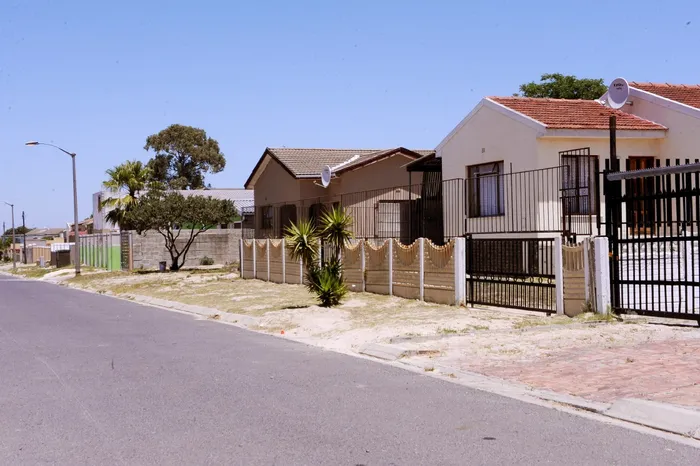
Township markets are differentiated and investable if you understand the data
The big challenge is said to be the “great mismatch” in formal housing.
“At incomes below R13 000 per month, there is only 1 formal registered property for every 4.8 households. Even at below R26 000 per month, it improves to only 1 property per 3.3 households. Some 80% of households fall under this level, meaning pressure is structural (opportunity).”
Lightstone’s data on stock growth shows major metros add stock, but demand concentrates faster than affordable supply in the well-located nodes.
Lightstone says it repeatedly observes a structural shift toward sectional title and estates. In Gauteng, 5% of sales of the past three years were either within estates or sectional schemes.
This is the proximity trade: households accept smaller footprints to buy into better-located (or better-serviced) nodes.
The provider says the market needs to scale formal supply where the mismatch is the worst. It says the 4:8:1 low-income mismatch is a supply reality; shifting it requires measurable increases in formal registrations in the entry bands.
It adds that using densification formats that the market already prefers would help with estates/ sectional schemes already making up 55% of sales in major metros (Gauteng example), and accelerating well-located smaller-unit options will align with demand.
It says access to finance would also be helpful.
Interest rates have already eased by 150 basis points since late 2024, and with the SARB targeting a lower 3% inflation rate, the country can probably expect two more 25 to 50 basis point cuts, says Ivins-Downes.
“This will be the single biggest contributor to reviving buyer confidence and improving bank approval rates. The Western Cape will likely remain the standout performer, and we are likely to see transaction volumes rise year-on-year.”
Coastal sales and rental prices continue rising faster compared to inland areas, especially along the Western and Eastern Cape, says Samuel Seeff, the chairman of the Seeff Property Group, attributing this to a "flight to quality," both in terms of lifestyle and property values.
FNB and Lightstone report coastal price growth averaging 5%, with the Western Cape surging at 8.7% while Johannesburg lagged at 1.8%. Coastal rental markets also show resilience, with the Eastern Cape achieving 5.7% growth by mid-2025, outpacing inflation.
While the Western Cape maintains the lowest vacancy rates nationally, the Eastern Cape remains a strong contender for value.
The Eastern Cape’s average price is R1.15 million, significantly lower than the Western Cape (R2.1m), KZN (R1.65m), and Gauteng (R1.4m).
Consequently, first-time buyers comprise 47% of the province's market, nearly matching Gauteng’s 48.5% and far exceeding the Western Cape’s 36.3% share, highlighting the region's exceptional accessibility for new homeowners.
It also boasts rental affordability at an average of just R7,608, considerably lower than the Western Cape (R11,635), Gauteng (R9,201), and KZN (R9,170).
Independent Media Property