

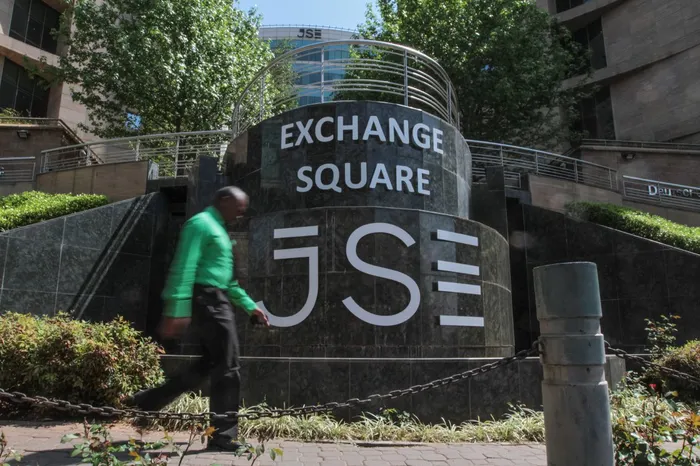
The real estate investment trust sector has seen substantial capital inflows, successfully raising over R11.4 billion in fresh capital in 2025.
Image: Dean Hutton
South African Real Estate Investment Trusts (REITs) delivered another standout month in February 2026, surging by 8.1%, breaking the sector’s total market capitalisation past the R350 billion mark.
The impressive performance decisively outpaced local equities (7.0%) and bonds (1.7%), underscoring a structural re-rating driven by improving fundamentals, accelerating distribution growth and a massive shift in institutional investor sentiment.
According to the latest SA REIT Association Chart Book for February 2026, compiled by Ian Anderson, portfolio manager at Merchant West Investments, the sector has now returned 9.1% year-to-date.
This builds on the exceptional momentum of the past two years, with top performers delivering total returns of approximately 50% over the trailing 12 months.
“The total market capitalisation of publicly traded SA REITs surpassing R350 billion is a significant milestone,” notes Anderson.
“It reflects the sector’s sustained recovery and landlord pricing power in a falling interest rate environment, supported by distribution growth for the sector standing at 8.06% on a rolling 12-month basis”.
This market recovery is matched by a dramatic pivot in institutional capital allocation.
Speaking at the recent sold-out SA REIT Conference, independent property analyst Keillen Ndlovu highlighted a massive shift in asset manager sentiment, quantifying the return of real money to the sector.
“Two years ago, 48% of fund managers were underweight on the SA real estate investment trust sector,” Ndlovu noted during his presentation. “Today, that picture has changed completely, with only 12% underweight and 40% now overweight or neutral-to-overweight.”
This renewed confidence is said to be visible in the physical economy.
“If you drive around Sandton and Rosebank today, the cranes are back. I counted 12 cranes over the weekend,” Ndlovu added during the conference held on 12 February 2026. “The physical economy is matching the real estate investment trust sector’s recovery.”
Furthermore, the real estate investment trust sector has seen substantial capital inflows, successfully raising over R11.4 billion in fresh capital in 2025 through heavily oversubscribed bookbuilds, while the massive discounts to Net Asset Value (NAV) seen in recent years have rapidly narrowed to an average of just 3% to 4%.
February saw robust corporate activity and confident earnings guidance across the sector. Top performers for the month included Heriot (+27.8%), Accelerate (+27.3%), Redefine (+18.5%), Fairvest B (+16.6%) and Hyprop (+13.6%).
Among the major strategic moves, Growthpoint announced the disposal of its 55% undivided share in Discovery Phase 1 for R2.32 billion, reducing its office exposure in Gauteng and Sandton while generating net proceeds of approximately R2 billion after the related Phase 2 acquisition.
Concurrently, Vukile announced that its subsidiary Castellana Properties will acquire the Islazul Shopping Centre in Madrid in a landmark EUR 318 million transaction, marking its strategic expansion into the Spanish capital.
The earnings scorecard is said to reflect this operational strength. Fortress reported a 16.7% jump in first-half distributable earnings to R1.07 billion, upgrading its full-year guidance to imply 10% growth.
Redefine struck a similarly confident tone in its pre-close update, describing its position as the strongest since the post-pandemic correction.
The local sector’s strength is said to align with shifting global dynamics. In his international keynote at the SA REIT Conference, Peter Verwer, executive chairman of Futurefy, highlighted that South Africa currently stands as a “world-beater” in terms of five-year total returns, significantly outperforming major real estate markets such as Australia, Japan and the UK.
Verwer noted that global property is entering the “REITs 4.0” era, thus transitioning into a globally interconnected, digital-first franchise focused on growth, data monetisation and the tokenisation of real-world assets (RWAs).
He emphasised that REITs are increasingly acting as “nation-building apps” capable of supporting state infrastructure and addressing massive urbanisation gaps without burdening public debt.
As the market shifts its focus from deep-value recovery to sustainable earnings momentum, the environment remains highly constructive.
“The improving macro backdrop, lower inflation, falling interest rates, South Africa’s credit rating upgrade and exit from the FATF grey list continue to support a positive outlook for SA REITs,” Anderson says.
“The re-rating of the sector since mid-2024 has been meaningful. Investors will be watching whether improving earnings can justify current valuations as the market transitions from recovery to momentum.”
Meanwhile, Spear REIT will be included in both the FTSE/JSE All Property Index (ALPI) and the SA REIT Index following the latest index review announced by the JSE via the stock exchange news service after market close on March 4. The changes will take effect on March 23.
The Western Cape-focused real estate investment trust says its inclusion in the two widely tracked indices reflects the continued growth, liquidity and institutional relevance of the company within South Africa’s listed property sector.
Dipula Properties and Octodec Investments were also announced as new entrants to the indices as part of the same review.
Spear REIT’s addition to these indices is expected to enhance the company’s visibility among domestic and international investors, while also potentially increasing demand from index-tracking funds and institutional portfolios that may have previously been precluded from taking on benchmark positions in non-indexed funds.
The company’s inclusion in the FTSE/JSE All Property Index and the SA REIT Index marks an important milestone for the business and reflects the disciplined strategy it has pursued since listing, says Quintin Rossi, CEO of Spear REIT.
“Spear’s inclusion in the FTSE/JSE All Property Index and the SA REIT Index is an important milestone for our business and a strong endorsement of the disciplined strategy we have pursued since listing.
"It reflects the growth, quality and liquidity of our Western Cape-focused portfolio and positions Spear for increased participation from a broader pool of institutional and index-tracking investors seeking high-quality real estate exposure in the region with the strongest real estate fundamentals in South Africa.”
Spear REIT remains focused on delivering sustainable earnings growth and long-term value creation through its specialised investment strategy in high-quality commercial real estate assets across the Western Cape.
Independent Media Property