

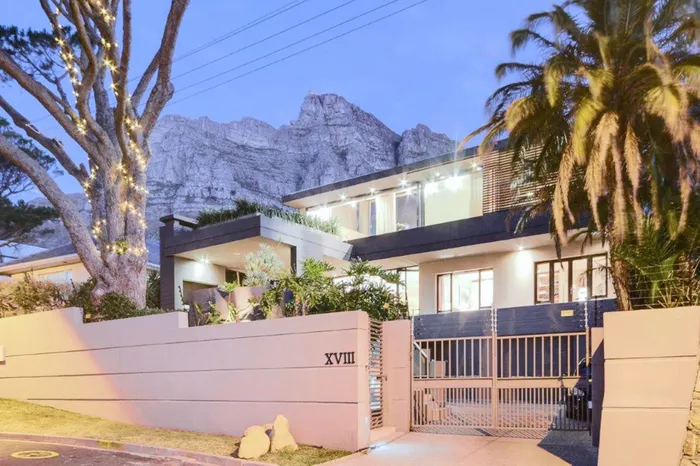
South Africa’s atypical market in 2025, marked by a higher proportion of stock transactions within the premium income bands.
Image: Supplied
Last year, the mid- to premium segments of South Africa’s residential property market were the busiest, deviating from the usual trends in a typically robust market.
Activity in the lower price bands remained subdued compared to the mid- and higher-end segments, reflecting a market that remains sensitive to macroeconomic pressures.
“In societies marked by significant wealth inequality, high-net-worth individuals tend to drive demand in the upper segments of the property market,” says Lightstone’s managing executive of Real Estate, Hayley Ivins-Downes.
“Meanwhile, slow wage growth among middle- and lower-middle-income households dampens entry-level demand, resulting in a strong high-end market and a constrained lower-tier segment."
"Structural supply constraints further exacerbate this imbalance, including a shortage of affordable housing, restrictive zoning regulations, investor activity displacing first-time buyers, and shifting demographic trends.”
According to the South Africa Residential Real Estate Market Report (2026–2031) by Mordor Intelligence, the country’s residential real estate market is estimated at USD 30.19 billion (approximately R543.42 billion) in 2026 and is projected to reach USD 52.35 billion by 2031, growing at a CAGR of 10.9% over the forecast period.
This robust growth is driven by easier monetary conditions, the nationwide rollout of the Electronic Deeds Registration System, and significant pent-up demand in both the affordable and coastal lifestyle segments.
Momentum continues despite modest GDP growth - 0.6% in 2024 and 1.8% in 2025 - demonstrating that housing demand is largely insulated from short-term macroeconomic volatility.
A comprehensive provider of data, analytics and systems across multiple industries, including the motor and property markets.
Churn in the lower price bands is highly sensitive to affordability: when interest rates rise or credit tightens, activity drops sharply, disproportionately affecting borrowers.
By contrast, cash buyers - typically in higher-income, higher-price segments - face far fewer constraints.
In most residential markets, churn - the number of transactions over a period divided by the total housing stock - typically follows a “hump-shaped” pattern.
At the entry level and lower price bands, churn tends to be moderate to high in healthy markets, driven by first-time buyers (FTBs), investors and younger households who move more frequently.
Churn usually peaks in mid-market or middle-class family homes, fueled by upwardly mobile seller-buyers, growing families and job relocations; this segment often serves as a key indicator of middle-class economic health.
At the high-end, luxury market, churn is generally lowest due to a smaller buyer pool, longer holding periods and more discretionary transactions.
Lightstone reviewed around 200,000 transactions last year in a market of approximately four million homes valued above R500,000.
Sales below R500,000 were excluded due to the high prevalence of subsidised transfers and transactions that do not reflect open-market values.
South Africa’s residential market in 2025 was atypical, with a higher proportion of transactions occurring in the premium income bands.
In the premium segment (Luxury and Super Luxury), seven out of every 100 properties transacted, compared with only four out of 100 in the Affordable segment and 4.5 out of 100 in the Mid-Value segment.
“Our analysis shows that property turnover in 2025 was higher in South Africa’s higher-value residential areas than in lower-value areas. However, the majority of seller-buyers chose to remain within the same province and, in many cases, within the same municipality,” says Ivins-Downes.
“Among those who did relocate to another province, the Western Cape was the preferred destination. Notably, it was the only province to record a net inflow of sellers who repurchased property over the past five years.”
Excluding first-time buyers, 83% of homeowners who sold and bought simultaneously stayed within the same province, and 63% remained in the same municipality.
In the City of Cape Town, 80% of sellers purchased again within the municipality, while 20% moved to other areas in the Western Cape. Among those who left the province, 17% relocated to Gauteng.
For those who remained in the Western Cape, the most popular destinations were Langebaan (including surrounding villages and small towns), Hermanus, and George.
Although 2025 data was not complete at the time of writing, the graph “Net Provincial Positions - Gauteng and Western Cape” suggested that the Western Cape attracted fewer residents in the above-R500,000 house bands in 2025 compared to the previous four years, while Gauteng appeared to have experienced the smallest net loss since 2021.
Rising prices and affordability pressures in the Western Cape - especially Cape Town - combined with declining remote work opportunities, increased return-to-office mandates, and relatively attractive property values in Gauteng, could explain this shift.
Each of the other seven provinces also recorded net losses over the past five years, making the Western Cape the only province with a net migration gain in the above-R500,000 property segment.
Interestingly, around two-thirds of repeat buyers in the Mid-Value and High-Value categories paid more for their new property than they sold for. This proportion declined in the Luxury (50%) and Super Luxury (36%) segments, possibly reflecting downsizing by pensioners.
Among those who sold in Cape Town and bought elsewhere, only one-third purchased a higher-value property. In contrast, two-thirds of buyers who purchased in Cape Town after selling elsewhere upgraded to a higher-value property.
Seller-buyers in the Traditional Townships and Affordable segments led in upgrading value, with a clear trend: the lower the price band, the higher the proportion of purchases at greater value.
Property churn was not only higher in high-value residential areas compared with lower-value areas, but these areas were also more likely to see properties purchased in the names of companies or trusts.
Independent Media Property