

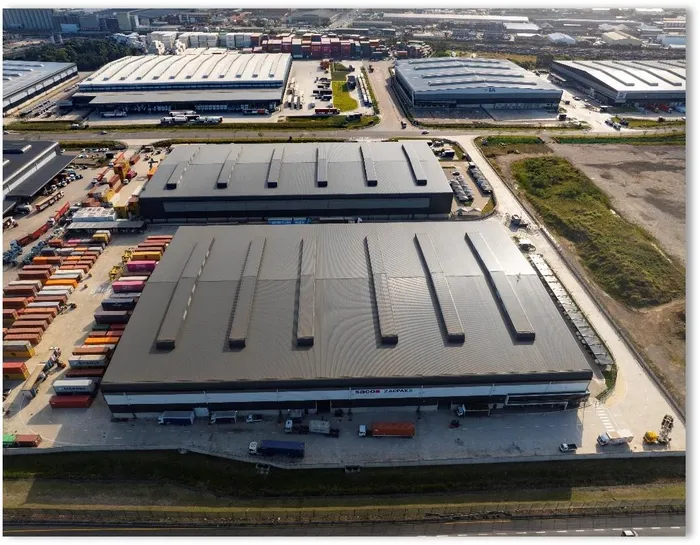
The actual impact impact of the electricity increases is often more severe than expected, particularly for C&I businesses with specific load profiles or peak usage patterns
Image: Supplied
While an 8.8% tariff increase for Eskom-direct customers may sound manageable on paper, for commercial and industrial (C&I) businesses, this will have a significant impact.
The modelling shows that, for a large electricity user consuming around 1 000 000 kWh per month, a 24/7 operation could see its annual electricity costs increase by roughly R2.17 million, based on the estimated consumption for typical consumers in this range, says Brandon Horn, head of Commercial at SolarAfrica.
Last week, Eskom said it implemented the tariff adjustments that will come into effect for the 2026/27 financial year, following the National Energy Regulator of South Africa’s (NERSA) decision of March 5.
NERSA has approved an average electricity price increase of 8.76% for customers supplied directly by Eskom.
Eskom said the new tariffs will apply from April 1, 2026, for Eskom direct customers. It said municipal bulk purchasers will implement their tariff increases, averaging 9.01%, from July 1, 2026, in line with the Municipal Finance Management Act (MFMA), which requires municipalities to implement tariff changes at the start of their financial year.
The energy solutions provider says it is also important to bear in mind that the headline percentage does not tell the full story.
It says the increases are not limited to energy charges alone; businesses are also facing pressure from network, legacy and other structural cost components, which continue to push total bills higher.
“If you break it down further, using the same estimated parameters, peak charges could go up by almost 60c per kWh during high-demand winter months, which means a 24/7 operation could pay an extra R200 000 per month for that period alone.
"This means the actual impact is often more severe than expected, particularly for C&I businesses with specific load profiles or peak usage patterns.”
The industrial warehousing and logistics sector is doing particularly well and is leading the three commercial property categories, according to a recent report by independent economist John Loos.
Industrial property boasts the shortest market turnaround, fuelled primarily by e-commerce growth and supply chain needs.
Consequently, Camilla White, a property agent with Seeff Amanzimtoti, said industrial vacancies in Durban’s core logistics nodes were now at a historic low of around 3.8% (based on a report from Paragon Steel Structures).
This was said to underscore industrial property as a top-performing asset class in the area.
The timing also could not be worse, says Horn, as these tariff increases come into effect alongside a looming fuel price shock, which will feed directly into transport, logistics and input costs.
For many businesses, the head says this creates a compounded cost environment that is difficult to absorb without either raising prices and passing these costs onto the customer or cutting back elsewhere.
“Now more than ever, it is important for businesses to diversify their energy mix, combining on-site solutions like solar and battery storage with virtual options like Wheeling and energy trading.”
The company says relying on a single source of electricity -particularly one with structurally rising costs-is becoming increasingly risky.
“Businesses that diversify their energy supply by incorporating wheeling and virtual wheeling are better positioned to manage cost volatility and build long-term resilience. Just remember to consider the full spectrum of charges and increases - not just the 8.76% - when signing up for these virtual solution agreements.”
Ahead of the 2026 Budget Speech delivered by Finance Minister Enoch Godongwana last month, Inga Ncomanzi, the CEO of the South African Student Accommodation Providers Association (SASAPA), called for some utility relief, citing that rising municipal rates, water and electricity costs are the silent killers of affordability.
The organisation said they were looking for specific subsidies or capped utility rates for accredited student housing to ensure that they were not forced to choose between keeping the lights on and keeping beds affordable.
However, employees face multi-layered financial pressure despite some positivity in the recent budget speech, says Lindiwe Sebesho, Master Reward Specialist and Executive Committee Member at the South African Reward Association (SARA).
She said that many households struggle with debt repayments that consume large portions of take-home pay, rising grocery costs, high interest on bonds and vehicle finance, and escalating utility bills.
“Income insecurity caused by unemployment, slow wage growth, and organisational restructuring adds to the stress.”
Financial pressure is no longer limited to lower-income households, Sebesho notes, citing that banking data shows that many customers across all income levels are either in overdraft or close to empty by payday.
Even higher-income earners are said to be borrowing to sustain themselves and support family members.
In March, South Africans were hit with another fuel price increase driven by geopolitical tensions in the Middle East, says SARA.
It says that from April 1, higher fuel levies will push up the cost of transport and goods. Adding to the pressure, it says Eskom tariffs are set to rise nearly nine per cent, with municipal electricity costs following in July.
Food prices, closely tied to transport and production costs, are also expected to increase, further stretching household budgets.
“For the employee who drives 40km to work each day, these are not abstract realities; they are the difference between making it to work or not,” Sebesho adds.
Independent Media Property