

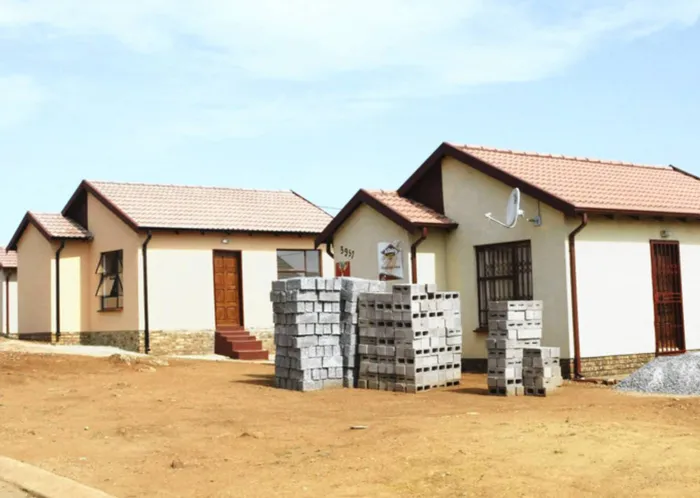
Many potential property buyers are sitting on the sidelines waiting for interest rates to drop.
Image: Simphiwe Mbokazi
South African workers with mortgage loans, or those planning to buy a home through mortgage financing, are facing the rising cost of servicing debt as a more immediate concern.
Dr Roelof Botha, economic advisor to the Optimum Investment Group, said that the real prime overdraft rate, adjusted for inflation, currently stands at 7.2%. This is more than 130% higher than it was in 2014.
According to Botha, monetary policy authorities have prioritised the fight against inflation at a time when South Africa’s construction sector is already struggling to stay afloat.
“The values of building plans approved by most local authorities have declined by more than 50% since interest rates were pushed to their highest levels in 15 years, while total unemployment reached a historic high during the first quarter of 2026,” he said.
The economist said that lower interest rates are needed to address these challenges and stimulate job creation in one of the country’s most labour-intensive sectors, construction.
He adds that involving private sector engineers and project managers in identifying and executing urgent infrastructure and public works projects, particularly road upgrades, could significantly help create jobs while also broadening the tax base.
In a recent LinkedIn post, Gerhard Kotzé, chief executive officer and franchisor at RealNet Properties, said that the latest data from BetterBond confirms that the property market is recovering, though the reality differs depending on location.
According to Kotzé, while the Western Cape continues to attract attention in the luxury property market, Gauteng is leading in terms of yield and transaction volumes.
“Johannesburg South-East recorded a 28.6% increase in home loans over the past year. If you are looking for accessible entry points and consistent demand, this is currently the most active property market in the country,” he said.
For property practitioners, Kotzé said that the market is presenting a contradiction: confidence remains high, but banks have tightened their lending requirements.
He noted that average deposit requirements for first-time buyers increased by 33% in a single quarter and now sit at around 38%.
According to Kotzé, the role of property practitioners has increasingly become one of managing expectations.
“Do not let a seller take their home off the market unless the buyer has proven they can bridge that deposit gap,” he advised.
For first-time buyers, Kotzé said that average home prices reached new highs in April, while many prospective buyers remain on the sidelines waiting for interest rates to decline.
He warned, however, that any future relief on monthly bond repayments could quickly be offset by rising property prices once the market gains stronger momentum.
“They need to realise that any relief on their monthly bond will likely be swallowed by a spike in property prices once the market truly opens up,” he said.
“If you wait for the perfect moment, you risk being permanently outpaced.”
According to him, buying property currently offers better value than building from scratch.
Kotzé said that construction costs, particularly for cement and electrical equipment, are increasing at a faster rate than house prices.
As a result, this creates a natural floor under existing property values because it is becoming more expensive to replicate a home than to purchase one on the open market.
“The bottom line is that waiting for a better economic climate often comes at a price,” he said.
“The most effective strategy right now is to secure the asset and treat ownership as the primary hedge against future inflation.”
Meanwhile, in a pre-repo rate commentary released ahead of next week’s Monetary Policy Committee meeting, BetterBond said that South Africa’s property market is resilient enough to withstand a possible interest rate hike.
The company noted that while the housing market continues to recover, growing inflationary pressure linked to fuel price shocks and global economic uncertainty could prompt a more cautious lending environment.
As a result, BetterBond believes the prime lending rate could increase when the Monetary Policy Committee meets on May 28.
“Although not ideal, enough has been done in recent months to restore investor confidence in the property market,” said Bradd Bendall, national head of sales at BetterBond.
“While ongoing global tensions have raised concerns around inflationary pressures, South Africa’s economic fundamentals remain on a solid footing, and the housing market is likely to withstand an increase in the prime lending rate,” he added.
The possible shift comes after two consecutive decisions to keep the prime lending rate unchanged at 10.25%.
Despite no movement since the last rate cut in November last year, home loan applications have continued to grow steadily, recording a year-on-year increase of 6.2%, according to Bendall.
“Home prices have also reached record levels for both first-time buyers and repeat buyers,” he said.
Bendall added that while a potential interest rate hike may weaken expectations of further financial relief for consumers, underlying demand in the housing market remains supported by continued growth in bond applications and resilience across key regions.
Independent Media Property