

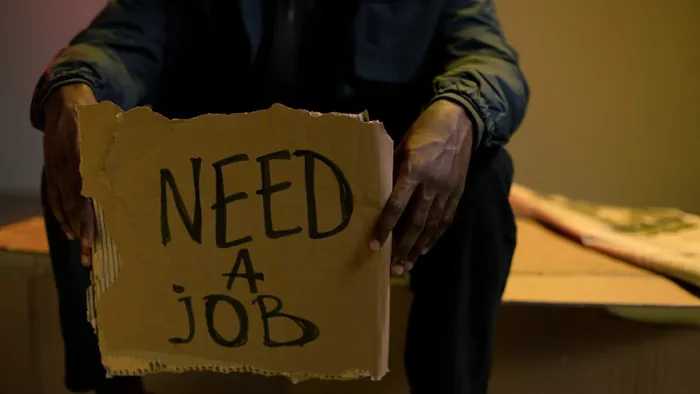
South Africa's youth unemployment rate exceeds 60%, prompting calls for urgent job creation strategies.
Image: Ron Lach/Pexels
South Africa’s youth unemployment is over 60%, the highest unemployment in an emerging market, or outside a country’s civil war or war.
South Africa is suffering from multiple system failures, including societal, economic, democratic, and state failures. A national job creation strategy to provide jobs for youth should use unemployed youth to fix some of these system failures.
This will mean taking a system crisis-resolving-based youth job creation. It will demand a different approach to youth job creation than is currently the case in government, political party and policy debates.
A major challenge of creating employment for South Africa’s youth is that large numbers of youth have not completed schooling. Many unemployed youth who have completed matric have done so without science, technology, engineering, and mathematics (STEM), or technical or economically critical subjects such as economics or accounting.
Some unemployed youth may have completed post-school education, whether at SETAs or TVET colleges, either without technical or critically essential economic-related subjects, or if they have these subjects, the education was of inferior quality. Many unemployed with a university education lack STEM, or critical economic-related subjects.
STEM, technical, vocational, and economically-critical education allows pupils or students to have a broader range of opportunities not only in South Africa, but also globally. Education cannot be a gateway to individual prosperity, unless it is of such a quality that recipients of such education obtain South African skills with which they can compete globally, in both emergency and developed markets.
If a system failure resolving-based youth job creation approach is taken, skills development for marginalised youth will then have to be specially focused to fill the gap of these multiple system failures of society, the economic, democracy and the state.
Social grants to the youth should then be reconceptualised to be used to fund the transfer of skills to young people that help them to be employed in system crisis-resolving employment roles. At a minimum, South Africa’s SETAs and TVETs will also have to be repurposed to provide economically critical technical, STEM, and economically relevant courses. The reconceptualisation of skills development will have been done in partnership with business, which has a better grasp of the real- economy skills needs than many public servants and politicians, who have not worked a single day in the real economy, beyond politics and the state.
How would a system crisis-resolving-based youth job creation strategy look like? South Africa’s infrastructure, whether roads, railways or water provision, is broken, because of state failure, neglect, mismanagement, corruption, and vandalism. Unemployed youth could be used to rebuild collapsing state infrastructure across the country.
Young people can be used to clean public infrastructure across the country: roads, rail networks, power and water infrastructure, networks, and systems. Unemployed youth can also be trained to clean and take care of public parks, grounds, and schools. In failing state hospitals, young people can be used to be care assistants, maintaining equipment, providing cleaning and even security.
Public infrastructure, assets, and buildings are regularly destroyed by vandalism, as state security failure, democratic institutional and oversight agency failure, and rules breaking and corruption by protected political leaders has led to wider lawlessness, breakdown of rule and law, corruption, and vandalism.
During public protests against public service delivery failures, corruption and incompetence, many angry citizens often destroy public assets in anger. Unemployed youth could be used to educate peers in how to express their anger in more democratically healthy ways.
South Africa is suffering from massive pollution of rivers, dams, and open spaces. Young people could be trained and employed in mass cleaning of rivers, dams, and open spaces – and maintain these.
Social enterprises – community based social businesses should become more critical to deliver public services, community development services, and manufacturing products. Already larger social enterprises provide educational services, are involved in social services such as anti-drug campaigns or community safety campaigns.
Employment can be fostered for unemployed in the efforts to strengthen South Africa’s democracy, democratic institutions, and democratic culture, and to market the Constitution.
The Constitution itself, the values of the Constitution, are not known by many ordinary citizens – that is why many citizens can belief political opportunists who blame the Constitution for state failure, corruption, and lawlessness, which is caused by incompetent and corrupt leaders, and ideological, populist, and non-sensical policies.
South Africa’s has competing governance systems to the Constitution, which rules many individuals’ everyday behaviour. These competing governance systems include patriarchy, customary law, gang law, township communal ‘laws’ and the ANC’s party ‘laws.’
Unemployed youth can be trained to become democratic values educators. They can be trained to provide democratic civic education, popularising the Constitution, democratic values and non-racialism, racial inclusiveness, ethnic and colour inclusiveness, and gender equality.
Many voters currently vote for politicians based on the past, not on present performance; or based on shared colour, ethnicity or slogan-shouting, or outdated ideologies and populism or ‘enemy’ blaming. Many voters also stay away from voting when the parties and leaders they voted for do not deliver.
There is not a wide recognition among voters that they can vote for parties they do not have ideologically, colour or ethnic affinity, but to hold their own preferred parties accountable or to secure better service delivery. Many ordinary voters do often understand how to hold their leaders and parties accountable between elections.
Unemployed youth democratic civic educators can run public education campaigns across the country to educate citizens on the value of conscious voting, on ways for citizens to hold political leaders, parties, and civil servants accountable between elections.
South Africa’s democracy lacks the mass monitoring by citizens and civil society organisations of public service delivery. Citizens and civil society often only protests when public service delivery fails damagingly.
Unemployed youth can be organised to monitor service delivery by national, provincial, and local government departments, state-owned entities, and agencies.
Many countries, have civil society-based organisations and movements that monitor delivery by government departments, such as Home Affairs. In South Africa, government departments monitor themselves, and reward themselves, even if they fail to deliver public services.
South Africa is experiencing partial social failure. Drug abuse, gangsterism, violent and anti-social behaviour are rampant. Youth can be employed to run youth-led campaigns to educate fellow youth in alternative paths to drug abuse, gangsterism and anti-social behaviour.
Climate change is increasingly causing deadly natural disasters in South Africa. A disaster brigade, consisting of unemployed youth could be established to be the first responders to disasters in local communities.
How will this mass youth capacity building of unemployed youth be funded or who will be doing the mass training? Corporates and civil society organisations should be involved in the training of unemployed youth.
Black economic empowerment (BEE) and corporate social responsibility (CSR) programs, both currently largely ineffective, should be remodelled to include companies providing funding or skills training for unemployed youth to be employed to repair societal, economic, democracy and state failure. Corporate funding to training, could be channelled to train unemployed youth for employment to overcome state, society, and democracy failures.
Finally, private companies, as an alternative to BEE, could contribute to an independent public fund to support a system crisis-resolving-based youth job creation strategy. Such a fund could be managed by business and civil society – excluding the state or politicians in appointments or management.
Repairing South Africa’s societal, economic, democracy and state failure, by training and employing youth as the fixers, should be seen as an essential youth job-creation strategy.
* Gumede is Associate Professor, School of Governance, University of the Witwatersrand. He is the former Chairperson of ActionAid.