

You may qualify for a reprieve from legal action if you have applied for debt counselling but your application has not been finalised. You may qualify for a reprieve from legal action if you have applied for debt counselling but your application has not been finalised.
The National Credit Regulator (NCR) hopes that the debt counselling process will function more smoothly in future after credit providers recently signed a code of conduct in which they agree to change how they handle debt restructuring arrangements and to hold off on legal action under certain circumstances.
Credit providers, which include the major banks – Absa, First Rand (First National Bank and WesBank), Nedbank and Standard Bank – started to implement the code of conduct in December last year.
The code states that creditors will implement the repayment arrangements of any debt restructuring plans where debt counsellors have complied with all the legal and regulatory requirements in drawing up the plans. Creditors are also bound by the code to refrain from terminating debt review processes or resorting to litigation where consumers have applied for debt counselling and/or lodged a dispute with an ombudsman.
Peter Setou, the senior manager of education and strategy at the NCR, says the regulator believes the code of conduct will go a long way towards creating a situation in which more consumers who are undergoing debt counselling reach an agreement with their creditors about a repayment plan and do have to resort to court orders.
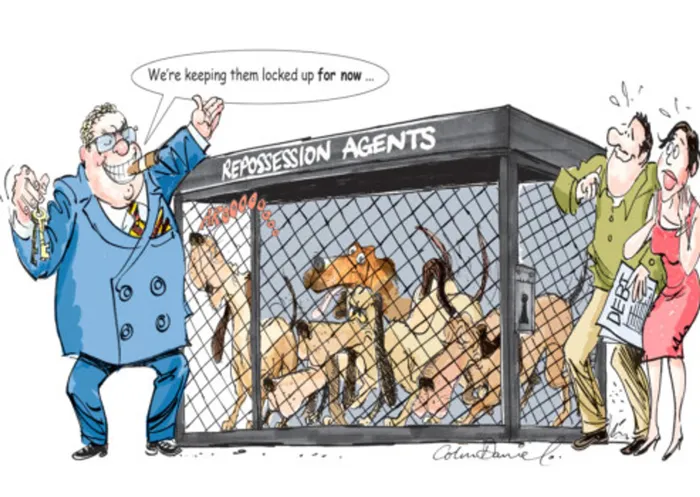
Creditors also agreed to institute a seven-month moratorium, from November 30 last year to June 30 this year, on legal action in respect of bank debts, including mortgage bonds and vehicle finance, for overindebted consumers who applied for debt counselling before November 30 but who have not yet started the debt counselling process.
The moratorium applies to consumers who have not reached an agreement with their creditors about a repayment plan or who are still waiting for their court cases to be heard.
Setou says that in a few cases the High Court’s interpretation of the National Credit Act (NCA) has differed from that of the NCR.
“In such instances there has been the view that a debt counselling court order or consent agreement must be finalised within 60 days of the consumer applying for debt counselling. Some credit providers have taken advantage of this and chosen to pursue legal action after two months of the consumer’s debt counselling application, on the basis that the matter is unresolved,” he says. The NCR believes this is unreasonable, because in some cases consumers have to wait six months for a court hearing, Setou says.
According to the NCR, more than 200 000 consumers had applied for a debt review by December last year. Of these, about 20 000 cases were resolved through court orders, while a further 26 000 cases are still on the court roll and have not been heard yet.
“We are going to make legislative amendments to the NCA to make it clear that consumers cannot be subject to legal action once they have applied for debt counselling. However, as this process may take some time, the NCR has also applied to the Johannesburg High Court for a declaratory order on this matter,” Setou says.
The moratorium is intended to ensure that people whose debt counselling cases are on the court roll do not lose their homes while they wait for their counselling applications to be finalised through either a consent agreement with their creditors or a court order.
The moratorium applies only to credit agreements with the four major banks and if you meet the following requirements:
* By November 30 last year you had already applied for debt counselling and your case has not yet been resolved; and
* You are repaying your debt. If you are not already doing so, by March 31 this year you must be meeting at least 80 percent of your monthly home loan instalment, 70 percent of your monthly vehicle finance instalment and 1.67 percent of the total balance outstanding in respect of any other debt to the bank.
First National Bank (FNB) clients must meet a further condition: they must be paying a minimum of 50 percent of their debt instalments with FNB.
If between now and March 31 you reduce the debt repayments you are making, you will not qualify for the moratorium, which means a bank will be able to take legal action against you. For example, if you are paying 100 percent of your instalment and you decrease it to 80 percent, you will be disqualified.
The moratorium is aimed at people who cannot meet their monthly repayments. If you are meeting your monthly repayments in full, the banks expect you to continue to do so, unless you make another arrangement with your bank.
If you meet all the conditions of the agreement between the NCR and the banks and you qualify for the moratorium, you will be allowed until June 30 to finalise your debt counselling through either a consent agreement or a court order.
HOW DEBT COUNSELLING WORKS
If you suspect that you are overindebted or find that your expenses exceed your income, you can apply to a debt counsellor for debt counselling.
The debt counsellor will assess your financial situation. If he or she concludes that you are in fact overindebted, the counsellor will draw up a repayment plan.
The debt counsellor must notify all your creditors within five days of your application that you are undergoing debt counselling.
In terms of the National Credit Act, creditors may not charge you further interest once the interest and other charges on your debt reach the same level as the outstanding capital amount, regardless of any repayments you make. Previously, if you made a payment towards your debt and, as a result, the amount of unpaid interest fell below the amount of the outstanding capital, a creditor could again charge you interest until the amount of unpaid interest equalled the outstanding capital.
If you and your creditors agree to the repayment plan, your debt counsellor will present the plan to the National Consumer Tribunal for approval. If any of your creditors disagrees with the plan, the counsellor has to refer the matter to the magistrate’s court that has jurisdiction over the area in which you live for an order to restructure your debts. The magistrate will make a ruling after hearing representations from all parties.
The magistrate can:
* Declare one or more of the credit agreements to be reckless and suspend them and/or re-arrange the remaining repayments;
* Reject your application; or
* Order that a revised repayment plan be drawn up.
In order for a credit agreement to be declared reckless, you must be able to prove that you could not afford the credit at the time it was granted and that the credit provider did not take reasonable steps to determine your financial situation or did not check your affordability before granting you the credit.
If you are undergoing debt counselling, it is noted on your credit record and you will not be able to access further credit.
DEEPER SHADE OF RED
R1.05 trillion: that is how much consumers owed the country’s banks at the end of September last year.
Consumers’ total outstanding debt, which includes money owed to retailers, stood at R1.17 trillion by September last year, according to the most recent consumer credit market report released by the National Credit Regulator in December last year.
The number of credit applications received by registered credit providers increased by 5.1 percent, from 6.54 million in June to 6.87 million in September last year. This was an increase of 18.22 percent from the same period in 2009.
Of the total credit applications to all registered credit providers, the proportion of rejected applications decreased from 40.26 percent for the quarter to the end of June last year to 39.1 percent for the quarter to the end of September last year.
Credit cards, store cards and bank overdrafts were the main drivers of credit facilities. Of the R8.81 billion granted in credit facilities for the quarter to September last year, credit cards and store cards alone amounted to R5.95 billion.
The total value of new credit granted to consumers increased from R67.55 billion for the quarter ended June 2010 to R75.14 billion for the quarter ended September 2010, an increase of 11.23 percent when compared with the previous quarter and 40.23 percent higher than the total credit granted to consumers a year previously.
FIND OUT IF YOU QUALIFY
You can contact your bank directly to find out if you qualify for the moratorium or to suspend any termination and enforcement actions that may already be under way. You can use the following contact numbers:
* Absa – 0861 005 901;
* First National Bank – 0860 111 005;
* Nedbank – 0860 109 279;
* Standard Bank – 0860 439 770; and
* WesBank – 0861 288 272.