

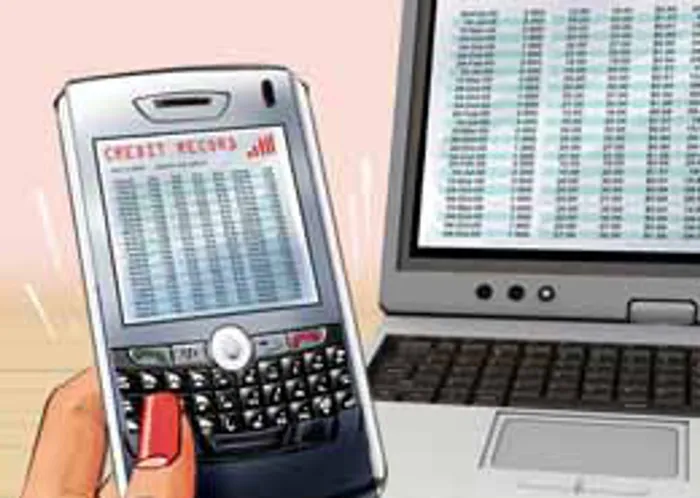
Check your credit rating online. Check your credit rating online.
Credit bureaus collect information about how some 18 million of we credit users pay our accounts. Credit providers, in turn, use this information to determine whether to lend you money or allow you to buy on credit.
To help ensure there is no abuse of the information collected, the National Credit Act (NCA) requires each credit bureau to provide you with one free credit report each year. This allows you to check the accuracy of the report and challenge any inaccurate information about your paying abilities.
It is no use checking your profile only when you are in the midst of trying to buy a home or car, or while applying for a job. It takes time to sort out disputes over incorrect information and in the meantime you may lose the house, car or job.
Although the number of us who ask to see just what information the bureaus have on us is increasing, still relatively few of us do. According to the National Credit Regulator (NCR), just over 253 000 people requested their credit reports in the year to the end of March. This, according to the regulator’s report, is despite the fact that some 46 percent of the more than 18 million credit users in South Africa have impaired credit records – records with some kind of adverse information listed.
Your report can record a variety of credit information for different periods of time. For example, any credit provided to you in the past five years; details of whether you paid any accounts late; whether you have defaulted on payments within the past year; any civil judgments against you in the past five years; and whether you are undergoing debt counselling or are in debt administration.
Some, but not all, credit reports show a credit score that gives an indication of how good you are at repaying debt. None of them will reflect how much you can borrow. This is something the credit provider must assess, based on your earnings, expenses and debt repayments at the time you apply for credit.
Manie van Schalkwyk, the Credit Ombud, says it is very important that you check your credit record regularly to identify information that has been listed incorrectly or unfairly.
He says there are 10 credit bureaus in South Africa, and although they obtain information from different credit providers, if you check your credit reports with the four largest bureaus, you are likely to have reviewed all the information provided by credit providers to the bureaus.
Most bureaus have call centres to fulfil their obligation to provide you with your credit report.
If, like me, you have an aversion to call centres, you may be interested to know what the biggest bureaus offer in easy web or cellphone access to your free report.
TransUnion (which was formerly called ITC and is still often referred to as such) offers an easy online process through its website, www.transunion.co.za. There is a fairly obvious link on the home page that offers access to your credit report.
TransUnion has a menu of credit report and other products, but among them you will find the one for the free credit report.
You will need to supply your personal information, such as your name, identity number, address and contact details. Next, choose a username, password, and a security question and answer.
You will also be asked some questions aimed at verifying that you are who you say you are. If you can answer these accurately, you should then be sent an email containing a one-time personal identification number (PIN), which you need to input online to get the report. The report is made available online and emailed to you.
I received my report within half-an-hour of visiting TransUnion’s website, but TransUnion’s consumer marketing manager, Tertia van Rooyen, says you
may not be able to obtain a report instantly online if you do not have credit and TransUnion does not have you on its database.
She says credit users who do not have a South African identity number will also not be able to get the report online, although TransUnion is working on resolving this problem.
My TransUnion credit report showed the information under clear headings and with a two-year his-tory of each monthly payment on my accounts. Some information was questionable: for example, accounts from 2008 were shown as new ones, whereas later-dated accounts were shown as paid.
TransUnion’s site also offers further reports that you can purchase, including one with continuous access to your report and notifications of major changes in your report for R20 a month or R200 once off. This could be valuable if you have been a victim of identity fraud and need to monitor whether anyone opens accounts in your name.
Another large credit bureau, Xpert Decision Systems (XDS), offers access to your credit report from an internet-enabled cellphone. You need to SMS the word “free” to 37996 at a cost of R1.50. Within a minute, I received an SMS containing XDS’s mobile phone website. Here, you need to register with your name, identity number, cellphone number and a password. Then you need to answer questions about which accounts you have and your outstanding
credit balances. This authentication process enables XDS to confirm that you are who you say you are.
Within a few minutes, you could have your XDS credit report on your phone. This report gives you a credit score and states if it is good, average or poor.
It records whether you own property; how many accounts you have of each type – for example, retail, credit card, bank, and so on; your outstanding debt and your monthly repayments; whether any accounts are in default or arrears for more than three months; and notes if there are any judgments against you or if you are undergoing debt counselling.
Another large credit bureau, Experian, also appears to offer access to your credit report from its website (www.experian.co.za).
An online registration process requires you to submit your name, identity number, contact details, to answer personal and account questions, and to choose a username and password. However, the process then goes offline, as the website instructs you to fax or email your identity document and proof of your address.
Marj Murray, Experian’s communication manager, says Experian hopes to have an online verification process like that of TransUnion and XDS within the next 12 months.
I scanned and emailed the documents required, and some five hours later I was informed that my report was available to me. By then I had forgotten my login, password and PIN and had to retrieve those by answering some online questions. When I finally received the report, it was clear and contained a two-year history of each monthly payment on some of my accounts – accurate but with some data not supplied.
The fourth large local credit bureau, Compuscan (www.compuscan.co.za), has a “Consumer help” section on its website. Following the “Obtaining your free credit report link”, however, takes you to a page that instructs you to telephone Compuscan’s call centre or email it at ccc@compuscan.co.za. Emailing this address elicits a reply containing a document that you need to print out and complete and return by fax or scan and email to Compuscan. With this document, you need to send your identity document and proof of residence.
Within 15 minutes of sending my documents by fax, I had my credit report. It was rather user-unfriendly and a little out of date. However, there was no incorrect adverse information.
Hopefully, you can also easily access your credit reports, which are an accurate reflection of your account-paying activities. But if your report is inaccurate, take a little comfort in the fact that many other people find this is the case too.
For the year to the end of March, the NCR records that there were about 40 620 disputes, of which some 23 477 were resolved in favour of consumers.
The Credit Ombud’s annual report for 2009 records 52 188 disputes for that year, and 1 586 were escalated to the ombud’s office. Of these cases, 65 percent were resolved in favour of consumers, the Credit Ombud’s annual report states.
The process for addressing disputes about information credit bureaus hold about you is governed by the NCA. You first have to contact the credit bureau concerned. For this purpose, some of the bureaus have links on their websites to allow you to send an email challenging the information on your report, but others expect you to telephone the call centre.
Van Schalkwyk says that when you dispute information a credit bureau has about your account payments or credit profile, it has to give you a reference number and record on your report that the information is disputed. The bureau then has 20 days to investigate the information and confirm it or remove it from your credit report. If the matter is not resolved satisfactorily, you can lodge a complaint with the Credit Ombud, who can take up disputes with credit bureaus or credit providers.
To lodge a complaint with the Credit Ombud, you can fill in an online complaint form on the Credit Ombud’s website at www.creditombud.org.za. Look for the “Complaint form” link.
Finally, put a reminder on your calendar to ensure you obtain an updated credit report in a year’s time. Perhaps by then more bureaus will offer simple online access to their reports on you.
This article was first published in the 4th quarter 2010 edition of Personal Finance magazine.