

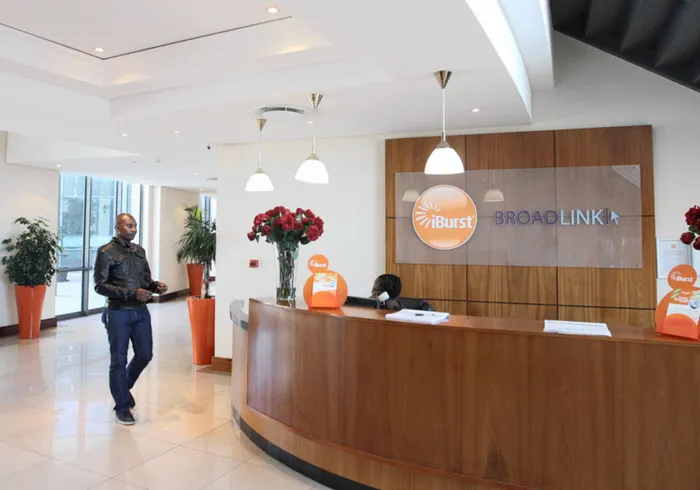
050413 iBurst offices:ICASA’s Seal and Seizure of WBS Radio-Communication Equipment.photo by Simphiwe Mbokazi 453 050413 iBurst offices:ICASA’s Seal and Seizure of WBS Radio-Communication Equipment.photo by Simphiwe Mbokazi 453
Wireless Business Solutions (WBS) secured an interim interdict in the South Gauteng High Court late on Friday afternoon to have its equipment returned with immediate effect.
The urgent action restored internet access to subscribers of Broadlink and iBurst, which are subsidiaries of WBS and service large blue chip corporates, including MTN and Anglo American.
The services were cut off on Wednesday when WBS’s Gallo Manor offices were raided by the Independent Communications Authority of South Africa (Icasa) in a dispute over unpaid spectrum licence fees.
The company will now resume business but this week Icasa will be working on squeezing payment of outstanding spectrum licence fees from the telecoms firm.
Thami Mtshali, the WBS chairman, said the business would continue negotiations on a settlement.
The action shut down large parts of the Gauteng network for Broadlink and iBurst.
Icasa said on Friday that it had sealed and seized radio communications equipment at six WBS sites in Gauteng, adding that the action was part of a “hard-line approach” to non-compliance by electronic communication, broadcast and postal licensees that were not paying their spectrum fees.
“As a result, Icasa inspectors commenced with investigations that led to the crackdown on WBS,” the regulator said.
Mtshali said: “Nobody says we don’t want to pay. The issue is how much is it and what is the payment plan.
“When the spectrum licence fees regime changed, some operators started owing billions of rands. It brought about huge licence fees overnight.
“We took a decision that we will owe them from two years ago not based on the new regulations.”
He would not reveal the amount in dispute, saying the matter was confidential.
Mtshali denied allegations that WBS operated illegal microwave links, which it failed to declare to Icasa.
He said that, at the most, WBS held 1 500 links, for which it paid R27 million.
The raid had cost the company between R60m and R100m in lost revenue, and some clients could demand compensation because of the breach of service-level agreements as a result of the raid.
“We want our customers to be rest assured that this will never happen again. There will be no mafia-style that has just happened.”
Mtshali said the court ruled that Icasa would have to notify the company of future inspections and the matter would first have to be debated in court.
Icasa spokesman Jubie Matlou said: “It’s an interim relief. It doesn’t mean we will stop pursuing them. It will give us more time to work on the case.”
Some industry commentators said that Icasa’s urge to collect the fees was influenced by less-than-positive results from the auditor-general, Terence Nombembe.
He found that Icasa missed 56 percent of its planned targets during the 2011/12 financial year.
Poor invoicing and collection of unpaid spectrum licence fees from entities including the SANDF and the SAPS were among the sore points.
Nombembe gave the regulator its third qualified audit.
The impasse between WBS and Icasa appears to pre-date the implementation in April last year of new spectrum licence fee regulations, which did away with a fixed annual price of R770 per megahertz per link.
The new model acknowledges the different uses of spectrum, and costs for spectrum users were expected to drop significantly as a result.
In February last year My Broadband reported that a row over spectrum fees was brewing between the regulator and WBS as the company operated about 1 000 unlicensed links, which it had not declared.
WBS allegedly owed more than R20m in unpaid fees.
Dominic Cull, the regulatory adviser to the Internet Service Provider’s Association (Ispa), of which iBurst is a member, said: “I would think the licence fees regulations suited WBS.”
Cull said Ispa had “no greater knowledge” of the dispute between WBS and the regulator, but he did not believe the specific matter between the parties was an industry-wide issue. He did add that there were other licensees in arrears.