
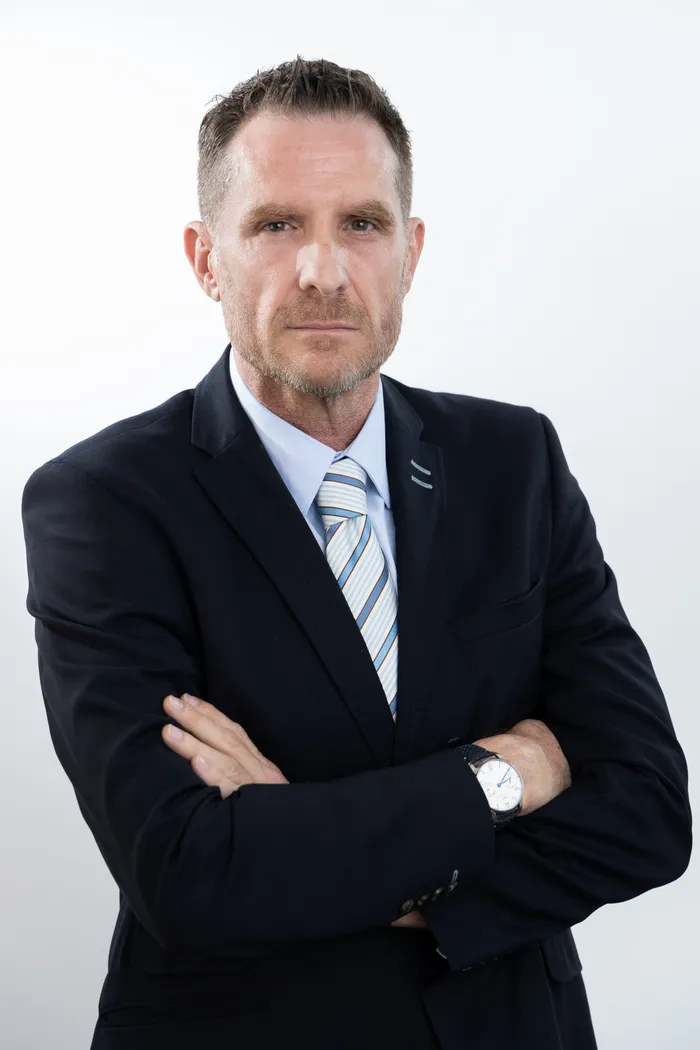
Fairvest CEO Darren Wilder.
Image: Supplied
Fairvest has exceeded its annual guidance, reporting 11.2% growth in its distributions per B share after strong rental income growth and lower vacancies - the distribution growth is certainly at the top end of growth among South Africa's REIT's, at this time.
In financial results for the year to September 30, the largest South Africa focused property fund on the JSE reported 11.2% growth in distribution per B share to 48.15 cents, exceeding the guidance of between 8% and 10%. The distribution per A share came to 142.57 cents. A 100% payout ratio was maintained.
CEO Darren Wilder said in an interview the results demonstrate "disciplined execution of a clear strategy, coupled with a strong operating platform that will continue to deliver growth in the future." The results of strategies adopted put in place three years ago were now bearing fruit, he said.
Vacancies reduced to 4.1% from 4.3% and like-for-like net property income growth came to 5.8%. Positive rental reversions improved to 4.8% from 3.6%. Letting activity involved 537 new deals and 504 renewals, for an overall tenant retention rate of 83%. The average lease escalation held steady at 6.7%, while the average lease term extended to 30.1 months.
Capital expenditure of R288.9m included R33.8m for further solar initiatives. Property expenses growth was limited to 2.6%, despite above-inflation municipal cost increases. Fairvest received an R123.3m dividend from its 23.6% stake in Dipula Properties.
Fairvest acquired seven retail properties, valued at R1.15bn. Thembalethu Square, Shoprite Manguzi, Ulundi Shopping Centre, and Nquthu Shopping Centre, while Eyethu Junction, Jozini Mall, and Tugela Ferry Mall are expected to transfer in the new financial year.
Three disposals of industrial and office assets valued at R99m were concluded. Two have transferred and one is expected to transfer in January 2026.
The transactions are aligned with Fairvest's strategy to create a retail-only fund focused on non-metropolitan retail assets situated near commuter nodes and transport interchanges, with strong national anchors that cater to previously underserviced markets throughout South Africa.
It aims to achieve this by improving the quality of and recycling non-core assets. Retail assets already represent close to 71% of Fairvest's revenue and value, with offices and industrial assets comprising the remainder.
This strategy would continue, on a disciplined basis, and the group held a "strong pipeline" of further potential retail acquisitions, said Wilder.
Fairvest is a market leader in the REIT sector in integrating digital infrastructure assets with traditional retail property assets. Some R477m has been invested in a subsidiary, Onepath Investments, which acquires fibre infrastructure in townships. This infrastructure is leased to a fibre network operator to supply high-quality internet to township homes and communities.
Digital inclusion for underserviced communities opens up opportunities in education, employment, entrepreneurship, and entertainment, helping these communities thrive and grow, said Wilder.This not only strengthens Fairvest's core retail market but also gives the company access to data, insights, and new retail opportunities within its existing portfolio.
The rental income also provides an accretive dividend yield for Fairvest, exceeding 12% of invested capital. At year-end, the loan-to-value (LTV) ratio was 25.6%, down from 33.3% last year. The ratio remains comfortably below the LTV covenant limit of 50%. As of September 30,, Fairvest had about R1.3bn in cash and available undrawn debt facilities.
"The group starts 2025 strong, supported by solid performance and strategy execution. Portfolio fundamentals are stable with low vacancies, better tenant quality, and strong like-for-like net property income growth across sectors. Electricity grid improvements, easing inflation, and moderating interest rates have boosted operating conditions," said Wilder. Municipal service issues and the broader macroeconomic environment however remained risk factors.
"We continue to transition towards retail, with a commitment to entering acquisitions and disposals only at the right price," he said.
Questioned on how their retail tenants are trading at present, Wilder said they continue to trade well and distributable earnings per B share for the new financial year is expected to rise by between 9%-11% in 2026, with A share dividends growing by the lesser of 5% or CPI.
BUSINESS REPORT