

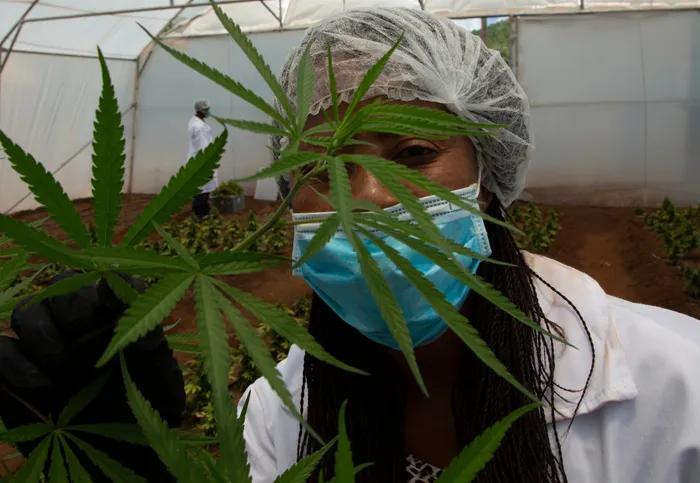
One of the most notable updates, and likely to attract significant commercial interest, is the revised legal definition allowing for the cultivation of Cannabis sativa L. (hemp) varieties with up to 2% THC.
Image: (AP Photo/Denis Farrell)
South Africa’s agricultural sector entered a new regulatory era this week as the Department of Agriculture officially brought the Plant Improvement Act of 2018 and its corresponding regulations into operation from Monday, 1 December 2025.
The long-awaited implementation, signed into effect by President Cyril Ramaphosa following approval by Agriculture Minister John Steenhuisen, replaces the nearly five-decade-old Plant Improvement Act of 1976.
Published in Government Gazette No. 53707 on 21 November, the new Act introduces a modernised framework for the production, certification, trade and quality control of seeds and propagating material in the country.
It establishes new systems for registering plant-related businesses and their premises, enforces quality standards for plants intended for cultivation and sale, and strengthens oversight of import and export activities.
A key feature of the legislation is the creation of a National Listing system for plant varieties, supported by a newly established National Varietal List Journal.
The framework allows for the evaluation of new plant varieties to determine their value for cultivation and use, and introduces a formal process for lodging and hearing objections to varietal listings.
One of the most notable updates, and likely to attract significant commercial interest, is the revised legal definition allowing for the cultivation of Cannabis sativa L. (hemp) varieties with up to 2% THC.
This is a substantial shift from the previous limit of 0.2% THC, opening the door for expanded industrial hemp production and the development of a broader range of value-added products.
The department said the Act provides a stronger legal foundation for ensuring that plant material traded in South Africa is “true-to-type” and of high quality, a critical pillar for the country’s food security and agricultural competitiveness.
The new regulations also introduce an advisory committee empowered to guide the Registrar on technical matters arising from the administration of the Act.
Industry players are expected to watch closely as the new regulatory environment settles, particularly in relation to certification schemes and the potential growth of South Africa’s industrial hemp industry.
The department confirmed that the full regulations and supporting documents are now available on its website.
BUSINESS REPORT