

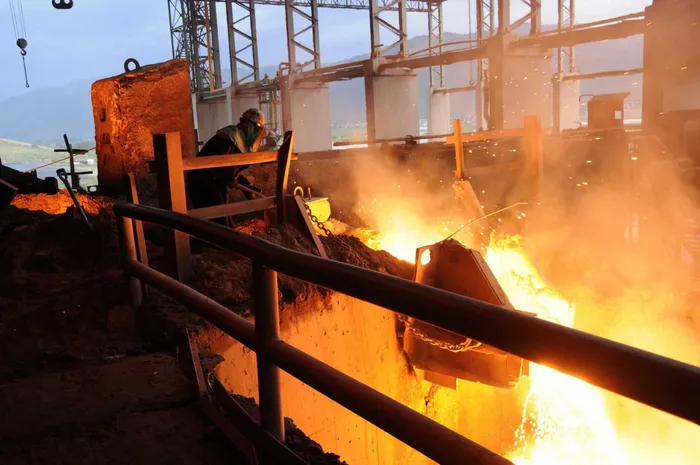
The Minerals Council South Africa says high power prices, combined with logistical inefficiencies at ports and rail, have left smelters uncompetitive, even though transport conditions have marginally improved in recent months.
Image: Supplied
South Africa’s chrome mining sector has pushed back against government plans to impose a tax on chrome ore exports, arguing that the decline of the domestic ferrochrome industry is the result of crippling electricity tariffs rather than ore availability or pricing.
The Glencore-Merafe JV ferrochrome smelter has started retrenchments while Samancor Chrome could also close down.
The Minerals Council South Africa says high power prices, combined with logistical inefficiencies at ports and rail, have left smelters uncompetitive, even though transport conditions have marginally improved in recent months.
Chrome miners face a government tax on chrome ore exports. In October, Cabinet made decisions aimed at reviving South Africa’s chrome industry and invited comments for on a proposal to “place chrome ore under export control by the International Trade Administration Commission” of South Africa.
“This and other interventions are designed to improve the long-term viability and competitiveness of the chrome value chain in the Republic of South Africa,” argued the government.
However, South African chrome ore producers, including primary miners and those generating chrome ore from their platinum group metals mines and integrated producers, are opposed to this proposed taxation on chrome ore exports.
They argue that “any interventions in addition to an electricity tariff adjustment must be balanced, equitable and supportive of the competitiveness of both chrome mining and ferrochrome” beneficiation.
“Both groups are clear that the price and availability of chrome ore is not the cause of South Africa’s ferrochrome smelter closures or suspensions,” said the Minerals Council this week, a mining industry employers' organisation.
“Instead, the over 900% increase in electricity tariffs since 2008 has rendered domestic smelters uncompetitive and unprofitable.”
It said the chrome and ferrochrome industry in SA was committed to adding value to South Africa’s mineral endowment, and to supporting domestic manufacturers.
The chrome industry players also argued that “no trade measures, including a chrome ore export tax or quotas, will restore meaningful viability to the country’s ferroalloy smelters” without addressing the electricity tariff that is burdening the industry.
“Both miners and smelters, therefore, reject recently mooted calls for an export tax or restrictions, as these would harm chrome ore producers without materially assisting smelter recovery,” said the Council.
“The solution for restarting ferrochrome, silicon and manganese smelters is clear: the sustainable provision of electricity at globally competitive tariffs, not measures that disadvantage non-integrated chrome, manganese and silica producers.”
Glencore and Samancor Chrome have advanced a proposed solution that does not involve a government subsidy. The proposal by the ferrochrome smelters spearheads the acquisition of renewable energy as a longer-term solution, although this is likely to be a long term solution on the implementation front.
Nonetheless, the proposed solution would help reduce reliance on Eskom and position South Africa’s ferroalloy producers to minimise exposure to Carbon Border Adjustment Mechanism (CBAM) penalties.
Additional measures that could support ferroalloy production include a reduction or temporary suspension of the domestic carbon tax applied to smelters.
Chrome and ferrochrome industry players have also undertaken to help eradicate illegal chrome mining, which generates an estimated R8 billion per year and accounts for roughly 10% of South Africa’s chrome ore exports.
However, this required policy and legal interventions on the part of the government through enhanced border controls and stricter, consistently enforced regulations.
Moreover, the Minerals Council and other players in the chrome industry have proposed joint development of beneficiation roadmap.
This would be hinged on contributions from stakeholders, including government, on promoting and growing industrialisation, factoring in incentives and creating a conducive regulatory environment that “encourages and sustains investment in exploration” and mine development.
BUSINESS REPORT