
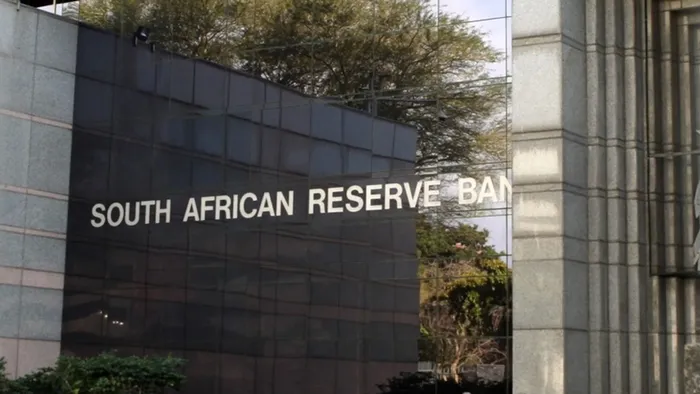
Sarb deputy governor Dr Rashad Cassimsaid a formal pre-cessation announcement, expected imminently, will trigger fallback clauses in existing contracts and crystallise credit adjustment spreads. Although the spreads will be locked in now, they will only apply after Jibar ceases at the end of 2026.
Image: File
South Africa’s move to modernise its interest rate benchmarks has entered its most decisive stretch yet, with South African Reserve Bank (Sarb) announcing that the industry is now “barely a year away” from the final discontinuation of the Johannesburg Interbank Average Rate (Jibar).
Jibar is the money market rate that is used in South Africa for short-term loans and instruments, and has long served as a benchmark to determine the pricing of financial instruments such as loans, bonds, and derivatives.
Jibar will cease to be published and will immediately become non-representative after 31 December 2026, a date the Sarb has repeatedly communicated. The transition will shift South Africa’s benchmark rate system to South African Rand Overnight Index Average (ZARONIA).
Speaking at the Market Practitioners Group (MPG) Conference in Sandton on Wednesday, Sarb deputy governor Dr Rashad Cassim said the eight-year reform process was approaching its end, with no signs of division among stakeholders.
Cassim noted “significant progress” in adoption since the launch of the ZARONIA First initiative seven months ago, with market exposures rising in the early months.
"Since then, we have noted a significant increase in the adoption of ZARONIA, from R6.4 billion to over R200bn in the initial months. Of course, Jibar exposures remain much larger," Cassim said.
"Earlier this year, the MPG officially adopted methods for determining credit adjustment spreads and recommended Jibar fallback rates based on compounded ZARONIA rates."
Cassim said a formal pre-cessation announcement, expected imminently, will trigger fallback clauses in existing contracts and crystallise credit adjustment spreads. Although the spreads will be locked in now, they will only apply after Jibar ceases at the end of 2026.
He announced that the Sarb and the Financial Sector Conduct Authority (FSCA) plan to introduce regulations by the second quarter of 2026 that will limit the creation of new Jibar-linked contracts, a key step to prevent the stock of legacy contracts from expanding just months before discontinuation.
"We are already encouraging market participants to use ZARONIA instead of Jibar in contracts, but around the second quarter of next year, we plan – along with the FSCA – to issue regulations limiting new Jibar exposures. Our aim is to stop increasing the stock of contracts that will need to be transitioned off Jibar," Cassim said.
"After that, we will reach the major milestone of Jibar cessation. All Jibar tenors will cease to be provided or be representative immediately after this date. We are aware that the pre-cessation announcement will trigger certain contractual provisions for the calculation and future application of fallbacks.
"We expect credit adjustment spread calculations to crystalise today. However, these spreads will not be applied until after 31 December 2026, as the Jibar rates are expected to remain representative until that point."
Cassim reiterated that the most persistent concern raised by industry participants is the treatment of “tough legacy” contracts that cannot be amended before the rate is discontinued.
To address this, the Sarb and FSCA have proposed amendments to the Financial Sector Regulation (FSR) Act, empowering the central bank to designate replacement benchmarks and determine the necessary adjustment spreads.
"These amendments will give the Sarb powers to designate replacement benchmarks for discontinued rates and determine adjustment spreads for moving contracts from one benchmark to another," he said.
"We may need a synthetic Jibar, similar to synthetic Libor ‒ the London Interbank Offered Rate ‒ for dealing with some tough legacy contracts, but overall, we want to put Jibar behind us. In the UK, authorities used synthetic Libor to reduce disruptions in markets where converting certain outstanding legacy contracts to alternative reference rates was not feasible. However, this was a temporary solution."
Cassim also updated the industry on plans to develop a forward-looking term ZARONIA rate.
While the Sarb maintains that compounded-in-arrears rates remain the most appropriate for most markets, he said work is underway to appoint a benchmark administrator capable of publishing a term ZARONIA rate by April 2026.
He encouraged market participants to avoid delaying their transition in anticipation of the term rate: “Start building liquidity in ZARONIA-linked products now.”
Cassim said the transition marks a major transformation of South Africa’s financial market infrastructure and urged collaboration over the coming year.
"We are now close to a milestone event where Jibar falls away and ZARONIA takes over. Operationalising new benchmark rates will be a major achievement,"he said.
BUSINESS REPORT