

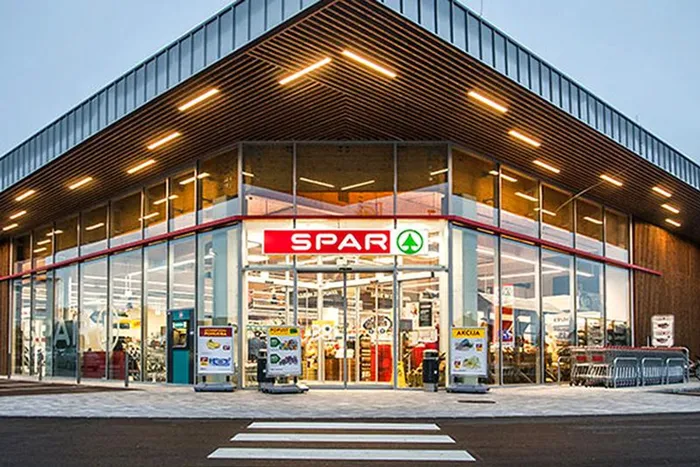
The SPAR Group, after its 52-week financial trading period to September 30, 2025, said it remains committed to resuming returns to shareholders over the short to medium term, either in the form of dividends and/or share buybacks, following a stronger financial performance in the 2025 financial year..
Image: IOL
The SPAR Group has generated a much improved second-half trading performance, with tight cost management, robust cash generation and a materially strengthened balance sheet.
The grocery retailer and wholesaler to independently-owned stores and to its own stores reset its business in the 52-weeks to September 26, 2024, optimising and simplifying the group structure.
"We have taken purposeful steps to reduce debt, simplify the group, improve operational efficiency and restore resilience…The momentum we saw in the second half, combined with improved cash generation and lower leverage, gives us confidence in our ability to restore shareholder returns, while continuing to invest responsibly in the business," said the CEO Angelo Swartz.
SPAR's net debt reduced by 40% to R5.4 billion from R9.1bn in 2024. This was mainly due to the strategic disposals of Switzerland and Poland, and improved working capital management. Cash generated increased to R5.4bn, up from R4.8bn.
Group revenue increased 1.6%, accelerating to 3.5% growth in the second half, while gross profit from continuing operations increased by 3.3%. Well-contained operating expenses, with lower fuel costs, saw operating profit to rise to R2.8bn from R2.7bn. The group operating margin of 2.1% was maintained broadly in line with the prior year.
"The BWG Group in Ireland remains stable and strategically valuable and delivered an operating profit margin above 3% despite wage and overhead inflation. This, with stronger trading in the second half, reflected a business well positioned," said Swartz. BWG grew revenue 0.6%.
The joint venture in Sri Lanka continued to scale in spite of currency volatility, inflationary pressures and elevated import costs. Footfall increased 15% year-on-year, while items sold grew by 6%. During the period, the group concluded its European exits, and progress was being made on the disposal of AWG, the regional distribution group in England.
Southern Africa delivered modest top-line growth of 2.3%, impacted by the subdued retail environment, but there was a "marked improvement" in sales momentum in the second half, rising by 2.9%.Operating profit increased by 6.8%, supported by improved wholesale execution, supply-chain efficiencies and promotional discipline.
On-demand channels gained momentum, with volumes increasing 136%. A partnership with Uber Eats was entered into in March 2025, which was already shown strong uptake.
SPAR Health delivered 13.2% growth, while the formal launch of the Pet Storey franchise opened a new specialist retail platform, "with strong early interest. "Performance in SPAR Health was driven primarily by the wholesale channel growing 9% and the ongoing success of Scriptwise, which grew by 20%, supported by the expansion of chronic medicine programmes."
Build it revenue increased 2.4% The business benefited from strong retail performance and the provision of microloans to consumers within the industry, most notably by Capitec.
"As South African households continue to face relentless cost-of-living pressures, SPAR has focused on helping grocery budgets go further. Even as food inflation remains elevated and consumers grow more price-conscious, SPAR is helping put nutritious, affordable meals on the table every day, with the launch of 'Super Savings' and the revamped SaveMor format, ensuring that families can stretch their budgets further without sacrificing quality," he said.
The recent opening of the first SPAR Gourmet store at Zimbali Oasis, demonstrated partnership-led growth, where national capabilities and local entrepreneurship combined to create new, high-quality shopping experiences.
"We have also ensured that value stays at the centre of key trading moments. This year's Black Friday campaign prioritised discounted staples and household essentials, enabling customers to build a multi-meal grocery basket for less than R375. It is a clear example of how SPAR uses scale, data and a growing digital ecosystem to support households through tough times," said Swartz.
While no distribution was declared, the board said it intended to reinstate shareholder returns in the short to medium term, as leverage continues to normalise.
"Management remains focused on accelerating technology rollout for more innovative retail, achieving margin recovery in Southern Africa, maintaining ongoing balance sheet deleveraging, and practising disciplined capital allocation," said Swartz.
BUSINESS REPORT