

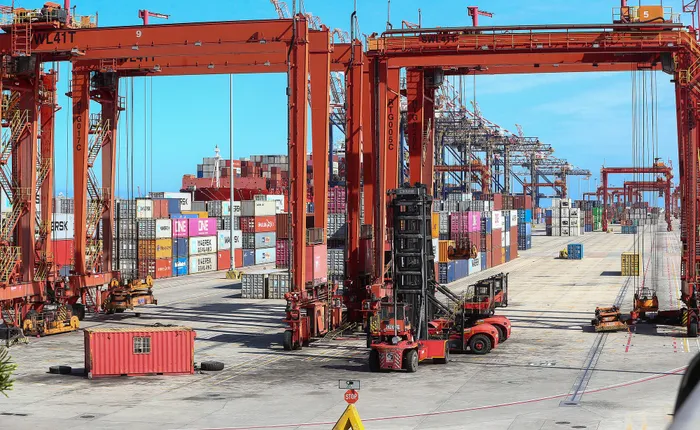
South Africa is expected to enter a phase of sustained recovery, with growth forecast at 2.0% in 2026, supported by easier monetary conditions, a revival in private-sector lending, and progress on long-standing reforms in energy and logistics.
Image: Leon Lestrade/Independent Newspapers
Africa’s reform drive, supported by resilient capital inflows and firming commodity prices, is underpinning a broad-based macroeconomic recovery across Sub-Saharan Africa (SSA), according to Standard Chartered Global Research.
In its Global Focus – Economic Outlook 2026, the bank on Monday forecast SSA economic growth of about 4.3% in 2026, up from 4.0% in 2025, comfortably above the projected global average of 3.4%.
The outlook underscores the region’s growing resilience amid global trade disruptions and geopolitical uncertainty.
Standard Chartered noted that many SSA economies remain relatively insulated from escalating trade frictions, given their diversified export channels and strong commercial ties with Europe and China. This has helped cushion the region from the impact of shifting tariffs and slowing global demand.
Key economies across the continent are increasingly driving the growth outlook. South Africa is expected to enter a phase of sustained recovery, with growth forecast at 2.0% in 2026, supported by easier monetary conditions, a revival in private-sector lending, and progress on long-standing reforms in energy and logistics.
Elsewhere, Côte d’Ivoire, Benin and Ethiopia are projected to maintain robust growth trajectories, benefiting from political stability, rising investment in agroprocessing and extractive industries, and advances in debt restructuring.
“Africa is entering a period of structural strengthening,” said Razia Khan, Head of Research for Africa and the Middle East at Standard Chartered.
“Countries like Nigeria, Ghana and South Africa are moving beyond stabilisation to growth acceleration, supported by fiscal discipline, banking-sector reforms and renewed investor confidence. The continent is benefitting from high gold prices and resilient commodity demand, creating room for monetary easing and stronger private-sector credit.”
In Nigeria, major reforms — including foreign exchange liberalisation and the removal of fuel subsidies — are expected to lift real GDP growth to 4.0%. Expansion is set to be driven primarily by non-oil sectors, alongside a recapitalised banking system preparing for a regulatory deadline in March 2026. These developments are expected to unlock further growth in private-sector lending.
In Ghana and Kenya, efforts to clear domestic arrears and normalise government payment cycles are reducing non-performing loans, strengthening banks’ balance sheets and improving their capacity to finance economic activity. Ghana, in particular, is making progress under its IMF programme, with public debt reduced to about 45% of GDP and a targeted infrastructure drive aimed at supporting long-term growth.
The report highlights that effective engagement with the International Monetary Fund has helped anchor policy frameworks in several African economies, including Ghana, Kenya and Senegal. These programmes have supported fiscal consolidation, rebuilt foreign exchange reserves and strengthened policy credibility among investors.
Growth prospects remain broadly positive beyond the continent’s largest economies. East Africa continues to stand out as a regional growth hub, with Kenya, Tanzania and Uganda all expected to expand by more than 5% in 2026, supported by resilient domestic demand and sustained investment in infrastructure and energy.
In Zambia, ongoing reforms and progress in reducing inflation are laying the groundwork for more durable growth.
Standard Chartered also pointed to improving external buffers across the region. Rising foreign exchange reserves in countries such as Ghana, Uganda and Zambia have been supported by higher gold prices and stronger exports.
Current account balances are improving, with Nigeria forecast to post a surplus of 4.6% of GDP by 2026. Lower oil prices are further aiding disinflation, allowing for policy rate cuts in Ghana, Nigeria and Zambia.
Emmanuel Kwapong, economist for Africa at Standard Chartered, said investors are noticing.
“Portfolio inflows have increased, and sovereign spreads continue to tighten. With deepening reforms and structural bottlenecks being addressed, Africa’s 2026 growth story won’t just be about recovery - it’s about transformation,” Kwapong said.
Improved sentiment is expected to translate into stronger capital-market activity. With tighter spreads and advancing reforms, several SSA sovereigns are likely to return to the Eurobond market in 2026, creating additional funding channels for infrastructure and social investment.
However, the global backdrop remains uncertain.
Madhur Jha, global economist and head of thematic research, cautioned that political tensions, elections, ongoing conflicts and shifting global alliances could still weigh on growth.
“Although the global 2026 growth outlook is positive, there are still risks, including political tensions, important elections, ongoing conflicts and new alliances challenging the US-led global system,” Jha said.
For African policymakers, the bank emphasised the need to maintain reform momentum and fiscal discipline. While lower oil prices are helping to curb inflation, they could weaken external positions for some oil exporters. Countries without strong policy anchors or IMF support may also face tighter access to external financing.
Overall, the report argues that sustained reform, prudent fiscal management and productivity-enhancing technologies, including advances in artificial intelligence, will be critical to sustaining Africa’s growth momentum in an increasingly complex global environment.
BUSINESS REPORT