

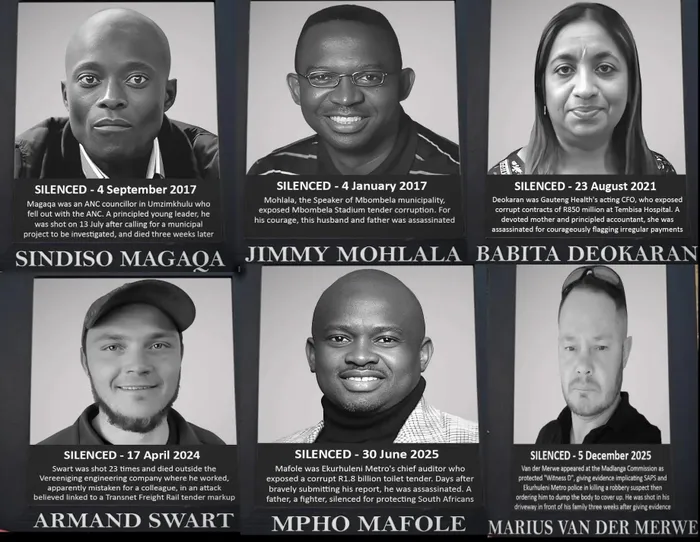
A society that holds conferences on whistleblowing while burying whistleblowers has already taken a side. A governance system that praises integrity while allowing truth tellers to stand alone has made its choice, says the author.
Image: OUTA
By Nqobani Mzizi
There are years that pass quietly, and there are years that remove our ability to pretend. 2025 was not a year of isolated scandals or unexpected failures. It was a year that exposed patterns we have tolerated for far too long.
It revealed the real danger facing South Africa today, which is not simply corruption itself, but ethical neutrality. The posture of watching without acting. The comfort of commenting without consequences. The silence of acquiescence in the face of wrongdoing.
Ethical neutrality is one of the most damaging positions a society can take. It is not overt wrongdoing. It is the decision to stand in the middle when the facts are clear. It shows up when leaders acknowledge problems privately while avoiding public accountability. When boards wait for reports, reviews and commissions long after the evidence is visible. When institutions respond to wrongdoing with process rather than principle. In 2025, ethical neutrality stopped being defensible.
This posture has a cost. Institutions do not collapse overnight. They erode slowly when accountability is delayed and consequence is negotiated. Municipalities fail not because policies do not exist, but because breaches carry no weight. Organisations lose credibility when values are published but not enforced. Over time, neutrality trains people to expect that nothing will happen, even when everything is known.
The price of this erosion is paid in weakened systems and broken trust, but it is also paid by people. Nowhere was this clearer than in the lives and deaths of whistleblowers. Babita Deokaran remains the defining symbol of the cost of speaking truth to power in South Africa. In 2025, that cost was reinforced with the assassinations of Marius van der Merwe (Witness D at the Madlanga Commission), insolvency attorney Bouwer van Niekerk, and forensic auditor Mpho Mafole, all targeted after exposing corruption. These were not random acts of violence. They were the consequences of systems that punish courage and protect silence.
A society that holds conferences on whistleblowing while burying whistleblowers has already taken a side. A governance system that praises integrity while allowing truth tellers to stand alone has made its choice.
The question is no longer whether South Africa has laws or policies. The question is whether we have the moral will to act when integrity becomes inconvenient.
This reality is not confined to one sector. Corruption in 2025 made it impossible to maintain the fiction that wrongdoing belongs only to government or only to business. It thrives wherever power goes unchecked, wherever influence overrides accountability, and wherever leadership chooses comfort over courage. Ethical neutrality has been present across both public and private institutions, and its effects have been cumulative.
The United Nations’ call on young people to champion the fight against corruption speaks directly to this moment. The youth are not merely observers of governance failure. They are its greatest victims, inheriting the unemployment created by stolen opportunity, the services that never arrive, and the distrust that corrodes faith in institutions.
This is not a symbolic role. It is a survival instinct. That is why young people’s voices demanding accountability, transparency and consequence matter profoundly. A country that ignores this energy risks entrenching a generation's disengagement from civic life, or worse, channelling its frustration into profound social instability.
Governance sits at the centre of this reckoning. Corruption is punished in courtrooms, yet it is prevented in boardrooms. The events of 2025 reminded us that ethical leadership is not demonstrated through policy approval or compliance checklists. It is demonstrated through action when the cost of doing the right thing is high.
Boards occupy a unique position of power and responsibility. They set the tone for what is tolerated and what is confronted. When boards delay action until public pressure mounts, neutrality becomes institutionalised. When ethics are treated as an annual agenda item rather than a lived standard, wrongdoing finds room to grow. King IV, and the incoming King V, were never meant to be aspirational texts. They are governance imperatives grounded in leadership, integrity and accountability.
2025 showed us what happens when boards hesitate. Silence becomes complicity. Process replaces principle. Courage is outsourced to individuals who are left exposed. This is not a failure of knowledge. It is a failure of resolve.
The idea that ethical leadership can be postponed until investigations conclude has been one of the most damaging myths of the year. Due process matters, but moral clarity cannot be suspended indefinitely. Leaders can uphold procedural fairness while still acting decisively to protect institutions, people and trust. Waiting has consequences. In South Africa, those consequences are visible in failing services, hollowed out entities and lives lost.
If 2025 was the year ethical neutrality was exposed, then 2026 will be the year governance choices become unavoidable. Credibility will no longer be claimed through policy; it will be tested through action. Boards, in particular, will face a new set of questions:
These are the emergent tests for a system that has reached its limit.
South Africa has examples of ethical leadership that have rebuilt trust and restored institutional integrity. The challenge is scale. A country cannot rely on isolated courage. Integrity must become the organising principle of governance, reinforced through consistent accountability and visible consequence. Leadership must be stronger than the discomfort of confronting wrongdoing.
As I reflected earlier this year on whistleblowers and the cost of silence, governance fails when truth tellers stand alone. That reality has only deepened. Boards cannot delegate this responsibility. They decide whether integrity is embedded or optional. They determine whether wrongdoing is confronted or explained away. They choose whether courage is rewarded or punished.
Before any institution declares itself ethical, uncomfortable questions must be answered honestly. Is wrongdoing difficult or merely discouraged? Do people feel safe speaking up or simply instructed to do so? Does leadership protect those who raise concerns or protect the system from embarrassment? If corruption is a choice, what is being chosen through silence?
The fight against corruption begins with a simple truth. Corruption is a choice. So is integrity. Ethical neutrality is also a choice, and 2025 has shown us its cost. South Africa cannot afford another year of observation without action. The future will judge this moment not by what we said about corruption, but by what we refused to tolerate.
A turning point is not declared. It is chosen. Better choices must prevail in 2026.
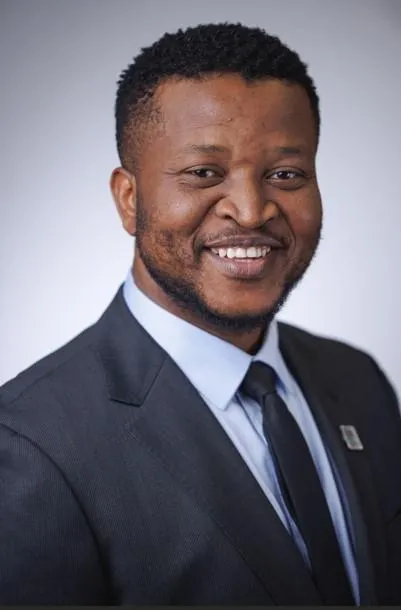
Nqobani Mzizi is a Professional Accountant (SA), Cert.Dir (IoDSA) and an Academic.
Image: Supplied
* Nqobani Mzizi is a Professional Accountant (SA), Cert.Dir (IoDSA) and an Academic.
** The views expressed do not necessarily reflect the views of IOL or Independent Media.
BUSINESS REPORT