

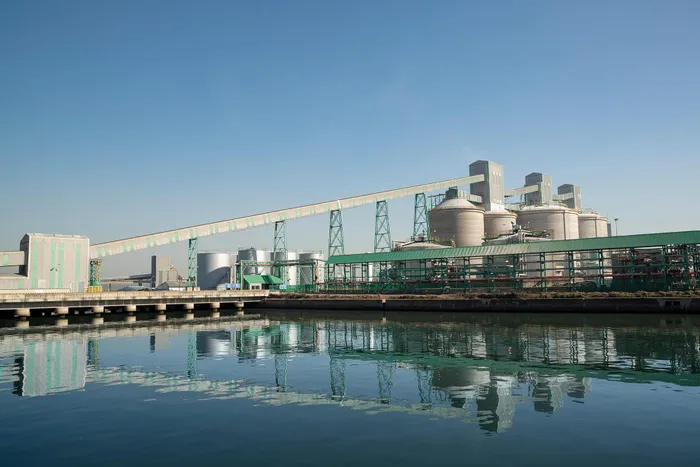
South32 said that although it had continued to engage with the Mozambican government, power supplier Hidroeléctrica de Cahora Bassa (HCB) and Eskom to seek sufficient and affordable electricity supply for Mozal beyond March 2026, it had not managed to reach an agreement.
Image: Supplied
Tawanda Karombo
Eskom could yet step in to save South32’s Mozal Aluminium smelter in Mozambique from being mothballed, after the JSE-listed miner failed to secure a new power supply agreement with the country’s electricity provider.
South32, which also has manganese and aluminium assets in South Africa, controls 63.7% of Mozal Aluminium. The Mozambican operation is of significant interest for South Africa as the Industrial Development Corporation controls 32.4% of the entity while Maputo holds the remaining 3.9%.
On Wednesday, South32 said that although it had continued to engage with the Mozambican government, power supplier Hidroeléctrica de Cahora Bassa (HCB) and Eskom to seek sufficient and affordable electricity supply for Mozal beyond March 2026, it had not managed to reach an agreement.
“A new electricity supply agreement has not been secured and Mozal will be placed on care and maintenance on or around 15 March 2026. Accordingly, raw materials required to sustain operations beyond March 2026 have not been procured,” said the company.
Shares in South32 slumped by about 2% on the JSE on Wednesday, trading at R32.66 compared to an 9% and 29% uptick in the past 30 days and 90 days, respectively.
Mozal Aluminium accounts for nearly 30% of South32’s total production of the commodity. The Australia-based company has also already provisioned for a $372 million impairment amount related to the Mozambican smelter.
“Throughout our engagements we emphasised that Mozal’s ability to continue operating depended on securing sufficient electricity at a price which allows the smelter to remain internationally competitive,” noted Graham Kerr, South32’s CEO.
“Unfortunately, the parties remained deadlocked on an appropriate electricity price, which was exacerbated by ongoing drought conditions affecting electricity supply from HCB.”
Although Eskom insists that any new agreement should be sustainable for it as the power supplier, it is expected to throw South32 a lifeline following its failure to reach an agreement with HCB.
Eskom on Wednesday shared the same sentiments with South32 that Mozal Aluminium should be allowed to operate with an electricity tariff that is sustainable.
The National Transmission Company South Africa (NTCSA), a subsidiary of Eskom, said the Mozal smelter requires an electricity price that is significantly lower than the direct cost of supply to remain globally competitive.
It explained that it remains “committed to concluding a new electricity supply agreement” with the Mozal aluminium smelter in Mozambique.
This, however, would have to be in a manner that safeguards the NTCSA’s financial stability and protects South African electricity consumers from unintended cost impacts.
Mozal Aluminium has up to now been powered up by a long standing supply agreement put in place more than 20 years ago.
Amid the engagements that have failed to yield an agreement and South32’s decision to place the smelter on care and maintenance in March next year, Eskom underscored that the previous power supply arrangement is no-longer “sustainable” going forward.
“As such, a mutually beneficial solution, developed collaboratively with stakeholders in both Mozambique and South Africa, is essential to support regional industrial activity, while ensuring the NTCSA’s financial sustainability and fairness to South African electricity consumers,” said Monde Bala, CEO of NTCSA.
“The NTCSA will continue engaging with stakeholders in both countries to explore the feasibility of such an arrangement.”
Meanwhile, Kerr acknowledged the impact of the company’s decision to place Mozal Aluminium on care and maintenance on suppliers, customers, communities and other stakeholders.
He said the company would engage these stakeholders as the refinery transitions from operations to care and maintenance in the coming months.
Despite this development, Mozal's production guidance for the period to March 2026 has remained unchanged at 240 000 tons on an attributable basis.
South32 said one-off costs related to the placement of Mozal on care and maintenance, including employee separation costs and termination of contracting arrangements, are expected to be around $60 million.
Furthermore, ongoing annual care and maintenance costs are expected to be approximately $5 million.
Alumina supplied from Worsley Alumina refinery in Australia to Mozal will now be sold to third party customers, with South32 having already secured options to sell the resource at index-linked prices.
BUSINESS REPORT