

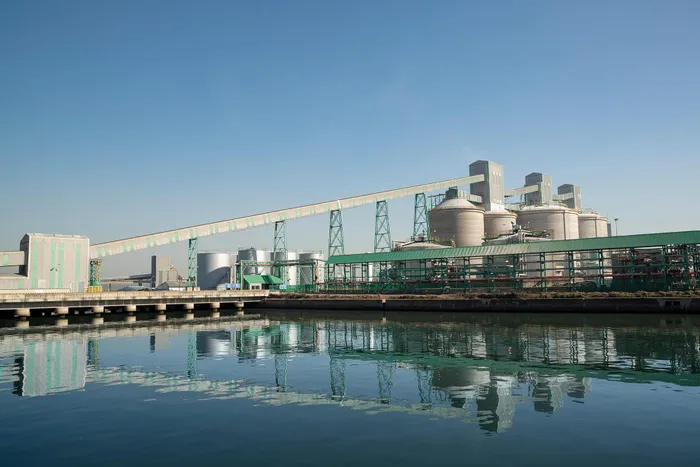
South32 said that although it had continued to engage with the Mozambican government, power supplier Hidroeléctrica de Cahora Bassa (HCB) and Eskom to seek sufficient and affordable electricity supply for Mozal beyond March 2026, it had not managed to reach an agreement.
Image: Supplied
The Congress of South African Trade Unions (COSATU) has been deeply alarmed by news of a potential mothballing or even closure of Mozal’s operations in Maputo, Mozambique.
Such a decision would threaten the jobs of 5 200 workers at Mozal and 22 000 indirect downstream jobs in South Africa linked to the company. This is something neither nation can afford. With unemployment already dangerously high at 42.4% in South Africa, we must pull out all stops to avert this potential calamity.
Our fate as a country is deeply intertwined with that of Mozambique’s. We are sister nations and a society indebted to the Mozambican people for the many painful sacrifices they made, and the subsequent devastation inflicted upon them for their support for South Africa’s liberation struggle.
A South Africa battling high levels of unemployment and poverty cannot sustain the levels of migration flowing into the country from across the region and continent, amongst elsewhere.
Key to giving people an alternative to leaving their homes in search of scarce jobs is to support economic development in our neighbouring states. Mozal is a major source of manufacturing jobs and industry in Maputo and a positive pillar of regional economic integration.
At the heart of the issues affecting Mozal’s continued viability is the price of electricity, the largest cost of their operations. Over the years they have benefited from favourable electricity tariffs from Cahora Bassa Dam in Mozambique and Eskom in South Africa.
Cahora Bassa is struggling due to ongoing draught in the region. Eskom too is having to make tough decisions as it emerges from its dark chapter of state capture and to plug its many financial leakages. Its current agreement with Mozal ceases at the end of March 2026.
What is needed is a short-term solution to be found before then to enable Mozal to continue operations. Equally a long-term solution that addresses the challenges faced by Mozal or any other intensive electricity user, and the rest of the economy and society is needed as a matter of the highest urgency.
It is critical that the owners of Mozal; South 32, the Industrial Development Corporation and the Mozambican government, working with Eskom and the South African government pull out all stops to ensure a mutually affordable new electricity tariff regime is secured before the end of March.
This is a critical economic asset that South Africa and Mozambique just cannot afford to lose.
We are encouraged by the interventions by the South African Presidency, the Minister for Electricity and Energy, Dr. K. Ramokgopa and Eskom to find solutions with the owners of Mozal. We are confident that with the necessary will and compromises by all parties that an agreement can be found, as had recently been concluded with Samancor Chrome and Glencore-Merafe Chrome.
Whilst breathing space and an affordable new tariff agreement is a necessity to enable the continued operations of Mozal, a package of short-, medium- and long-term interventions are needed to enable Eskom to provide more affordable tariffs to the economy and all consumers, whilst simultaneously ensuring its own sustainability.
Key to finding a sustainable long-term solution is to provide Eskom and municipalities with the necessary support to plug their many financial holes.
This starts with law enforcement and the judiciary providing Eskom and municipalities with their full support to tackle cable theft, vandalism and corruption. Those who steal from Eskom must be sent to prison.
Treasury needs to ramp its support for Eskom and municipalities to plug wasteful expenditure and deal with their debt burdens.
Real progress has been made here by government under President Cyril Ramaphosa and the African National Congress including relieving Eskom of R253 billion or more than 60% of its debt burden. This intervention was key to ending loadshedding.
As announced by Minister Ramokgopa these interventions need to include a comprehensive package of interventions to arrest the crisis of municipal debt owed to Eskom currently nearing R100 billion and increasing at an alarming rate of R20 billion per annum.
Eskom cannot be sustained nor end its increasingly unaffordable dependence upon tariff hikes far above inflation unless consumers pay their bills.
The fundamental solution has to include an urgent shift towards ensuring all consumers pay for the electricity they consumed. No business, public or private, can survive if only half its customers pay for what they purchased.
We can no longer continue to ignore this existential crisis. Increased daily revenue will enable Eskom and municipalities to increase the allocation of free electricity to indigent households and thus providing real relief for the poor.
It will also empower Eskom and municipalities to ramp up maintenance key to ending load shedding and reduction. Improved revenue collection will provide the funds needed for investments in new generation, transmission and distribution infrastructure.
These too will help Eskom expand its portfolio of low carbon generation capacity and thus reduce its operating costs.
It is critical to continue with Treasury’s debt relief programme for struggling municipalities on condition that going forward they honour all future obligations.
Key to unlocking the economy and achieving the 3% growth rate necessary to slashing unemployment, is an affordable electricity tariff regime. Discussions are needed on how this can be linked to government’s industrial strategy, given the large percentage of industry’s operating costs consumed by electricity.
Working- and middle-class families need to see the price of electricity become affordable once again. Lower prices will help workers take care of their families’ needs and see more money spent stimulating economic growth.
Government, Eskom and the owners of Mozal must spend the next three months crafting an interim solution.
Most important is a long-term solution, including the fundamental interventions, to provide the affordable electricity tariff regime central to unlocking economic growth as well as saving and creating badly needed jobs. Getting this right is the game changer the economy needs.
This is a matter that requires urgent solutions and prioritisation by the most senior leadership of government and industry.
Zingiswa Losi is the president of Cosatu.
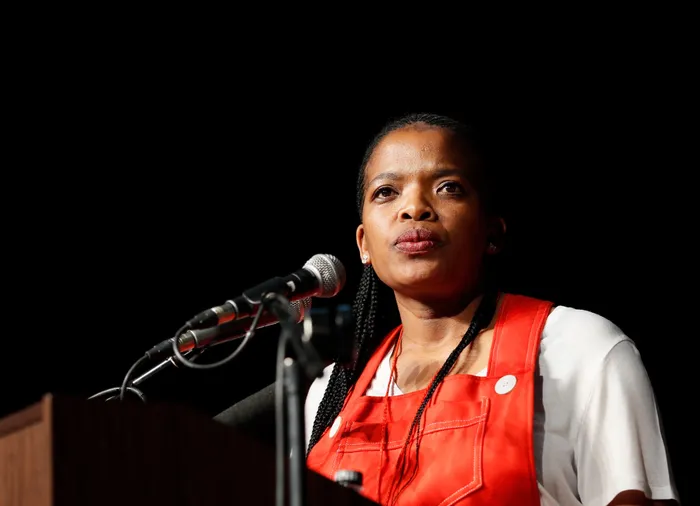
Zingiswa Losi is the president of Cosatu.
Image: Independent Newspapers
BUSINESS REPORT