

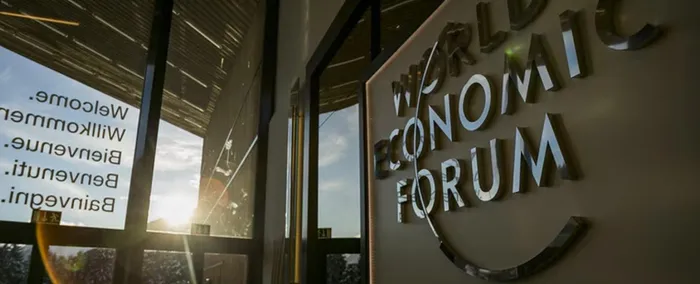
The findings will shape discussions at the WEF’s Annual Meeting in Davos-Klosters next week, held under the theme A Spirit of Dialogue.
Image: Supplied
Dr François Bonnici, Director of the Schwab Foundation for Social Entrepreneurship and a member of the World Economic Forum’s (WEF) Executive Committee, has warned that the world’s emerging “age of competition” must not descend into paralysis, calling for stronger partnerships between governments, business, philanthropy and social innovators to confront escalating global risks.
Speaking in response to the WEF’s Global Risks Report 2026, Bonnici said the findings confirm what social innovators and entrepreneurs are already experiencing on the ground: a convergence of geopolitical shocks, climate disruption and an information-integrity crisis.
“The age of competition must not become an age of paralysis,” Bonnici said.
“We urge governments, business and philanthropy to partner with social innovators to turn risk into resilience at scale. We must back leaders who champion business models that are more inclusive and more sustainable, and that respond to what people and markets actually need.”
Bonnici said social enterprises have shown remarkable resilience despite funding contractions, political shocks and fragile ecosystems.
The Schwab Foundation’s community of social innovators and enterprises has directly improved the lives of an estimated 950 million people worldwide.
He said partnering with social innovators offers unique advantages, including agile models tested under pressure, close proximity to communities, access to new markets and trust-based networks.
Looking ahead to 2026 and beyond, Bonnici said the focus must shift decisively toward execution. Priorities include building trust infrastructure through evidence, safeguards and citizen voice; strengthening resilient essentials such as climate-proofed health systems, livelihoods and local safety nets; and mobilising catalytic capital to scale solutions through public-private coalitions.
He cited examples ranging from circular textile markets in Lebanon to road-safety and emergency-care reforms in India and Ethiopia, and education initiatives addressing teacher shortages in the United States.
The Global Risks Report 2026, released on Tuesday, reinforces the urgency of such action.
Now in its 21st edition, the report identifies geoeconomic confrontation as the most pressing global risk for 2026, reflecting a world increasingly shaped by rivalry, fragmentation and the weaponisation of economic policy.
Geoeconomic confrontation — defined as the use of trade restrictions, sanctions, industrial policy and economic leverage to advance national interests — climbed eight places to top the near-term risk rankings.
It was also ranked as the most severe risk over the next two years, amid deep concern about the impact of geopolitical rivalry on global supply chains, inflation, growth and international cooperation.
The report paints a picture of heightened uncertainty, with half of the more than 1 300 global leaders and experts surveyed expecting the global outlook over the next two years to be turbulent or stormy. Only 1% anticipate a period of calm.
State-based armed conflict ranked second for 2026, highlighting the continued fallout from prolonged wars and regional instability.
Extreme weather followed in third place, while societal polarization and misinformation and disinformation rounded out the top five risks for the year ahead.
“The world is entering a new competitive order as major powers seek to secure their spheres of interest,” said Børge Brende, President and CEO of the WEF.
“While cooperation now looks different than it did in the past, dialogue and collaborative approaches remain essential.”
Economic risks were identified as the fastest-rising category in the short term. Both economic downturn and inflation surged eight places in the two-year outlook, reflecting persistent cost-of-living pressures, elevated interest rates and mounting public and private debt.
Risks of asset bubble bursts also rose sharply, raising fears of financial instability amid tightening global financial conditions.
The report found that 68% of respondents expect the world to shift toward a multipolar or fragmented geopolitical order over the next decade, weakening the ability of global institutions to respond collectively to crises.
Technological risks also featured prominently, particularly concerns around artificial intelligence, with adverse AI outcomes climbing steeply in the long-term rankings.
While environmental risks declined in the short-term rankings, they remain the most severe over the next decade, with extreme weather, biodiversity loss and critical changes to Earth systems topping the long-term outlook. Three-quarters of respondents expect a turbulent or stormy environmental future.
The findings will shape discussions at the WEF’s Annual Meeting in Davos-Klosters next week, held under the theme A Spirit of Dialogue.
BUSINESS REPORT