

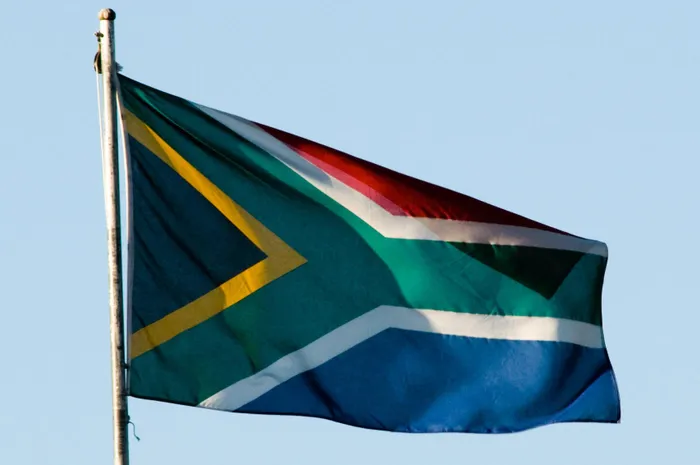
South Africa’s slow and uneven economic recovery is expected to continue through 2026.
Image: File
South Africa’s slow and uneven economic recovery is expected to continue through 2026, but remains highly vulnerable to global shocks, policy uncertainty and entrenched structural constraints.
This is according to the International Monetary Fund’s latest World Economic Outlook (WEO) update released on Monday, which revised slightly upwards the country's growth prospects.
The IMF forecasts South Africa’s economy to grow by 1.4% in 2026, edging up slightly to 1.5% in 2027.
While this represents a modest 0.2 percentage points upward revision from earlier projections of 1.2%, it remains well below both the sub-Saharan African average and the level of growth needed to make meaningful progress in tackling unemployment, poverty and inequality.
The outlook places South Africa near the weaker end of emerging market performance, even as the IMF expects global growth to hold steady at 3.3% in 2026, supported by easing inflation and fading trade tensions.
These positives, however, are counterbalanced by rising geopolitical, fiscal and financial risks — global dynamics that arrive at a particularly delicate moment for South Africa.
Despite the headwinds, some domestic and external factors are offering partial support.
Investec chief economist Annabel Bishop noted that nearly half of South Africa’s economic growth last year was driven by the agricultural sector.
Bishop said growth is expected to pick up modestly in 2026, to around 1.5%, but without the benefit of the substantial agricultural base effects seen last year.
"International events are key however, and the rally in precious metals has significantly benefited the value of SA’s exports. The international prices of agriculture goods (an important export for SA) are however down 2.0% in the new year however, following on from drops last year," Bishop said.
"But the third category of high relevance for South Africa’s exports, vehicles, parts and components has seen growth year-on-year on alternative export destinations, and the resilience of global trade in general last year aided global growth and sentiment.
"The volatile and disjointed nature of US trade policy, with delays and changes in tariffs and severe threats, gave the time and impetus needed to switch global trade patterns (partners), allowing for a better world growth than expected. With global growth faring better than expected last year, the IMF revise dup its global growth forecast for this year as well."
However, the IMF noted that South Africa’s growth ceiling is constrained more by domestic factors than by global demand.
Persistent electricity supply challenges, weak logistics performance, infrastructure backlogs and policy uncertainty continue to weigh on private investment and productivity.
Even as global trade remains relatively robust, South Africa’s export competitiveness is undermined by port inefficiencies and transport disruptions that limit its ability to capitalise on improved external conditions.
Rising global public debt and fiscal vulnerabilities are flagged as a key downside risk in the WEO update — a concern with particular relevance for South Africa, where limited fiscal space constrains the government’s ability to respond to shocks or support growth without undermining debt sustainability.
The IMF stressed the importance of rebuilding fiscal buffers and committing to credible medium-term consolidation, especially for countries facing high borrowing costs and subdued growth.
Despite the headwinds, some domestic and external factors are offering partial support.
Professor Raymond Parsons, an economist at North West University Business School, said the IMF may have underestimated the extent to which positive factors such as the recent removal from the FATF greylist, the S&P Global ratings upgrade, and others have outweighed negative ones in creating a better economic platform for South Africa this year.
Parsons said what is worrying is not that the IMF’s assessment of South Africa’s immediate economic outlook may be little on the pessimistic side, but that the IMF projects GDP growth to reach only 1.8% by the end of the decade.
"This is far short of what is needed for significant job creation. If this is correct, it falls well below GNU’s GDP growth target of 3.5% by 2030. It injects a sense of urgency in what still needs to be done," Parsons said.
"What is now needed to boost growth is indeed much higher levels of gross fixed capital formation (GFCF) by both the private and public sectors. For these are now the main drivers of future growth. Boosting investor confidence is therefore the key.
"In the coming year, a sufficient number of firms must feel that the policy environment and growth prospects justify their making fresh plans for expansion. The onus remains on SA to create the conditions that will eventually prove the IMF growth projections wrong."
BUSINESS REPORT