

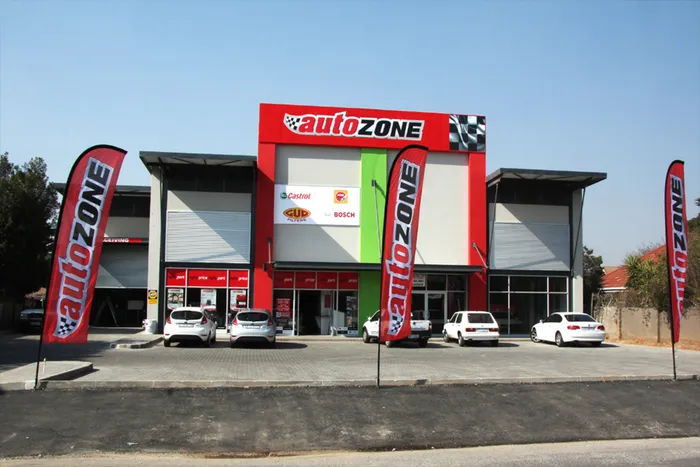
However, AutoZone progress to stabilise as it emerges out of business rescue is stalling.
Image: Supplied
Tawanda Karombo
Metair expects its loss-making AutoZone business to underpin a sharp increase in revenue in its aftermarket spare parts segment, even as the unit’s turnaround is progressing more slowly than planned and sales volumes at First Battery South Africa decline.
The JSE-listed company is intensifying its strategy to diversify into the aftermarket segment as a way of entrenching operational improvements and efficient project management.
However, AutoZone progress to stabilise as it emerges out of business rescue is stalling.
“Bedding down AutoZone as the business emerges from business rescue is tracking approximately six-months behind plan, but Metair remains confident in the turnaround,” said Metair in a trading update Monday.
Nonetheless, revenues for the aftermarket segment is expected to increase by between 40% and 44% in 2025 from nearly R4.3 billion a year earlier. This is expected to be underpinned by “the inclusion” of AutoZone, which Metair acquired in 2024 for around R280 million, into the segment.
The earnings before interest and tax (Ebit) margin for the segment is, however, expected to decline to between 3.9% and 4.1% compared to 6.2% a year ago due to the FY2025 Ebit loss recorded by AutoZone. Metair said AutoZone was “in a stabilisation” phase.
The expected decrease in Ebit margins for First Battery South Africa Ebit is also expected to contribute to the lower margins.
Sales volumes for First Battery South Africa declined slightly in FY2025, with the company selling 1.51 million batteries compared to 1.53 million batteries a year earlier.
Positively though, Metair’s Romanian division, Rombat lifted up sales volumes by 3% to 2.88 million batteries, “supported by an improvement in both their local aftermarket and original equipment manufacturer (OEM)” sales.
Group revenue for the full year is thus expected to firm up by between 53% and 58% year-on-year compared to R11.37bn. This has partly been attributed to the inclusion of Hesto as a subsidiary effective from 1 April 2025.
Consequently, group Ebit for the 2025 full year is expected to be stronger by a range around 100% compared to R546m recorded for 2024. The higher Ebit has been attributed to the company’s “wide-ranging recovery initiatives and stronger volumes” among others, offset by the inclusion of losses from AutoZone.
The company’s OEM segment that supplies vehicle components directly to manufacturers is projected to have at least 63% higher revenues.
This comes as South Africa’s new-vehicle sales market delivered a solid performance during the 12-month period ended 31 December 2025 after it recovered to pre-pandemic levels.
According to the Automobile Business Council of South Africa, new vehicle sales increased by a significant 15.7% to 597 014 during the period although heavily weighted towards imported vehicles.
However, despite a recovery in a major customer’s volumes following the engine certification issue in 2024, South African OEM passenger and light commercial vehicles production increased by only 1.48% to 602 302 in 2025.
“South African OEMs have also faced strong competition in export markets alongside the competition in the local market, resulting in exports increasing by only 4.4% during FY2025. In addition, the local aftermarket experienced challenging market conditions,” said Metair.
Accounting for Hesto as a subsidiary is expected to result in a significant once-off net capital loss of approximately R300m for the year, mainly after the recognition of previously not accounted for losses from Hesto.
Subsequently, Metair has projected a headline loss per share of between 63 cents and 70 cents (for the 2025 year under review, representing an improvement of between 69% and 66% on the prior year. Shares in the company were slightly weaker by 0.22% on the JSE on Monday at R4.49.
BUSINESS REPORT