

During a presentation on the economic outlook for 2026 on Tuesday, Standard Bank Group chief economist Goolam Ballim said restricted access to the American market was already proving damaging for key sectors of the economy.
Image: Supplied
South Africa’s economic resilience is being tested by rising trade frictions with the United States, intensifying competition from Asia, and a rapidly shifting global order that is fragmenting long-standing trade relationships, according to Standard Bank chief economist Goolam Ballim.
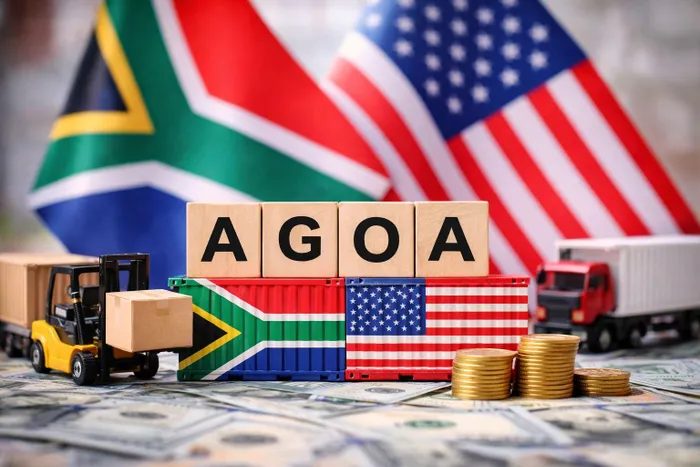
This comes as South Africa's trade relations with the US, its third largest trading partner after China and the European Union, have become strained over an ongoing diplomatic fallout.
During a presentation on the economic outlook for 2026 on Tuesday, Ballim said restricted access to the American market was already proving damaging for key sectors of the economy.
“I cannot deny that not accessing the United States market as liberally as we did in the past is problematic,” Ballim said, pointing to the depth and growth of US consumer demand. “America’s consumer market is deep, and the growth is rapid.”
Ballim said the impact of these constraints had been felt unevenly across industries, with agriculture facing growing pressure and the automotive sector bearing the brunt of the shock.
South Africa’s auto industry, long a cornerstone of industrial output and exports, was now squeezed from multiple directions.
“We’ve seen it imperil our farming industry to a degree, and our auto industry more majorly,” Ballim said.
He added that the automotive sector was also increasingly exposed to competitive pricing from Asia, further undermining domestic production.
Currently, the Department of Trade, Industry and Competition (the dtic) is currently reviewing measures, including higher import duties and excise taxes, and updating the country’s tariff schedule to align import levies with World Trade Organisation (WTO) rules for most-favoured nations, in a bid to support the domestic automotive industry.
Ballim said South Africa's auto industry was increasingly coming under pressure from Asian imports.
“And so South Africa's industrial beadrock has been shaken, one, simply because of competitive pricing from Asia, and two, trade frictions geopolitically changed from the United States,” he said.
Europe, traditionally one of South Africa’s largest trading partners, has also become a less reliable source of demand. Ballim noted that Europe’s share of South Africa’s trade had halved over the past 50 years, reflecting long-term structural shifts rather than any single policy decision.
“Europe also, for a length of time, has been a diminishing trade partner. Not necessarily for any specific reason, but Europe’s share of South African trade has halved over 50 years,” he said.
Ballim added that Europe remained a highly protective market, particularly in agriculture, limiting opportunities for export expansion. He framed these developments within a broader global realignment that he said was no longer gradual or transitional, but abrupt and structural.
Despite this, Ballim said the global economy is entering 2026 on firmer footing than expected, but beneath the surface lies a profound structural shift in power, trade and geopolitics.
For South Africa, the macroeconomic picture has improved meaningfully, even as political and social risks intensify.
Ballim said the sovereign credit rating appears to have bottomed out, inflation has cooled, employment has surpassed pre-Covid levels by around one million jobs, and household balance-sheet wealth surged in 2025 as the JSE delivered strong returns.
He noted that the rand also staged a notable recovery and has outperformed many emerging-market and commodity currencies since 2023, helping to anchor inflation expectations.
Lower inflation and currency stability have translated into falling bond yields and the prospect of further interest-rate cuts, although monetary policy remains mildly restrictive.
Politically, the outlook is, however, more unsettled. Ballim noted that the ANC’s electoral dominance has eroded sharply, fragmenting the political landscape, while service-delivery protests and public dissatisfaction with job creation, crime and corruption continue to rise.
He said these pressures underscore the central risk to South Africa’s medium-term prospects: without a stronger rule of law and faster reform implementation, economic gains could stall.
Standard Bank’s baseline forecast sees South Africa’s GDP growth gradually improving from 0.5% in 2024 to above 2% by 2028, driven by a recovery in fixed investment, moderating inflation and more supportive financial conditions.
BUSINESS REPORT