

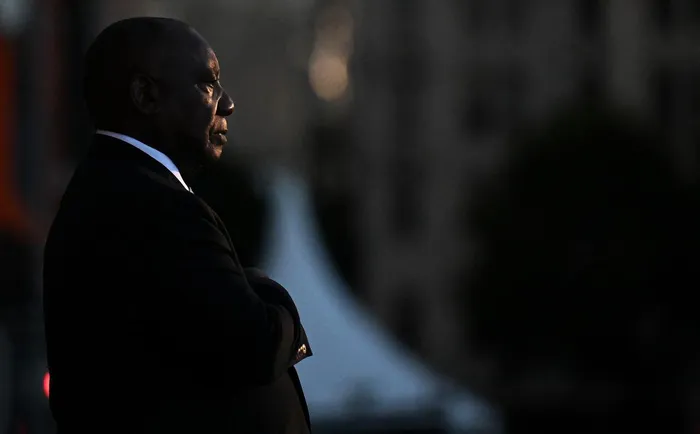
President Cyril Ramaphosa delivered the 2026 State of the Nation Address (SONA) on Thursday night in Parliament.
Image: Phando Jikelo / Parliament of SA
Big business in South Africa has welcomed President Cyril Ramaphosa’s sweeping reforms to the country’s energy sector, announced during the 2026 State of the Nation Address (SONA), but cautioned that the programme risks faltering without accelerated implementation.
Addressing Parliament on Thursday night, Ramaphosa outlined plans to deepen structural reforms in the electricity sector, including the establishment of a fully independent, state-owned transmission company and the introduction of private investment into the national grid.
The President said government is determined to create a competitive electricity market and end South Africa’s reliance on a single energy supplier. Central to this reform agenda is the restructuring of Eskom, whose long-delayed unbundling into separate generation, transmission and distribution entities is now set to be fast-tracked.
The new transmission entity will own and control transmission assets and operate the electricity market, separating these functions from generation and distribution.
Ramaphosa has tasked a dedicated team under the National Energy Crisis Committee (Necom) with finalising clear proposals and timelines for the phased implementation of the restructuring.
The task team, comprising the Ministers of Electricity and Energy, Finance, the Presidency and others, is expected to report back to him within three months.
In addition, government will launch the first round of independent transmission projects this year to attract private investment into expanding the grid. Ramaphosa said there has already been “tremendous interest” from investors in transmission infrastructure.
Business Leadership South Africa (BLSA), which represents leaders of some of the country’s largest companies, said the President’s remarks reaffirm government’s commitment to Eskom’s unbundling and to ensuring the independence of the Transmission System Operator from Eskom Holdings.
BLSA CEO Busisiwe Mavuso said the statement provides much-needed certainty after growing concern among both local and international investors about the pace and resolve of the reform programme.
“This issue has caused major concern, with international investors and local business leaders starting to question the government’s commitment to the reform programme,” Mavuso said. “Certainty is important and we are encouraged by President Ramaphosa’s comments.”
However, BLSA added that the broader reform agenda requires a renewed government-wide focus on accelerating implementation to ensure its success.
Echoing this sentiment, North West University Business School economist Professor Raymond Parsons said the Eskom unbundling process highlights the need for growth-friendly reforms to be seen as irreversible in order to sustain investor confidence.
Parsons also stressed the importance of upgrading public-private sector partnerships to strengthen delivery capacity.
He noted that the success of the SONA commitments would ultimately depend on how quickly government moves from planning to execution, and on what the February 25 Budget is able to safely finance.
“Implementation, in collaboration with the private sector, remains the name of the game,” Parsons said.
Raamphosat described the current moment as a unique “window of opportunity” to build on improving economic conditions and translate them into tangible benefits for citizens.
That urgency, Parsons said, will be critical if the Government of National Unity (GNU) is to achieve its target of lifting GDP growth to 3.5% by 2030.
BUSINESS REPORT