

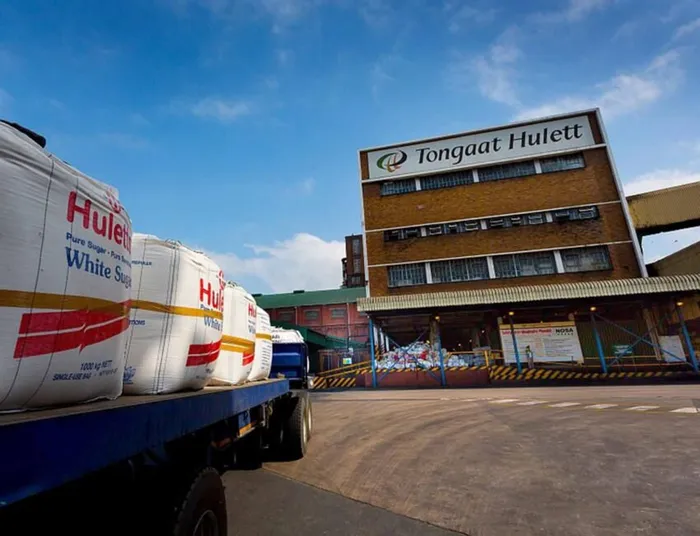
Last week, Tongaat Hulett business rescue practitioners announced that they had filed an application to the High Court seeking to discontinue business rescue proceedings and place the company's South African operations into provisional liquidation, following an extensive and exhaustive process to rescue it.
Image: Supplied
Minister of Agriculture John Steenhuisen has called for urgent intervention to prevent a shutdown of key sugar mills following the liquidation of Tongaat Hulett, warning that failure to resolve the funding impasse could devastate rural economies and threaten tens of thousands of jobs.
Last week, Tongaat Hulett business rescue practitioners announced that they had filed an application to the High Court seeking to discontinue business rescue proceedings and place the company's South African operations into provisional liquidation, following an extensive and exhaustive process to rescue it.
In a statement on Wednesday, Steenhuisen said the escalating crisis in the sugar industry has created significant uncertainty ahead of the April crushing season, a critical period when harvested sugar cane is processed at mills.
Steenhuisen said his department has been engaging with industry stakeholders and has been informed that unless the current funding deadlock is urgently resolved, growers may be unable to deliver cane for processing.
Should that occur, the consequences would be far-reaching as the mill operations would halt entirely. Approximately 15,500 delivering growers would be directly affected, along with between 35,000 and 40,000 workers whose livelihoods depend on the broader supply chain linked to the mills.
“This is not a theoretical risk, it is an immediate economic threat to rural communities,” Steenhuisen said.
“If the mills do not open, farmers cannot harvest, workers cannot earn an income, and entire local economies will stall. The longer uncertainty persists, the greater the damage becomes.”
Steenhuisen stressed that agriculture operates within strict biological timelines that cannot be paused while legal or financial negotiations unfold.
“Agricultural production works on biological timelines, not legal or financial ones. An intervention that unlocks funding and restores operational certainty is urgently required to protect both production and jobs,” he said.
The liquidation of Tongaat Hulett, a major player in South Africa’s sugar sector, has cast doubt over the operational continuity of several mills central to the country’s cane-growing regions.
With the April season fast approaching, growers face mounting anxiety over whether they will have a functioning processing system for their crop.
Steenhuisen emphasised that government’s priority is not to interfere in commercial negotiations, but to ensure that a viable solution is found to keep production running.
He said the sugar industry remains a strategic contributor to rural economies and food value chains, and that allowing production to collapse would have far-reaching economic and social consequences well beyond the farm gate.
“Our objective is not to intervene in commercial negotiations, but to ensure that a viable path forward exists so that growers can deliver cane, mills can operate, and workers can earn an income,” Steenhuisen said.
“The immediate priority must be keeping the season alive.”
The Department of Agriculture is currently engaging with relevant government departments and financing stakeholders to support a practical resolution that preserves production capacity and avoids what the minister described as “irreversible losses” in the sector.
Beyond its direct agricultural output, the sugar industry plays a strategic role in sustaining rural economies and supporting food value chains. Rural towns in cane-growing regions rely heavily on the seasonal income generated through harvesting, transport, processing and associated services.
The ministry said it would continue to monitor developments closely and stands ready to facilitate further engagement aimed at securing continuity in production.
Meanwhile, the Vision Group, the secured lender to Tongaat Hulett Limited, has pledged to salvage the business by securing control over the assets that had been pledged as security and protecting the integrity of the company.
SA Canegrowers has said that the “liquidation of Tongaat Hulett is a profound risk to the entire South African sugar sector and the million livelihoods that it supports” as it threatens “the earning potential of thousands of small-scale and large-scale growers” across KwaZulu-Natal and Mpumalanga.
“If this operational continuity is not secured, the consequences will extend far beyond one company,” said Dr Thomas Funke, CEO of SA Canegrowers, last week.
“The entire South African sugar value chain, starting with growers and flowing through to workers, transporters and downstream industries, will be severely destabilised.”
BUSINESS REPORT