

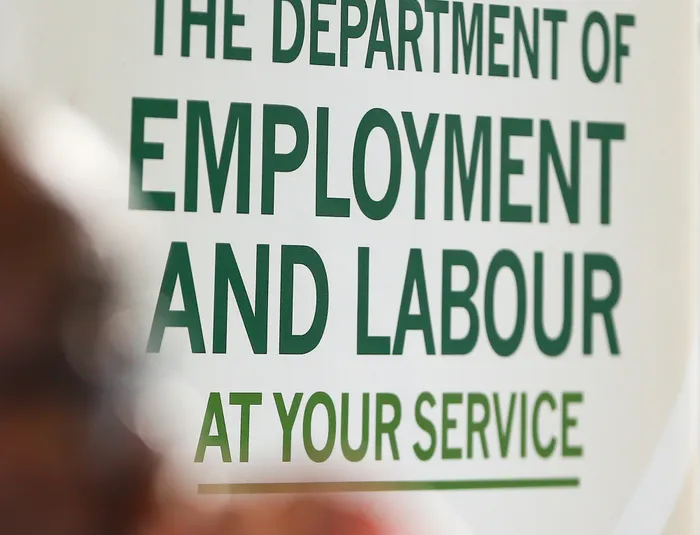
Central to the announcement made last week is the planned appointment of an additional 10,000 labour inspectors by the Department of Employment and Labour.
Image: Leon Lestrade/ Independent Newspapers
The 2026 State of the Nation Address has set the stage for a significant tightening of immigration and labour law enforcement, with President Cyril Ramaphosa outlining a more aggressive compliance posture aimed at curbing the employment of undocumented foreign nationals.
Central to the announcement made last week is the planned appointment of an additional 10,000 labour inspectors by the Department of Employment and Labour.
President Ramaphosa made it clear that businesses failing to comply with immigration requirements will face serious consequences.
"To tighten enforcement, we will hire an additional 10,000 labour inspectors this year. As we undertake these interventions, we insist that the laws of our country must be observed by everyone," Ramaphosa said.
Employers who hire foreign nationals without valid work visas, he warned, would “face the full might of the law,” reinforcing government’s hardening stance on workplace compliance and legal employment practices.
"The police, Home Affairs and labour inspectors will work together to crack down on violations of existing immigration, labour and other laws," Ramaphosa said. "Employers that hire foreign nationals without the required visas will face the full might of the law."
The renewed emphasis follows last year’s compliance blitz, which underscored the scale of non-compliance challenges. Enforcement operations resulted in 68 employer arrests and more than R680,000 in fines for labour and immigration law violations.
The outcomes signalled government’s intent to move beyond policy rhetoric toward tangible enforcement action.
Legal experts have said that Ramaphosa's message carries substantial implications for employers.
Nadeem Mahomed, director in the employment law practice at Cliffe Dekker Hofmeyr, said the announcement points to a coordinated and properly resourced enforcement drive that organisations cannot afford to overlook.
Mahomed reminded employers of their obligations under the Immigration Act 13 of 2002, which prohibits the employment of illegal foreign nationals.
"Employers must take reasonable steps to ascertain the legal status of any foreign national in their workforce," he said.
"The employment of an undocumented foreign national constitutes a statutory breach and exposes the employer to criminal sanction and administrative penalties."
Government’s strategy is anchored in strengthening inspection and enforcement capacity, long regarded as a structural weakness in the regulatory system.
The Department of Employment and Labour currently operates with approximately 2 300 inspectors tasked with monitoring compliance across millions of employers and workplaces in both the formal and informal economy.
This imbalance has historically constrained effective oversight. The inspection-to-employer ratio has made proactive monitoring difficult, limiting the department’s ability to respond swiftly to complaints, conduct routine inspections, and detect unlawful employment practices.
Nomakhosazana Meth, the Minister of Employment and Labour, has said the addition of 10,000 permanent inspectors is therefore being framed as a transformative intervention.
Meth said the expanded inspectorate would substantially improve compliance monitoring and strengthen protection for vulnerable workers.
"This is a major boost to our enforcement arm. The additional inspectors will significantly enhance our capacity to enforce labour legislation, promote fair labour practices, and ensure safer workplaces across all sectors," Meth said.
According to the department, increased inspection capacity will improve enforcement of key labour statutes, including the Basic Conditions of Employment Act, the Labour Relations Act, the Employment Equity Act, and occupational health and safety legislation.
The department also expects a stronger deterrent effect against exploitative and unlawful employment practices.
Immigration enforcement remains closely linked to broader labour market policy objectives.
Meth reaffirmed that unemployment, particularly youth unemployment, remains at the centre of government’s priorities.
She indicated that regulatory interventions would increasingly seek to prioritise South Africans in employment opportunities while remaining within constitutional and international legal frameworks.
Among the measures under consideration are targeted tax rebate mechanisms to incentivise youth employment, expanded digital employment platforms to connect job seekers with opportunities, and refinements to policy instruments designed to favour local labour market participation.
Meth also confirmed that the department is finalising the National Employment Policy and a framework governing immigration-related employment regulation.
These instruments are expected to empower the minister to prescribe sector-specific quotas for foreign nationals and potentially ring-fence certain sectors wholly or partially for South African workers.
The Department is working in collaboration with the Department of Home Affairs and the South African Police Service to address undocumented employment and related compliance challenges. Amendments to the Employment Services Act have already been introduced to strengthen regulatory oversight and enforcement mechanisms.
Agriculture has been identified as a high-risk sector due to its reliance on vulnerable and often seasonal workers.
Meth said the department has intensified advocacy, inspections, and enforcement efforts in the sector, recognising its economic significance and labour-law vulnerabilities.
"Given the sector’s reliance on vulnerable workers and its economic importance, the department has classified agriculture as a high‑risk sector from an enforcement perspective," she said, adding that the department has intensified all pillars of its intervention in the agricultural sector being advocacy, inspections and enforcement.
BUSINESS REPORT