

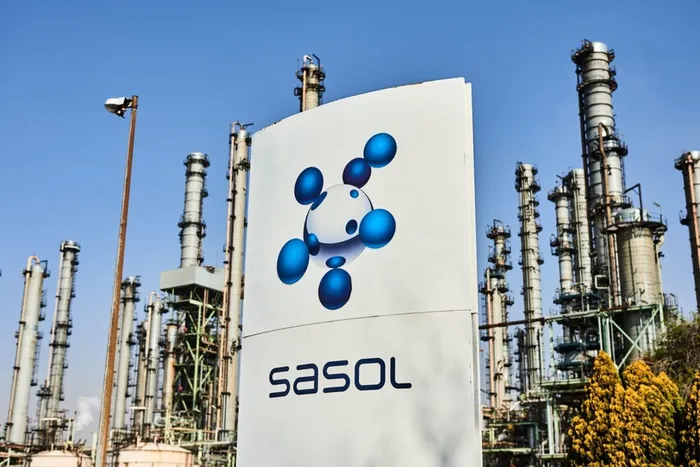
Sasol Mining's destoning plant was commissioned during the six months to December 31, 2025, a key initial element of its decarbonization strategy
Image: Supplied
Sasol made progress on its new 2030 decarbonisation strategy with the commissioning of a destoning plant at its coal mining operations during the six months to December 31, even though it reported sharply lower earnings.
The destoning plant is one of a range of initiatives that the fuels and chemicals from coal group has underway to reach its initial target of a 30% reduction in harmful greenhouse gas emissions by 2030 - the plant aims to improve the quality of the coal burned at Sasol, not only to improve the efficiency of its plants, but also to reduce greenhouse gas emissions from its Secunda Operations, which has among the highest harmful emissions on the continent.
Sasol President and CEO Simon Baloyi said in the interim results released on Monday that the destoning plant had reached beneficial operation, in line with plan and improving coal quality.
“This, together with higher gasifier availability and no phase shutdown, resulted in a 10% uplift in Secunda SO production volumes. Disciplined cost and capital management further supported a lower cash break-even oil price,” he said.
Another key element of the decarbonisation strategy, a reset of the International Chemicals businesses that saw some overseas plants soldor shut, was progressing, but market conditions were weaker than anticipated with lower US ethylene margins and muted market demand, said Baloyi.
“We have made good progress on lowering our cost base, which supported a 10% increase in Adjusted EBITDA (earnings before interest, tax, depreciation, and amortisation) in dollar terms compared to the prior period.”
The group also generated positive free cash flow in the first half, for the first time in four years, supported by higher sales volumes, lower cash fixed costs, and lower capital expenditure.
“We are showing consistent progress in the implementation of our strategic initiatives as set out in our Capital Markets Day plan. This is strengthening our foundation business, helping us to mitigate global market volatility and macroeconomic headwinds, building resilience for the future,” he said.
He said their balance sheet remained a focus area - there was “robust liquidity” in place while the group hedged proactively to manage downside risk.
An additional 300 megawatt (MW) of renewable energy was secured, increasing total secured capacity in South Africa to more than 1,200 MW, supporting emission reductions and cost savings.
Adjusted EBITDA of R21bn was 12% lower, primarily due to a 17% decline in the average rand per barrel Brent crude oil price and lower average US dollar per ton chemicals basket price. This was partially offset by much improved refining margins, a 3% higher sales volume driven by stronger production performance, and lower cash fixed costs.
Basic earnings per share (EPS) fell by 95% to R0,38 per share, and HEPS decreased by 34% to R9,27 per share compared to the prior period, due mainly to impairments of R7,8bn (before tax) compared to R5,7bn in the prior period, which include the impairment on the Secunda liquid fuels refinery cash generating unit (CGU) and the Mozambican Production Sharing Agreement (PSA) gas development.
The Secunda liquid fuels refinery cash generating unit (CGU) remained fully impaired. In line with this, the full amount of costs capitalised of R3bn was impaired. Actions continued to improve the underlying recoverable value of the asset, but this benefit was negatively impacted by lower forecast macro price assumptions and the stronger rand exchange rate outlook.
A R3.9bn impairment was written down on the PSA development in Mozambique. While the total quantum of gas was unchanged, a revision of the expected production profile resulted in a deferral of gas monetisation. The stronger rand against the US dollar further contributed to the impairment.
Cash generated by operating activities of R11,6bn declined 34%. Capital expenditure fell by 43% to R8,5bn mainly due to no Secunda shutdown, lower Production Sharing Agreement (PSA) project expenditure in Mozambique, and lower capital on environmental compliance programmes as these near completion.
Free cash flow of R0,8bn increased by more than 100%, supported by the lower capital expenditure. EBIT for the SA Energy and Chemicals business declined, with the current period including remeasurement items noted above.
Strong production performance across the SA Energy and Chemicals businesses from cost savings, higher refining margins, favourable commodity derivative movements, and lower depreciation charge was outweighed by declining fuels and chemicals sales prices. Earnings before interest and tax for Fuels increased by more than 100% to R3.1bn compared to the prior period loss before interest and tax of R1bn.
Debt fell to R93.,bn compared to R103,3bn at June 30, 2025. Turnover of R122,4m remained flat compared with the prior period, supported by a 3% increase in sales volumes and in spite of the softer macroeconomic environment.
BUSINESS REPORT