

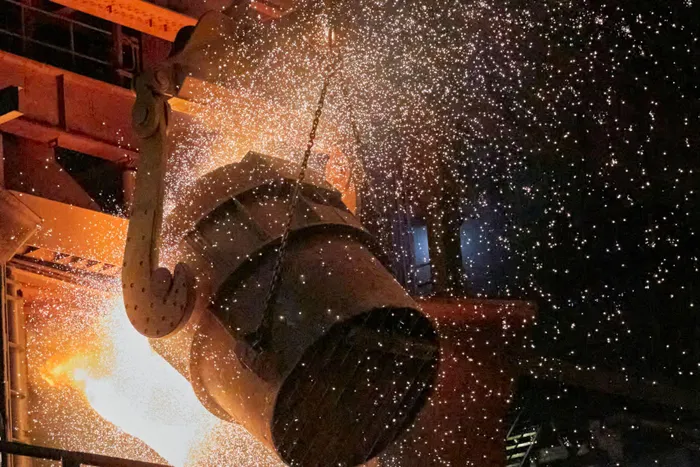
Transalloys has been engaging Eskom and government since October last year in an effort to secure a workable electricity tariff solution. However, Transalloys CEO Konstantin Sadovnik said escalating tariffs have rendered ore beneficiation in South Africa structurally uncompetitive.
Image: Supplied
Up to 600 jobs at Transalloys hang in the balance as the company warns it may be forced to retrench workers if the upcoming National Budget fails to deliver meaningful electricity tariff relief for the smelting sector.
Transalloys is Africa's leading producer of manganese ferroalloys.
This comes as Merafe Resources last week also warned that an interim, lower electricity tariff approved by the National Energy Regulator of South Africa (Nersa) ERSA to ferrochrome smelters is insufficient for them to operate viably over the long term, and 3000 jobs remain at threat at the Glencore-Merafe Chrome Venture.
Transalloys CEO Konstantin Sadovnik on Tuesday said he was not optimistic that significant relief will be announced by finance minister Enoch Godongwana in the Budget on Wednesday, despite electricity being the company’s single largest input cost and the decisive factor in global competitiveness in the ferroalloy market.
Should no relief materialise, Sadovnik said approximately 600 employees could lose their jobs, placing an estimated 7,000 livelihoods at risk when dependants and linked economic activity are taken into account.
Sadovnik said Transalloys, the last remaining manganese smelter in South Africa, contributes about R2.5 billion annually to the eMalahleni economy through procurement of local goods and services.
“Beyond the immediate job losses and downstream economic impact, shutting down theplant would wipe out a R5 billion strategic asset,” Sadovnik said.
“It would represent anirreversible loss of manganese beneficiation capacity in a country that holds roughly 80% ofthe world’s known manganese resources and severely damage investment climate in SouthAfrica.”
At the end of January, the National Energy Regulator of South Africa approved a 12-month interim electricity tariff of 87.74c per kWh, effective for one year from January 1, 2024.
This tariff is less than half that charged to consumers, the base rate of which will be R2.18 per kWh in 2024, following the 8.76% tariff increase from April 1, 2024.
Although ferrochrome smelters have received electricity tariff concessions, Sadovnik noted that silicomanganese smelting is about 30% more energy-intensive.
“If Transalloys is granted reliefon par with that expected for ferrochrome, manganese smelting can be saved,” he said.
Earlier, Glencore CEO Gary Nagle expressed confidence that the ferrochrome sector’s request for a 62 cents per kilowatt-hour tariff would be met before the end of February.
Sadovnik said a similar tariff for manganese smelters would align South Africa with the 3 to 4 US cents per kilowatt-hour paid by globally competitive producers in the United States, Norway and Malaysia.
“Ironically, South Africa is losing competitiveness to countries thatlack our resource base but have proactively structured energy solutions to capture the socio-economic benefits of beneficiation,” he said.
Sadovnik described the proposed tariff reduction as an interim measure to prevent large-scale job losses while a longer-term energy solution is developed.
“It is an immediate bridge while a long-term energy solution is being developed. It would provide much-needed breathing space, not only for Transalloys but for the broader ferroalloys sector,” he said.
He added that electricity pricing reform for energy-intensive sectors should be viewed within the broader fiscal and industrial framework to be outlined in the Budget.
“Electricity pricing reform for energy-intensive sectors is not a concession. It is an investment in preserving productive capacity, export earnings, tax revenue and maintaining an attractive investment climate. A competitive framework strengthens the national balance sheet over time,” Sadovnik said.
The ferroalloy value chain is widely reported to support around 300,000 direct and indirect jobs nationally.
Sadovnik warned that smelter closures could trigger a domino effect, forcing Eskom to spread its fixed costs and debt burden over fewer customers, while placing additional pressure on upstream coal mining operations.
Transalloys, the leading producer of manganese ferroalloys - essential inputs into steel - has been engaging Eskom and government since October last year in an effort to secure a workable electricity tariff solution.
However, Sadovnik said escalating tariffs have rendered ore beneficiation in South Africa structurally uncompetitive.
“Timing is now critical,” Sadovnik said. “Without certainty, the company will be compelled to act. With it, we have an opportunity to protect jobs, preserve industrial capability and contribute to growth.”
BUSINESS REPORT