

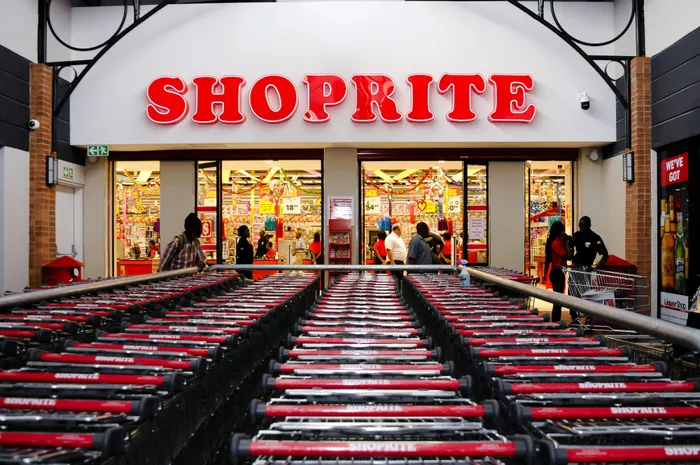
Shoprite, the mass value retailer increased sales by 7.2% to about R136.8 billion in the six months to December 28.
Image: Supplied
Shoprite has cautioned the government about basing economic decisions on CPI inflation data, as South Africa’s leading retailer’s own calculations on food inflation reveal a marked difference.
Group CEO Pieter Engelbrecht said Tuesday in a briefing yesterday that, for instance, official food and non-alcoholic beverages inflation in December came in at 4,7%. This figure, he said, was based on a static basket of goods that reflected life conditions during 2023, when, for instance, there was load shedding, and candles were an important product.
He said Shoprite calculated its own food inflation, which was 0,7% in December 2025, based on 56,000-line items that are bought by customers, compared with the price of the goods a year before.
“We do believe our own figure is a true reflection of what the consumer paid for inflation,” he said during the release of the group’s financial results for the 26 weeks to December 28.
The group, meanwhile, comfortably outsold inflation and increased sales by 7,2% to about R136,8 billion in the six months to December 28. This, he said, was in spite of the fact that 14,000 line items for the group were priced lower than what they were a year before in December.
The increase in sales was not from price increases, but because more efficiencies were extracted from its operations, he said.
Group like-for-like sales increased 2,7% for the six months, a figure that excluded the additional sales from a net 273 new stores that were opened during the six-month period.
South Africa’s biggest employer also added 1,711 new jobs to its total of about 170,000, and this excluded countless contract workers, he said.
Engelbrecht said the low selling price inflation reflected their commitment to affordability, as did about R9,7 billion in Xtra Savings discounts for customers at the till point over the period.
NielsenIQ, which is a market research company, determined that Shoprite’s core business grew at 2.3 times the rest of the market for the period, widening to 5.3 times during December.
Engelbrecht said there was widespread consensus in the retail sector that the Black Friday and Christmas trading periods had not been strong last year, but this was not the case for Shoprite and its brands, which had performed well throughout.
Supermarkets RSA (84,3% of group sales) increased sales by 7,1%. Within this, Shoprite and Usave increased sales by 5,1% alongside internal price deflation of 0,1% and 0,7% respectively.
Checkers and Checkers Hyper, which cater to higher-income customers, saw sales increase by 8,9% with internal selling price inflation of 1,9% and 1,1% respectively.
Within Supermarkets RSA, Sixty60, the on-demand digital platform, increased sales by a very strong 34,6% to R11,9bn, and it was a profitable business, said Engelbrecht.
The adjacent businesses including Petshop Science, Uniq Clothing by Checkers, Checkers Outdoor, and Little Me - grew sales by 70,9% as the value proposition for customers was broadened.
Petshop Science, now operating more than 170 stores, continued to scale meaningfully, supported by its recent integration onto the Sixty60 on-demand digital platform.
Outside South Africa, Supermarkets Non-RSA delivered 12,1% sales growth; however, constant currency sales growth measured 9,5%. From a profitability perspective, this segment was impacted by adverse humanitarian crisis conditions in Mozambique.
“We continue to maintain a disciplined approach to capital allocation as well as portfolio focus, and following the recent classification of our operations in Ghana and Malawi as discontinued operations, our scope of operations on the continent now numbers seven countries, all situated relatively close to our South African home base,” he said.
Operating profit was up 3,5% to R7,42bn. Profit was up 4,2% to R3.76bn. Headline earnings per share increased 7,7% to R710.5m. The interim dividend was raised 7,7% to 307 cents per share.
BUSINESS REPORT