

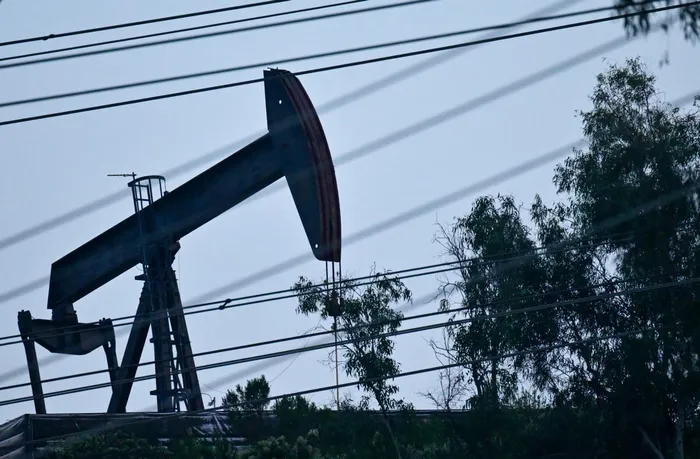
Markets have been roiled much of the week as the conflict between the US and Iran effectively closed shipping through the Strait of Hormuz, where a fifth of the world's crude oil travels as well as considerable liquefied natural gas (LNG) supplies travel through.
Image: FREDERIC J. BROWN / AFP
Global oil markets have been rocked by the escalating conflict in the Middle East, with Brent crude surging in its highest weekly rally since 2022.
The sharp rise in energy prices is fuelling concerns about renewed inflation pressures and slower economic growth worldwide, including in South Africa, which is forecast to grow by 1.6% this year.
The Brent crude oil price was trading near $85.50 per barrel on Friday after earlier declines triggered by signals from the United States that it may introduce short-term measures to curb surging fuel prices.
These include the potential release of crude from strategic reserves, relaxed fuel-blending requirements and allowing the US Treasury to trade oil futures. Brent Crude oil is a major benchmark price for purchases of oil worldwide.
Despite those efforts, oil prices remain significantly higher this week, rising by around 20% since the first missile was fired as hostilities between Israel and Iran continue to disrupt energy markets.
Shipping through the Strait of Hormuz, one of the world’s most important oil transit routes, has nearly halted amid security concerns.
The situation has heightened fears of prolonged supply disruptions, particularly after Iran launched missiles and drones across the Gulf targeting energy infrastructure, including an oil refinery in Bahrain, while Israel intensified airstrikes on Tehran.
Higher oil prices are particularly concerning for South Africa because the country is a net importer of fuel, meaning rising crude prices translate directly into higher transport and production costs across the economy.
Michael Saunders, senior advisor at Oxford Economics Africa, said their baseline assumption is that Brent crude will average $79 per barrel in the second quarter, roughly $15 higher than February projections, before easing later in the year as supply disruptions ease.
However, Saunders said that trade disruptions rather than production losses posed the biggest risk to energy markets. He said while spare capacity in Saudi Arabia and the United Arab Emirates could offset lost Iranian output, alternative shipping routes can reroute only about one-third of the oil normally transported through the Strait of Hormuz.
"In their monetary policy decisions, central banks will try to avoid making policy decisions that could turn out to be badly wrong if things turn out differently their central forecast," Saunders said.
"Most likely, they will adopt a robust approach whereby they don't just consider which is the best approach for their central forecast, but also which approach is likely to be acceptable – or at least not terrible – under a range of plausible alternative outcomes for energy prices."
Oxford Economics estimates the energy shock could raise global inflation by 0.3 to 0.4 percentage points in late 2026 while trimming about 0.1 percentage point from global economic growth this year.
The escalating conflict has triggered a global shift toward safe-haven assets as investors reduce exposure to risk-sensitive emerging markets.
The rand has already felt the impact. The local currency briefly weakened to around R16.74 against the dollar before recovering slightly to R16.56/$1 on Friday as global risk aversion intensified and higher oil prices weighed on energy-importing economies.
Although rising gold prices, now trading above $5,100, provide some support given the metal’s importance to South Africa’s export earnings, they have not fully offset the negative effects of higher oil prices.
Andre Cilliers, currency strategist at TreasuryONE, said the intensifying war is driving a “risk-off” sentiment across financial markets. He said the rand remains vulnerable to further geopolitical developments in the short term.
"Like many emerging market currencies, the rand has been weighed down by rising global risk aversion and higher oil prices, which are particularly negative for South Africa as a net energy importer," Cilliers said.
"In the near term, the rand is likely to trade within a R16.40–R16.75 range as markets await further clarity on both the geopolitical situation and US economic data."
Economists have warned that if the conflict persists, it could undermine the fragile recovery expected in South Africa over the coming years.
According to Nedbank economists, the country’s economy is projected to grow by 1.6% in 2026, averaging around 1.7% over the next three years as financial conditions ease and supply-side constraints gradually improve.
However, Nedbank said US trade policy and the war in Iran has significantly increased downside risks to oil prices, inflation and interest rates outlook though a subdued inflation and interest rates will likely boost demand.
"A prolonged war in the Middle East would keep oil prices high for longer, placing renewed upward pressure on domestic inflation, potentially leading to tighter monetary policy, which would remove a key driver of the anticipated acceleration in economic activity," Nedbank said.
BUSINESS REPORT