
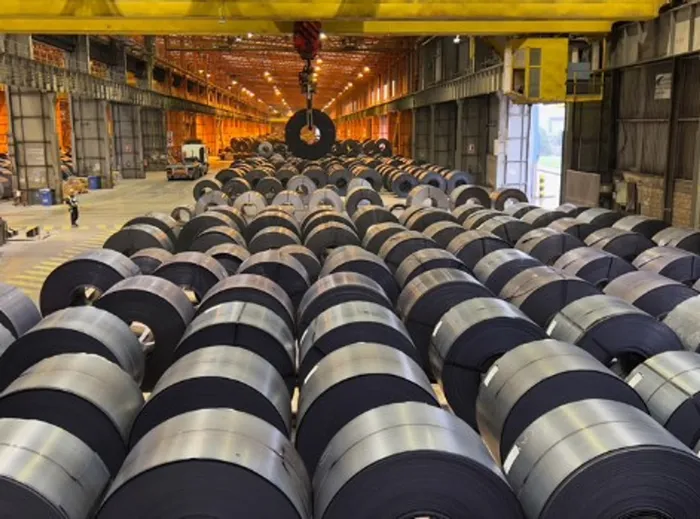
Zimbabwe’s steel exports have surged, with the Minerals Marketing Corporation of Zimbabwe (MMCZ) saying that regional markets, including South Africa, are taking up most of the shipments.
Image: File
Zimbabwe’s steel exports have surged, with the Minerals Marketing Corporation of Zimbabwe (MMCZ) saying that regional markets, including South Africa, are taking up most of the shipments of the key construction industry raw material.
In 2025, export sales of steel from Zimbabwe reached $92.1 million from 146,314 metric tonnes, representing a 450% increase in value compared to the previous year, data from the MMCZ shows.
This comes on the back of Chinese investments into the Dinson Manhize steel manufacturing plant, as well as increased capacity from local recycling. The Chinese parent company of Dinson, Tsingshan Holding Group, has said it will invest about $800 million in the Zimbabwean steel plant, with funds earmarked for supporting infrastructure and a blast furnace, helping to lift capacity from the current 600,000 metric tonnes of carbon steel to 1.2 million metric tonnes annually.
The Zimbabwean state minerals marketing agency has revealed that steel exported from Zimbabwe is mostly made up of long steel products such as billets, rebars and wire rods. These are exported “mostly into the regional Southern Africa market”.
Infrastructure gaps have prompted rapid investment in the region, with South Africa among the top investors in infrastructure development. This investment has increased the utilisation of steel and iron products.
Scrap metal is highly sought after in the region’s hub, South Africa, where ArcelorMittal has announced plans to shut down its long steel business.
Donald MacKay of XA International Trade Advisors said in an interview that Zimbabwe accounts for about 6% of South Africa’s scrap metal imports, noting that the country “has a perpetual scrap shortage” that forces steel and iron fabricators to “take whatever is available” to feed their manufacturing needs.
Iron and steel production in Zimbabwe had previously sagged as a result of the shutdown of the country’s giant steel manufacturer, Ziscosteel, due to corruption and operational challenges.
The South African Iron and Steel Institute (SAISI) cautioned in July last year that the country was witnessing a sharp influx of steel. It said Zimbabwe — which started restricting steel imports last year — was set to contribute more, with the coming into production of the Chinese-owned Dinson Iron and Steel Company.
“The implications for our domestic producers and the entire manufacturing value chain are serious. This is not simply a story of increased volumes; it is one of displacement, distortion and dumping,” SAISI said.
It argued that South African steel mills were already contending with high input costs and an unreliable energy supply and were now being forced to compete with imported products priced below sustainable levels, often backed by foreign subsidised and state-owned capital.
Quoting data from SA Revenue Service, SAISI said primary steel imports into South Africa — excluding stainless steel, wire and rail — reached a record high of approximately 1.56 million tonnes in 2025.
This was mainly due to higher imports of semi-finished steel products such as billets, blooms and slabs, which surged by over 514% to 195,723 tonnes in 2025. Long steel imports remained broadly stable, while heavy and light HR sections declined sharply by 41%, down from the record 65,898 tonnes in 2024.
Finished flat steel imports into South Africa declined by approximately 11% to 147,923 tonnes, with the steepest reductions in hot-rolled coil, which fell by 34%. However, significant increases were recorded in HR strip and universal plate imports, which reached a five-year peak of 28,512 tonnes.
BUSINESS REPORT