

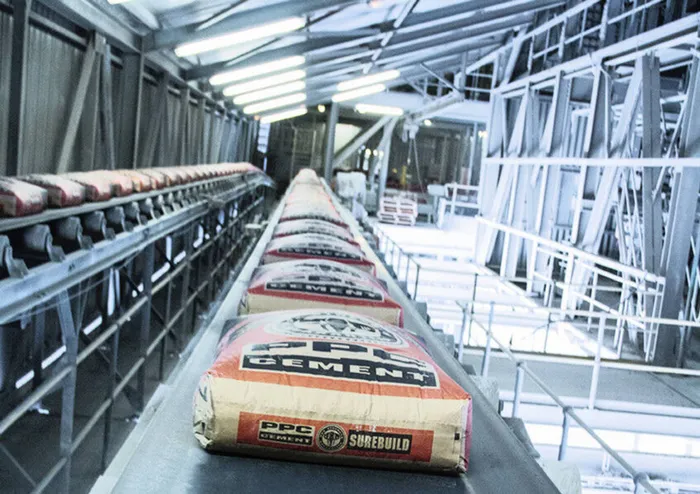
PPC reported flat cement sales in South Africa and Botswana in the 10 months to January 31, 2026, but sales volumes were up 22% in Zimbabwe.
Image: Supplied
PPC’s share price rose sharply by over 4% Wednesday morning after it reported further evidence that its “Awaken the Giant” turnaround strategy is delivering improvements in operating and financial performance.
For the 10 months to January 31, the group’s South Africa and Botswana unit ended with a net cash position of R367 million, significantly improved from R106m a year before.
The share price traded at R5,96 on the JSE Thursday morning, extending steady gains from R4,10 a year ago.
An increase in group revenue was driven mainly by the growth in PPC’s Zimbabwe operations, while the South Africa and Botswana group revenue remained largely unchanged from the prior period.
This all resulted in a 22% increase in total group earnings before interest, tax, depreciation, and amortisation (EBITDA). Cement volume sales remained flat in South Africa and Botswana.
“Our turnaround plan is deliberately ambitious. It is designed to rebuild PPC’s iconic status by restoring our competitiveness and long-term value creation. The results for the ten months clearly demonstrate the ongoing and compounding benefits of this strategy,” said PPC CEO Matias Cardarelli.
In South Africa, structural, cultural, and personnel changes across the business translated into delivery ahead of expectations. Changes in logistics, procurement, plant efficiencies, and the realignment of the business to maximise contribution margin delivered further results.
In Zimbabwe, the implementation of the turnaround advanced. Record year-to-date cash flow generation reflected the initial benefits, supported by strong underlying market demand.
Free cash flow in the South African group—net cash inflow before financing activities, but excluding dividends from Zimbabwe and investment expenditure in the new plant in the Western Cape—amounted to R567m in the period. This was less than R692m in the comparable period due to a temporary increase of R208m in inventories, attributed to the timing of planned maintenance shutdowns, some of which are scheduled for March 2026.
The increase in working capital will unwind as planned maintenance activities are completed.
The construction of the cement plant in the Western Cape (RK3) was progressing well and remains on schedule and within budget. Spend on the project, including realised foreign exchange losses, amounted to some R491m in the current period.
Despite this investment, the South African group was in a net cash position of R367m.
PPC Zimbabwe saw a step change in free cash flow generation, leading to the payment of R595m in dividends compared to R142m paid in the comparable period. PPC Zimbabwe remained debt-free and held R7m in cash at January 31, 2026.
South African sales volumes increased by about 2%, but this was offset by a decline in Botswana volumes. The low growth environment did not constrain performance, as the business continued to prioritise value, margin, and quality sales over volume growth.
In Zimbabwe, volumes increased by over 22%, supported by strong demand across the industrial and retail sectors. Revenue increased by 19% in rand terms, while EBITDA grew by 23% in rand terms.
After the longer maintenance shutdown in the first quarter, margins had recovered, leading to an overall increase of 0.9 percentage points, from 26.0% to 26.9%.
“PPC is well positioned to continue executing on its strategy. Growth in full-year 2026 earnings is on top of the robust improvement achieved in 2025. In line with previous guidance, these improvements are expected to be consolidated in 2027, with 2028 anticipated to deliver a further step change as benefits of the new RK3 plant are fully realised,” said Cardarelli.
Visit:www.businessreport.co.za
PPC reported flat cement sales in South Africa and Botswana in the 10 months to January 31, 2026, but sales volumes were up 22% in Zimbabwe.
Image: Supplied