

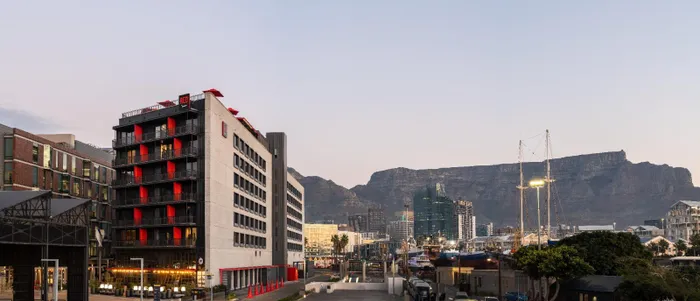
This article delves into the record-breaking growth of Africa's hotel development market, showcasing how local pension funds are transforming the investment landscape and unlocking the continent's vibrant hospitality potential.
Image: Supplied
Africa is at a pivotal moment in its hospitality sector, as the continent’s hotel development pipeline reached an unprecedented milestone.
With 675 hotels and resorts in various stages of development, translating into 123,846 rooms, investment in the hospitality industry has surged by 18.6% year-on-year.
The growth is primarily driven by a booming tourism sector, with international arrivals rising by 8% in 2025, translating to the continent to welcome around 81 million visitors according to the United Nations Tourism.
"We’re not seeing global capital flowing into African hospitality. Investment in this region is driven by local and national players, within their own countries,” said Daniel Trappler, Senior Director of Development for Southern and Eastern Africa at Radisson Hotel Group.
Local capital is increasingly emanating from pension funds rather than individual private investors.
Trappler said, “The investor landscape has moved more towards pension funds and institutional money, which is only equity and no debt.”
This shift is fundamentally pragmatic: hotel investments necessitate patient capital, aligning seamlessly with pension funds’ obligations to yield long-term returns for their members.
This paradigm shift reflects a larger trend within the Southern African Development Community (SADC).
Research conducted by Intellidex for Financial Sector Deepening (FSD) Africa and the Southern African Venture Capital and Private Equity Association (SAVCA) indicated that sustainability, diversification, and high risk-adjusted returns are now among the most crucial objectives for pension funds in the region.
Alternative assets, including private equity and private debt, are increasingly viewed as viable avenues for achieving these goals.
With hotel development characterised as a long-duration asset with predictable income after stabilisation, it fits neatly within this investment framework.
Pension fund investment in the hospitality sector is picking up steam.
In Tanzania, the National Social Security Fund is involved in developing two hotels. In Zambia, the National Pension Scheme Authority operates a property in Livingstone, while the Municipal Employees Pension Fund in South Africa owns and manages a hotel at OR Tambo International Airport and is set to inaugurate a second property in Mpumalanga later this year. All these initiatives are underway in partnership with the Radisson Hotel Group.
East Africa is spearheading construction momentum on the continent, with Kenya, Ethiopia, and Tanzania each reporting close to 80% of their planned hotel rooms already in construction.
“This is a significantly higher actualisation rate than the continental average, signalling that announced projects in this region are transitioning from paper to reality faster than elsewhere,” Trappler added.
Specific markets within Africa are beginning to attract distinct investment interest.
In Harare, Zimbabwe's capital, the dearth of internationally branded hotels equipped with dedicated conference and events facilities has created a gap in the market that Trappler believes savvy investors are starting to recognise.
“Pension funds in the country are sitting on significant capital and looking to deploy it; the gap in Harare's hotel market is becoming increasingly visible to them.”
Radisson Hotel Group has already signed a property deal in Harare, while the demand for leisure and MICE facilities in Victoria Falls is being addressed with the development of a Park Inn by Radisson resort. Bulawayo, the second-largest city in Zimbabwe, presents a third potential market for the group, catering to regional business travellers and cross-border traders who currently lack sufficient accommodation options.
Zanzibar is also emerging as a desirable resort market, mirroring broader investor interest in leisure destinations across the Indian Ocean.
Trappler identified Tanzania, alongside Kenya and Morocco, as the markets poised to witness the most significant hospitality investment activity over the next three to five years.
In a noteworthy achievement, Radisson Hotel Group has surpassed the milestone of 100 hotels operational or in development across Africa.
Recent agreements, such as the planned Radisson Serviced Apartments Umhlanga, a 155-room extended-stay property slated for 2029 in Umhlanga Ridge, one of Durban’s central commercial and lifestyle hubs, further underscore the rising demand for high-quality branded accommodations in South Africa’s secondary city markets.
Trappler sais, “We are at an inflection point. The capital is here, the demand is here, and the development is happening. Africa's hospitality story is no longer one of potential. It is one of progress.”

Daniel Trappler, Senior Director of Development for Southern and Eastern Africa at Radisson Hotel Group.
Image: Supplied.
Follow Business Report on Facebook, X and on LinkedIn for the latest Business and tech news.