

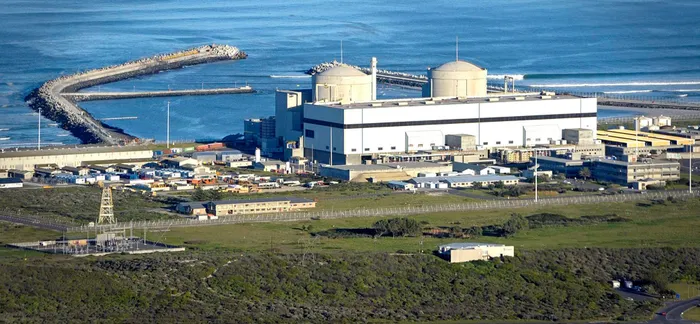
Koeberg Nuclear Power Station's Unit 2 achieved 365 consecutive days of uninterrupted operation in March 2026, operating at a 99.4% Energy Availability Factor and delivering roughly 946 MW to the national grid.
Image: Supplied
By Prof. Bismark Tyobeka
Unless another unfathomable tragedy strikes, I think we all know how we will remember 2026. The war in Iran. Terms and names like ‘The Strait of Hormuz’ were unknown to many only a few months ago but have since entered everyday vocabulary. It is sad how conflict so often becomes the world’s best geography teacher.
I would have preferred to remember 2026 differently, and I look forward to the day when science and societal advancement receive more headlines than violence and retribution. That will be a day.
We will look back at this year and recall that it marked the dawn of South Africa’s second nuclear age. We have moved from theory to practice and from talking to doing. Koeberg proved what sustained reliability looks like. Long-term operation became policy rather than aspiration. New-build discussions moved closer to implementation. We shifted from asking whether nuclear belongs in South Africa’s future to deciding how that future should be built. This is a real moment, one that should not be overshadowed by the fog of war or division.
Consider the milestones. Koeberg Unit 2 achieved 365 consecutive days of uninterrupted operation in March 2026, operating at a 99.4% Energy Availability Factor and delivering roughly 946 MW to the national grid. Government also continued with Koeberg’s life-extension programme, reinforcing its long-term commitment to nuclear energy. At the same time, renewed interest from the South African Nuclear Energy Corporation (Necsa) in Small Modular Reactors (SMRs) and pebble bed nuclear technology — a field in which South Africa was once a global leader — has returned to the spotlight.
It makes you want to dream again, and with that in mind, take a walk with me into the future. The results and resolve we are seeing invites us to think beyond the present moment and to imagine what comes next. If South Africa maintains its current momentum, and if we remain disciplined enough not to let corruption or short-term disruption derail long-term progress, there is little reason why our nuclear infrastructure cannot become the foundation for stable energy and trade corridors across southern Africa.
Nuclear energy can help build stable trade corridors across South Africa and wider Southern Africa because it provides something trade and industry depend on above all else: predictable, uninterrupted power. Ports, rail freight systems, mineral processing plants, cold-chain agriculture, manufacturing zones and cross-border logistics networks cannot function efficiently when electricity supply is unstable.
Nuclear energy offers long-term baseload generation that is not dependent on weather conditions or fuel-price volatility, making it uniquely suited to support heavy industry and continuous economic activity. For a region seeking deeper integration through the African Continental Free Trade Area (AfCFTA), stable electricity becomes more than an energy issue; it becomes trade infrastructure. A reliable nuclear backbone could support industrial corridors stretching between ports, inland manufacturing hubs and neighbouring economies, reducing bottlenecks, strengthening investor confidence and enabling Southern Africa to trade not only more efficiently, but more competitively.
This is the type of lasting impact we also like to talk about, but what often remains frustratingly out of reach. So close, but yet so far. Isn’t that the norm? Not when you shift the goalposts through vision, long-term commitment and the courage to build beyond the limits of the present.
Then, you have something to remember.
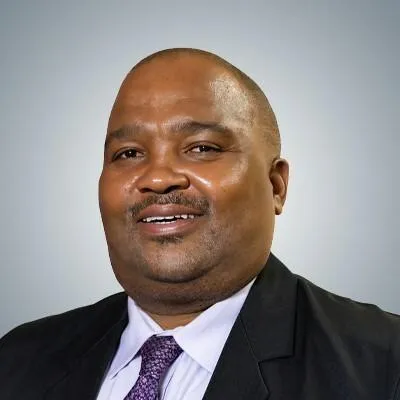
Prof. Bismark Tyobeka, Principal and Vice-Chancellor of the North-West University (NWU), is the former CEO of the National Nuclear Regulator and chairperson of the Ministerial Expert Panel on Nuclear.
Image: Supplied
* Prof Bismark Tyobeka is the Principal and vice-chancellor of the North-West University
** The views expressed here do not necessarily represent those of Independent Media or IOL.
BUSINESS REPORT