

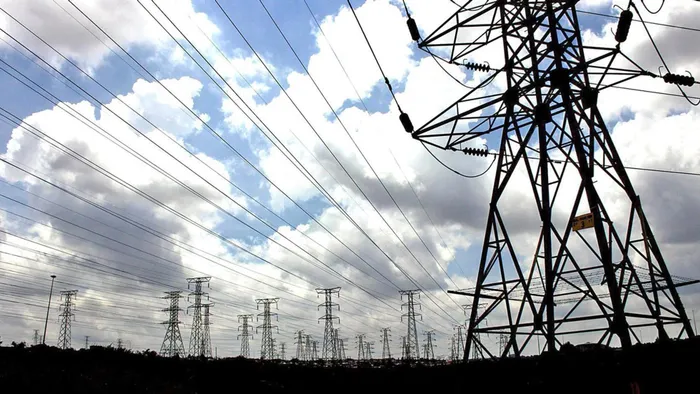
Reunert, as a key supplier of cables to Eskom, said there was little government infrastructure spending in the six months to March 31, 2025, with gross domestic fixed investment falling to its lowest level in 25 years.
Image: Supplied
Reunert's latest financial results reveal a decline in operating profit attributed to continuing low infrastructure investment in South Africa, amidst geopolitical challenges and rising commodity prices.
The JSE-listed engineering and applied electronics group said Friday in its financial results for the six months to March 31 that its operating profit was impacted by low levels of power cable activity in its electrical engineering segment. Despite this, the group's interim cash dividend was maintained at 90 cents per share.
“This is evident in the South African gross domestic fixed investment (GDFI) falling to its lowest level in 25 years, at 14% of gross domestic product, as the South African government’s stated commitment to infrastructure investment did not translate into tangible activity in the period,” Reunert's directors, led by chairman Mohamed Husain, said in the results.
They said geopolitical developments in the Middle East had been a notable contributor to recent changes in market conditions, influencing foreign exchange rates, energy prices, supply chains, and overall sentiment, but the full impacts of these developments “are still unfolding.”
In the first half, however, the group’s diversified portfolio helped to underpin a resilient financial performance, with two of three segments delivering solid operating results. Group headline earnings per share fell 22% to 185 cents.
The Electrical Engineering Segment’s performance, particularly the power cable businesses in both South Africa and Zambia, was weaker.
The power cable businesses saw lower demand in both South African and Zambian infrastructure investment, appreciation of the Zambian Kwacha against the US dollar, and record high raw material commodity prices in the six months.
Non-cash share-based payment remeasurements of the group’s Employee Share Ownership Plan (ESOP) and equity-settled Conditional Share Plan (CSP) also reduced group operating profit.
Group revenue increased 1% to R6.31 billion, while operating profit fell 23% to R453 million.
The slight increase in revenue was due to strong circuit breaker export volumes in the Electrical Engineering Segment, and good execution on a healthy order book, which contributed to an "excellent Defence Cluster performance," the directors said.
The ICT Segment saw a stable performance as initiatives in the 2025 year gained traction, while the Applied Electronics Segment delivered a strong improvement in operating profit from the strong order execution in the Defence Cluster.
Group operating profit was also affected by the allowance for expected credit losses of R15m, as well as R11m from the group’s share of the after-tax loss from the equity-accounted solar energy business.
There was a net investment of R197m in working capital (R126m investment), mainly as a result of increases in raw material commodity prices, reaching record highs during the first half, that impacted the working capital investment in the power cable businesses.
Electrical Engineering segment revenue increased by 2% to R3,5bn, while segment operating profit decreased by 40% to R138m.
In the South African power cable business, orders were delayed, mainly around the recapitalisation of the transmission grid and low volumes from local municipalities. High voltage cable volumes remained at the low level of the prior comparative period, with volumes of medium and low voltage cable decreasing by 14% and 20% respectively.
Higher maintenance services and cost containment, including less overtime, partly offset the loss in contribution from the lower volumes in the South African power cable business.
ICT’s segment revenue fell by 4% to R1.87bn, while its operating profit increased by 1% to R321m.
The Applied Electronics’ segment revenue increased by 9% to R1,03bn and segment operating profit increased by 41% to R110m.
The Defence Cluster delivered a robust improvement in performance, achieving revenue growth on the back of good execution despite the appreciation of the rand on the cluster’s foreign-denominated export revenues. There was improved capacity utilisation, production efficiencies, and favourable product mix.
Reunert’s share price had nudged up 2% to R63.86 on Friday afternoon, a price that had risen from R57.59 a year earlier.