

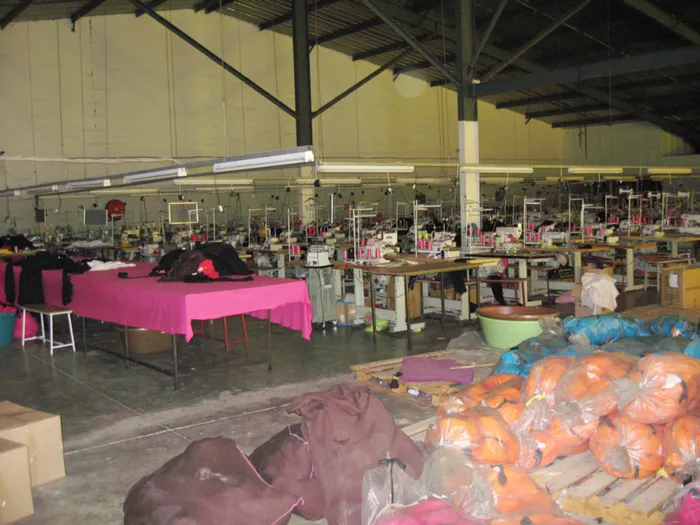
One of the 85 chinese factories, closed down by the bargaining council in Newcastle KZN. supplied 2 One of the 85 chinese factories, closed down by the bargaining council in Newcastle KZN. supplied 2
Ayanda Mdluli
At least 46 foreign workers without legal work permits were arrested in a surprise swoop by the Department of Labour at what it called “12 of the worst clothing factories” in Newcastle, officials said yesterday.
The raid is one of the initiatives the department has encouraged provinces to undertake in a bid to stamp out non-compliance in the textile industry. This is in addition to the nationwide blitz campaign that focuses on high-risk and problematic sectors.
The inspection, to ensure compliance with labour laws, was conducted in collaboration with the Department of Home Affairs, the SAPS and the bargaining council for the clothing and textile sector.
“This is a way in which a holistic and consolidated approach is used to root out employers who flout the law. Follow-up inspections will be conducted and if it is found that the employers concerned are still disregarding the law, then inspectors will not hesitate to recommend prosecution in such instances,” said Abey Rasepae, the provincial control inspector of the Department of Labour in KwaZulu-Natal.
Although the nationalities of those arrested could not be confirmed yesterday, Rasepae said there was concern over textile companies hiring foreign labourers who did not have the correct documentation and permits. Nine workers were arrested two weeks ago in a similar operation.
The antagonism between government agencies and textile factory owners has been exacerbated by the latter’s reluctance to pay agreed minimum wages, despite a process through which government has tried to enforce compliance.
Rasepae said yesterday’s raid had uncovered various anomalies. Production at one factory was ordered to stop as the sewing machines had no safety guards and this posed a danger to workers.
“Some of the contraventions included emergency exits not being demarcated, no electrical certificates available for electrical installations and no soap or toilet paper being placed in toilets.
“In one instance, it was found that only one toilet was shared by almost 60 male and female employees,” he said.
He said some factories had no fire-fighting equipment or qualified first aid personnel, and some first aid boxes were not adequately supplied
.
“Employers were also found to be on the wrong side of the law when it came to making declarations and paying contributions to the Unemployment Insurance Fund (UIF). The lack of registering with the Compensation Fund was also prevalent,” Rasepae said.
The Southern African Clothing & Textile Workers Union (Sactwu) had laid complaints against the employers, accusing them of exploiting workers and not providing decent working conditions.
Rasepae said such initiatives would be continued to ensure that the enforcement of labour laws gained momentum at all levels, particularly where there was gross violation.
Inspectors have issued contravention notices giving employers 60 days to comply.