Pick n Pay to open new distribution centres
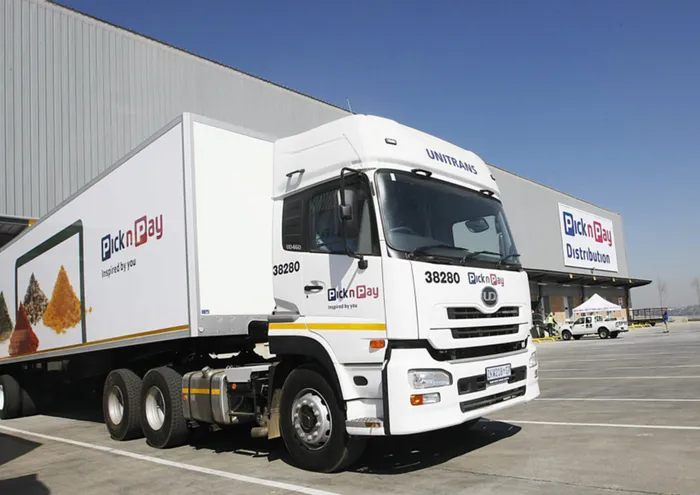
Pick n Pay's Longmeadow distribution centre in Edenvale, Gauteng was opened in 2010. The benefits of a second distribution hub, opened at Philippi in Cape Town, may take years to show on the group's bottom line, analysts say. Photo: Leon Nicholas Pick n Pay's Longmeadow distribution centre in Edenvale, Gauteng was opened in 2010. The benefits of a second distribution hub, opened at Philippi in Cape Town, may take years to show on the group's bottom line, analysts say. Photo: Leon Nicholas
Pick n Pay opened its second distribution centre yesterday, taking it one step closer to achieving greater efficiencies across the group. But the effect on the group’s bottom line may only be visible in years to come.
The new distribution centre, opened in Philippi in Cape Town, forms part of the roll-out of five distribution centres around the country, with a total investment of R2 billion.
The Philippi centre follows the launch of the first centre in Longmeadow, Gauteng, in 2010. A further three centres will be opened in KwaZulu-Natal, the Eastern Cape and another one in Gauteng.
Pick n Pay deputy chief executive Richard van Rensburg said the fast-moving consumer goods section of the Philippi centre would be fully operational by October, by which time it would be distributing 400 000 cases a week. Currently, the Longmeadow centre moved 1 million cases of groceries a week out to Pick n Pay stores.
Cobus Barnard, Pick n Pay’s divisional director for supply chain, said the benefits from centralised distribution included better on-shelf availability while holding lower overall inventory levels in stores.
“This means less congestion at stores’ receiving centres and, importantly, lower transport costs in our supply chain,” Barnard said.
Van Rensburg said once the switch-over to the new facility was complete, the existing old Western Cape warehouse would be redesigned as a state-of-the-art facility for fresh produce and other perishables.
Jean Pierre Verster, an analyst at 36One Asset Management, said the opening of the Philippi distribution centre was long anticipated and was an obvious step in Pick n Pay’s strategy of moving to centralised distribution.
But Verster was cautious about when the group would reap the full benefits from its new distribution centre.
He said hopefully Pick n Pay would have learnt from some of the teething problems at its Longmeadow distribution hub. The first 18 months of operations at Longmeadow was disappointing as it took a while to reach optimum efficiency. This was partly due to the group changing its logistics partner and because some tasks were initially done manually.
But Verster said even if these lessons were applied at the new Philippi centre it would still take about a year before the centre achieved maximum efficiency.
Verster said the pace at which Pick n Pay was moving towards central distribution was in line with expectations. “It is one of these things that take time.” He said that the group had also faced capital constraints in the recent past, which was partly why it had sold and then leased back the Longmeadow site.
The proceeds received from the sale of its Australian operation, Franklins, would assist it to roll out further distribution centres at a quicker pace.
It was reported previously that Franklins was sold for R1.2 billion net of fees.
The group recently reported that headline earnings a share were down 15 percent to R1.61 for the year that ended in February. But improvements in its performance were evident with total net cash from operations up from R3.5 million to R1.6bn, illustrating improvements in working capital management.
Focus on stock management translated into like-for-like stock holdings sliding 5.3 percent from last year.
Pick n Pay Stores rose 1.3 percent to R45.62 yesterday.