

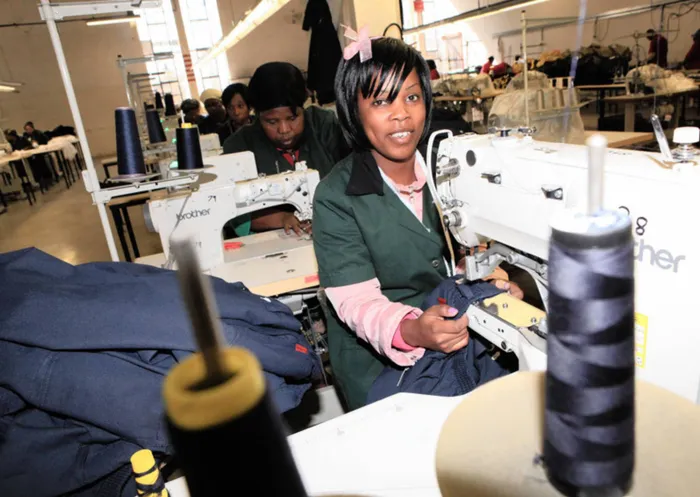
File picture: Zanele Zulu File picture: Zanele Zulu
Labour Minister Mildred Oliphant has accepted the judgment setting aside her decision to extend minimum wage provisions to five Newcastle clothing companies. However, changes to the Labour Relations Act are planned.
The companies and the United Clothing and Textile Association (Ucta) had successfully challenged the minister’s decision in December 2010 to extend the bargaining council for the manufacturing industry wage agreements to non-members of the council.
The companies are owned by Chinese, Hong Kong and Taiwanese businessmen.
On Wednesday
Pietermaritzburg High Court Judge Piet Koen found the minister was incorrect in relying on a certificate of representivity issued to the council rather than basing her decision on the representivity of the parties to the collective agreement at the time that agreement was submitted to the department.
Labour Department spokesman Musa Zondi said the judgment echoed one issued by the Labour Court in Johannesburg in December.
“The judgments stem from a misalignment between two sections of the Labour Relations Act which is being corrected through the amendments to the Labour Relations Act,” he said.
“In the meantime, the department will abide by the judgment and has already changed its practice. Certificates of representivity issued in terms of section 49 of the Labour Relations Act will not be used when considering extensions of collective agreements.”
Zondi said all parties within the scope of the council should note that the suspension of the agreement did not create a vacuum.
On September 14, 2012, the minister had extended an amending agreement to non-parties that remained in effect until August 31, 2015. “This agreement has not been set aside. It would in any event constitute an unfair labour practice if any employer were to unilaterally change an employee’s conditions of employment.”
He said the judgments corrected the way in which collective agreements had been extended to non-parties in terms of the Labour Relations Act, but “they do not undermine the ability of the minister to extend collective agreements”.
Zondi said the department would oppose a recent Constitutional Court application by the Free Market Foundation challenging the Labour Relations Act. The foundation is taking the labour minister as well as Justice and Constitutional Development Minister Jeff Radebe and various bargaining councils to court.
The Southern African Clothing and Textile Workers Union, which was cited as a respondent with the minister and the bargaining council in the Newcastle matter, said yesterday that it was weighing its options.
Andre Kriel, general secretary of the union, said it was still deciding whether to appeal. This, he said, was based on two questions: “Does it set a bad industrial relations legal precedent and does it have a detrimental practical effect on clothing workers’ wage levels?”
On Wednesday, Ucta said it would now revive the clothing industry in the next year by employing about 40 000 workers.
They had argued that the survival of 450 firms in the country, employing about 16 700 workers, was at stake if clothing and textile manufacturers were forced to comply with the minimum wage agreements.