

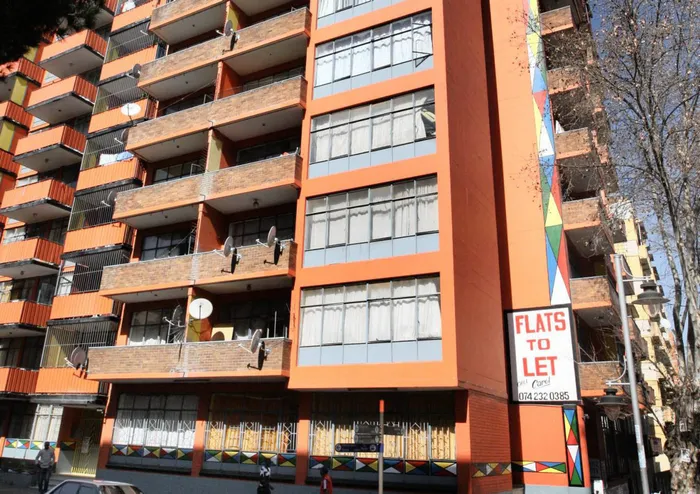
Flats in Johannesburg's inner city are in demand, with vacancy rates of 1 percent. Photo: Simphiwe Mbokazi. Flats in Johannesburg's inner city are in demand, with vacancy rates of 1 percent. Photo: Simphiwe Mbokazi.
Flat vacancies in the inner cities of Johannesburg and Pretoria have hit a record low of 1 percent, paving the way for a renewed surge of investor interest in residential accommodation in these areas.
Vacancies in the inner city of Durban have also declined but not to the same level, while flats in the inner city in Cape Town cater more for higher-income tenants.
Andrew Schaefer, the managing director of property investment and management group Trafalgar, said there had been a steady improvement in vacancies in Johannesburg’s inner city over the past 18 months after an oversupply bubble two years ago when about 2 500 units from commercial conversions were released into the market in a short space of time.
He said this oversupply took about a year to be absorbed.
Trafalgar manages a portfolio of about 3 500 flats in some 100 buildings in Johannesburg’s inner city.
Schaefer said two-bedroom units in the Johannesburg inner city were in the highest demand, renting from R3 000 to R4 500 a month depending on size and area. Investors could expect yields of between 11 percent and 15 percent.
Areas such as Yeoville, Berea, parts of Hillbrow and the residential improvement districts tended to command the highest rentals, he said.
Schaefer added that with the commercial conversion trend largely finalised and the available stock converted, a new trend of demolish and rebuild was expected.
He said distressed sectional title sales were regularly being marketed at attractive prices and yields but often with very uncertain body corporate solvency and governance.
Schaefer said there was still no easy answer as to how to address insolvent sectional title buildings that had huge municipal account arrears and severe maintenance issues.
Jeffrey Wapnick, the managing director of City Property, which manages 8 000 flat units in the inner city of Pretoria and the adjoining suburbs of Sunnyside and Arcadia, said demand was very strong and vacancies had remained low at 1 percent despite the recession.
“As long as we have been operating in Pretoria the demand in this market has been strong and, if anything, got stronger because of the demand from government employees and students,” he said.
City Property also manages about 3 500 flat units in the inner city of Johannesburg, some in partnership with asset manager Old Mutual.
Wapnick said there was still commercial building stock available for conversion to residential use but competition had driven the price of these buildings too high.
He said there appeared to be a ceiling on rental growth because of affordability issues.
However, Wapnick believed the group could comfortably achieve rental growth of 7 percent to 8 percent in Pretoria and Johannesburg in the future.
Schaefer said Trafalgar managed a portfolio of about 1 400 units in some 40 buildings in the Durban city centre, where the vacancy rate had improved to about 4 percent from 8 percent previously.
He admitted that Trafalgar found it a challenge to let out some units that remained vacant for many months. He attributed this to its exposure to student letting because students largely only looked for accommodation at the beginning of each year.
Schaefer said Cape Town’s inner city was different to the other major metros because the demand was for more high end properties that attracted a higher calibre of tenant with a different income profile.