Liberty’s attention turns to Nigeria
|Published
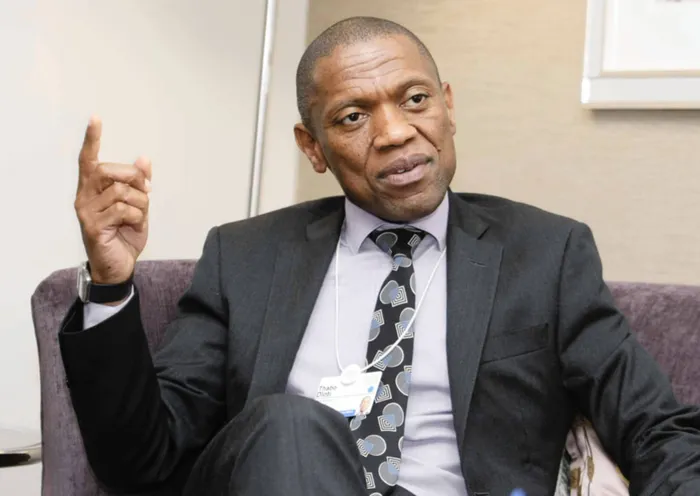
040615 Liberty CEO Thabo Dloti at the (WEF) World Economic Forum.Photo Simphiwe Mbokazi 040615 Liberty CEO Thabo Dloti at the (WEF) World Economic Forum.Photo Simphiwe Mbokazi
Cape Town - Financial services group Liberty was eyeing Francophone Africa and Portuguese-speaking countries such as Angola as part of its expansion on the continent, said chief executive Thabo Dloti yesterday.
“It would at some point be good to talk about the Francophone countries. In time we will add them to our list, too,” he said in an interview at the World Economic Forum on Africa in Cape Town.
In Francophone Africa, he said, he sensed bullishness about the Ivory Coast.
“I’ve heard a lot of good things. Talented and well-trained people and established institutions. I have not been there myself. It’s going to be one of our considerations but we’re not there yet.”
The company’s focus at the moment is on west Africa.
Liberty, which has asset management, investment, insurance and health products, already has a presence in 16 African countries.
Dloti said the company was particularly looking at growth in Nigeria, Africa’s largest economy, where it had allocated R1 billion to spend on acquisitions and capital expenditure.
“The reality is we could raise more capital. When the right opportunity comes along, we have committed shareholders who would happily support us.”
In Nigeria, Liberty has established a presence for its health insurance business and has a partnership with Nigerian company Total Health Trust.
Liberty wants to buy a general insurance company in Nigeria and also set up an asset management business there.
“This will be the platform for Liberty to have bigger business in Nigeria. Our sense is that Nigeria is underpenetrated.
“Massive further investment is required after an acquisition is complete. For markets like Nigeria to rerate, you need to invest in them,” he said.
“If you want insurance market penetration to rise from 0.7 percent to 3 percent, you need to get market confidence.”
In Nigeria there was much scepticism and lack of confidence in the insurance sector, Dloti said, and Liberty would need to improve the credibility of insurance in the country.
“You need to get customers to buy into the concept of insurance.
“We see the continent as the next region to emerge as a global economic powerhouse. Clearly you need to have a long-term horizon to see that.”
The sociopolitical changes in Africa and the stabilisation of democracies over the past decade had paved the way for the company’s interest in Africa, he said.
“The main regions are charging ahead. Whether the oil price is low or not, or there are local issues like violence or insurgency, the theme remains.”
Liberty first invested in Africa outside of South Africa in 2008. It set up business operations in six other African countries.
Dloti said the group was expanding in Africa along with its multinational clients and Standard Bank, which had a controlling stake in the group, he said.
Standard Bank was already in Angola and this would allow Liberty a gateway to the country when it decided to go.
“We are keen to follow Standard Bank wherever they are and to cover their clients,” Dloti said.
And Liberty wanted to expand its short-term insurance business, too. He said there were a number of countries the group was present in but it had, as yet, not introduced its short-term products in these places.