

Cape Town - Western Cape Finance MEC Ivan Meyer focused on economic growth and creating public value by reducing costs, using resources efficiently, and creating job opportunities, as he delivered his budget speech in the Western Cape legislature.
Meyer tabled what he dubbed a “budget for growth” amid a constrained economic and fiscal environment.
Read: W Cape MEC sets budget 'for growth'
Despite heckling and interjections from the opposition benches, Meyer stressed that the R55 billion budget was a “balanced, pro-poor budget”.
The provincial budget will see 15 new schools, about 33 new health facilities, more than 11 000 houses being built, and extensive transport upgrades being made along the national highways including the N1 and N2.
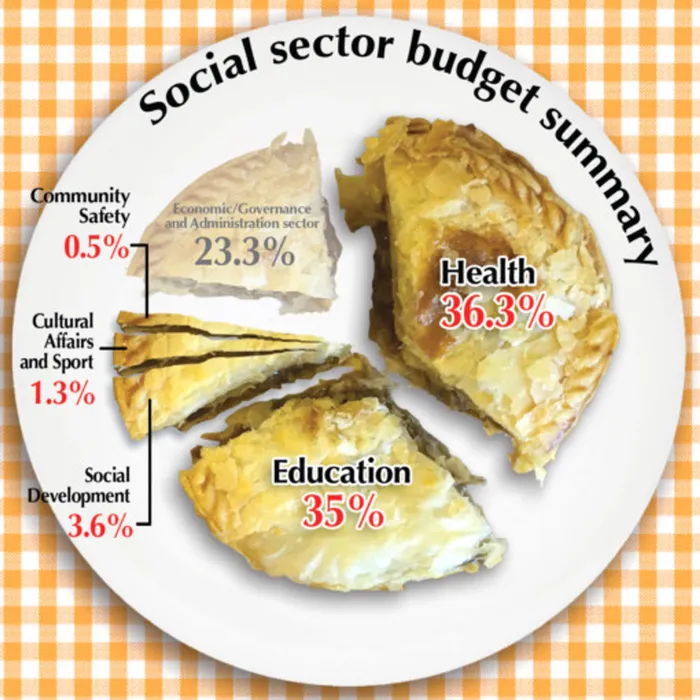
Telling citizens exactly how the province planned to plug the fiscal gap left by the huge public sector wage bill, high unemployment and drought, Meyer said education would receive R19.247bn of the budget, transport and public works will get R6.789bn and social development will get R1.961bn.
The rest of the budget was divided into:
* Human Settlements, R2.224bn.
* Cultural Affairs and Sport, R736.184 million.
* Environmental Affairs and Development Planning, R550.964m.
* Community Safety, R292.016m
* Economic Development and Tourism, R486.769m.
* Agriculture, R787.855m
* Local Government, R217.899m.
The Department of the Premier received R1.341bn while the Provincial Parliament got R130.821m and Provincial Treasury was allocated R260.739m.
Stressing that the budget was about inclusive, sustainable, and smart growth, Meyer listed five big domestic challenges the country has to deal with to help the economy grow.
These included policy uncertainty; rising fiscal pressures; rising interest rates; infrastructure gaps and the drought.
Regarding the budget for Premier Helen Zille’s games changers, Meyer said the estimated budgets over the 2016 Medium-Term Expenditure Framework (3-year period) will be to:
* Achieve energy security, R53m.
* Expand vocational skills and training in the province, R273.3m.
* Deliver high speed broadband across the province, R1.6bn.
* Roll out e-Learning at schools, R757.5m.
* Expand after-school activities, R419.5m.
* Tackle alcohol abuse, R56.2m.
* Pioneer a major “live-and-work” development that integrates communities, R41.7m.
Meanwhile, opposition parties gave the Western Cape’s budget the cold shoulder.
ANC MPL Carol Beerwinkel said the budget was a far cry from pro-poor, as it failed to tackle the imbalance between development in urban and rural areas.
“The rural areas do not see the growth and development the DA brags about,” she said.
Beerwinkel said Meyer’s budget was just a generalised budget that did not speak to how it was going to improve the lives of the poor.
“It did not speak to sanitation or housing. Most of the budget is meant for the City of Cape Town, the metro and not the rural areas where it is most needed,” she said.
According to Beerwinkel, the province is banking on the construction industry to grow job creation.
“Construction, unless it is continuous, will not be a job creator. It is an intermittent job creator.
“This was a budget that spoke mostly to development in already developed areas,” she criticised.
EFF MPL Bernard Joseph said the budget was problematic for his party.
“In no way is it aimed at the poor, but instead it focuses on business and development,” he said.
Joseph said they were not surprised by the budget speech because the DA government had never presented anything pro-poor. “Just look at the informal settlements and the way people live,” he said.
CAPE ARGUS